•
•
•
•
•
•
•
•
•
•
•
•
•
•
•
•
•
•
•
•
•
•
•
•
•
•
•
•
•
•
•
•
•


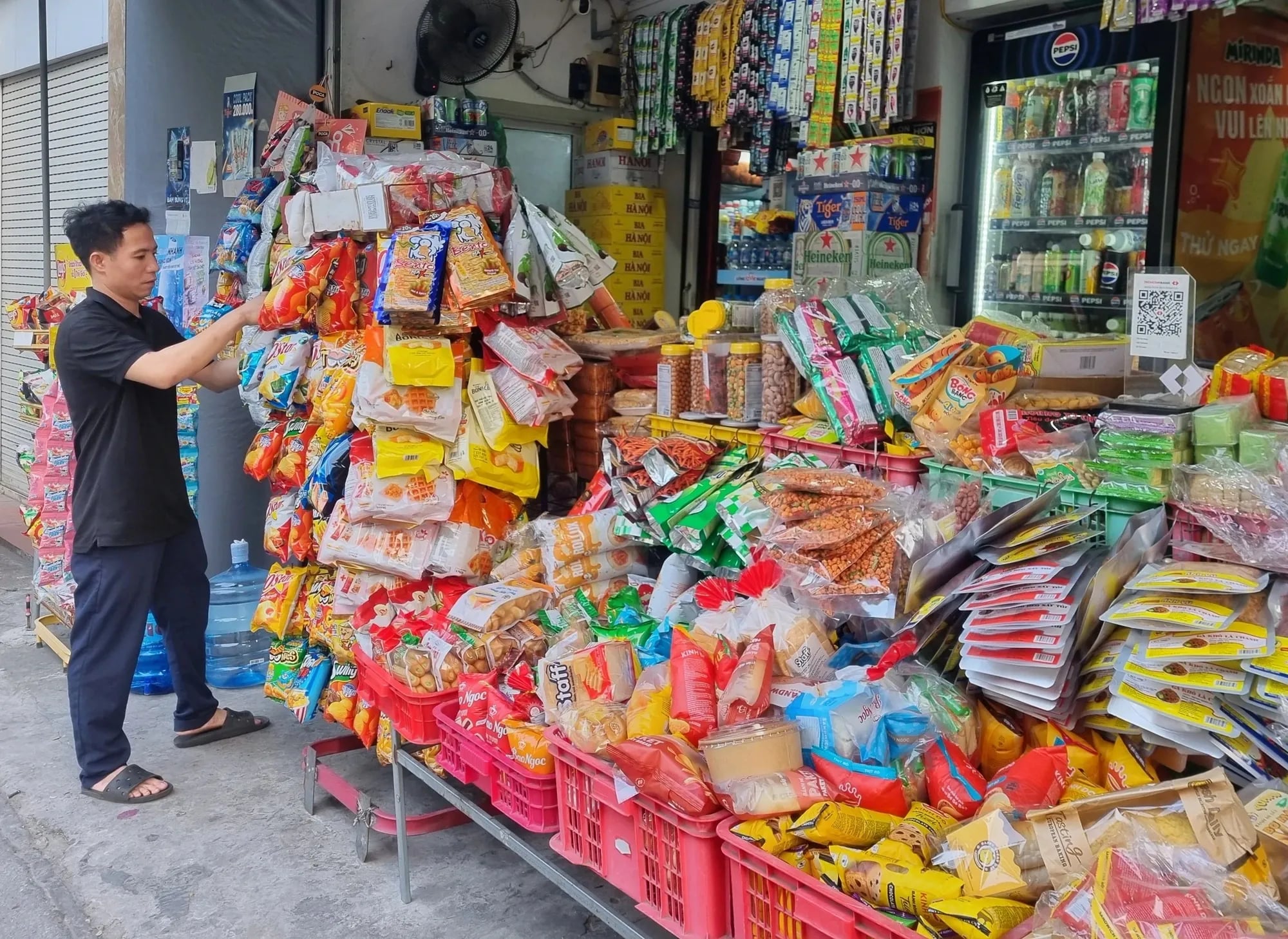
More than 1,000 small businesses were surveyed nationwide from February to April 2026, with responses from enterprises operating in 34 provinces and cities. More than 81% of small businesses reported a decline in revenue in 2025, according to the survey results discussed at a seminar by the Vietnam Chamber of Commerce and Industry (VCCI). Dau Anh Tuan, Deputy General Secretary of VCCI, said the findings reflect a not very optimistic but “very real” picture of the sector’s current condition.
Among the surveyed businesses, 73.7% reported only “low profits” in 2025, while more than 81% experienced revenue declines. In addition, 75% said they had fewer customers, and only 1.9% reported profits “as expected.” The survey suggests many firms are operating with razor-thin margins—able to survive but not in a position to build reserves or withstand future shocks.
The deterioration in business conditions has translated into a more defensive approach. In the survey, 60.8% of small businesses expect to maintain their current scale over the next two years, 33% said they tend to shrink, and only 1.8% indicated an intention to expand.
“The dominant state of the small business sector is no longer seeking growth but focused on maintaining existence,” emphasized Mr. Tuan.
Legal difficulties emerged as the most significant or major constraint. Overall, 73.3% of small businesses said legal issues are a major or serious problem—higher than concerns related to input costs, markets, or resources.
Looking at specific challenges, 71.2% of small businesses reported difficulties collecting customer information to issue electronic invoices. Other reported issues included 67.6% facing challenges in deducting allowable costs and 66.8% struggling to track policy updates.
Time spent complying with regulations was identified as the strongest pressure point: 73% of respondents rated it as having a large or very large impact. Mr. Tuan also noted that the compliance burden does not ease as firms grow; in many areas, difficulty tends to rise with revenue scale.
“There is a very important finding: the compliance burden does not decrease as the business grows. On many fronts, difficulty tends to increase with revenue scale,” Mr. Tuan noted.
The implication, as presented at the seminar, is that as small businesses develop, compliance costs and institutional complexity rise faster than their ability to absorb them.
When owners perceive that scaling up brings more complex accounting, heavier tax procedures, higher payroll and technology costs, the incentive to invest in expansion is reduced. The institutional environment, according to the discussion, can unintentionally keep small businesses in a small, defensive state that avoids growth.
On converting to a company, the survey found that only 15.6% of small businesses intend to convert within the next two years. More than 84.4% said they do not plan to convert, citing fears of more difficult tax procedures, more complex accounting rules, higher social insurance costs, and concerns about more frequent inspections.
The seminar also cited regression analysis indicating that businesses with a clearer understanding of tax and accounting policies are significantly more likely to plan a conversion than those without such understanding.
“Knowing the rules helps small business owners gain confidence, as they can weigh costs and benefits rather than merely fearing risks. Knowledge of tax and accounting policy is both a condition to reduce compliance anxiety and a motivation for small businesses to consider a corporate model,” Mr. Tuan said.
To address these concerns, Mr. Tuan proposed reducing the complexity of the tax, accounting, and electronic invoicing system to better match the capacity of small businesses—especially micro and very small groups, lower-educated groups, older people, and rural areas.
He also suggested that policy on converting small businesses to enterprises should follow a staged approach, since not every small business needs or should convert at the same time. In addition, he emphasized the need to “reposition” the role of small businesses in policy thinking, noting that 96.7% of households depend entirely or largely on household business operations.
Concluding, Mr. Tuan said a favorable environment for small businesses is not only about reducing market barriers, but also about ensuring compliance requirements are simple, understandable, predictable, and commensurate with the capacity of the target group.
“If we approach this sector with an educational, supportive, compassionate, and constructive mindset, I believe we can both achieve transparency, digital transformation, and preserve the dynamism and flexibility that are the sector’s most valuable assets. Protecting and upgrading the resilience of this sector is not only an economic objective but also a broad social policy choice in strengthening a more formal, transparent, and sustainable private economy,” he emphasized.
“Need to let small businesses voluntarily comply with the electronic invoicing policy instead of administrative pressure” (07:06, 22/07/2025).
“Hanoi ‘pulls back’ on the tax management method for household businesses, moving toward declaration from 2026” (09:34, 07/12/2025).
“Concerns about implementing electronic invoicing, many small businesses choose to reduce scale” (07:36, 11/07/2025).



Premium gym chains are entering a “golden era” that is ending or already in decline, as rising operating costs collide with shifting consumer preferences toward more flexible, community-based ways to exercise. Long-term memberships are shrinking, margins are pressured by higher rents and facility expenses, and competition from smaller, more personalized…




