•
•
•
•
•
•
•
•
•
•
•
•
•
•
•
•
•
•
•
•
•
•
•
•
•
•
•
•
•
•
•
•
•


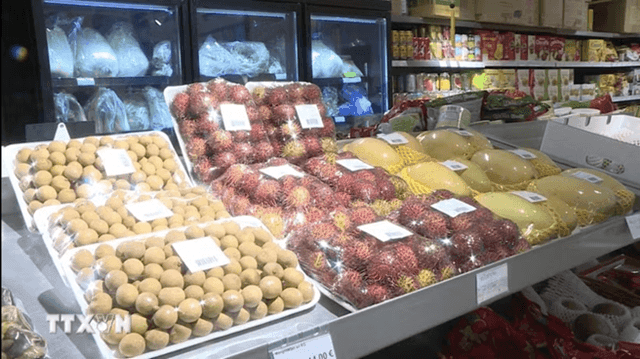
In a context of deep integration, tariffs are gradually removed and competition increasingly shifts from price to trust and identity. As a result, branding is emerging as a “soft passport” that helps Vietnamese goods expand globally.
While Vietnamese enterprises have expanded their international presence, the gap between having a presence and securing a foothold remains large. The core challenge is building brand capability rather than simply exporting products.
Exports have risen strongly, but brand value has not kept pace. Many enterprises remain at the OEM stage—dependent on design and foreign brands—making Vietnamese products harder to recognize in international markets. Experts say this is not only an economic issue but also a development mindset problem.
According to Mr. Hoang Minh Chien, Deputy Director of the Trade Promotion Department (Ministry of Industry and Trade), the biggest challenge today is not pushing goods to the market, but defining the role of Vietnamese enterprises in the value chain. Enterprises, he said, cannot only participate; they must progressively position themselves—moving from outsourcing (OEM) to design and toward building their own brands.
From a macro perspective, economist Nguyen Minh Phong argues that brand is a key factor in enhancing national competitiveness by linking product brands, enterprise brands, and the national image. A credible country creates trust advantages for enterprises, while strong enterprises help reinforce the nation’s position.
However, brands cannot be formed through short-term campaigns. They must be built on sustainable internal strength. To compete globally, enterprises need scale, finance, human resources, execution capability, and a well-structured brand governance system. A common limitation, he noted, is potential that has not been converted into capability—paired with a lack of long-term strategy for brand development.
From a business perspective, Mr. Dinh Hong Ky, Chairman of the Secoin Board, said Vietnamese enterprises do not lack good products, but often lack a story with value. As global consumers increasingly care about experience and emotion, branding is no longer just a label; it is the sum of quality, design, culture, and social responsibility. In his view, price competition may work in the short term, but only a story and identity can sustain customer recognition over time.
Secoin’s experience, he added, shows that upgrading value does not come from chasing scale alone. The company’s path has been to find a unique identity—moving from OEM toward design and brand building, combining Vietnamese culture with international design thinking.
Mr. Le Hong Quang, CEO of MISA JSC, said that in the digital era, digital transformation is no longer optional but a mandatory condition. As enterprises adopt technology, productivity, efficiency, and growth speed can increase significantly, directly strengthening competitiveness.
At the same time, Vietnam cannot replicate the development path of global technology giants in every field. Instead, it needs to identify niche areas where progress is feasible.
In manufacturing, the shift from OEM to ODM and finally to OBM is described as a major but necessary leap. Ms. Truong Thi Chi Binh, General Secretary of the Association of Support Industry, noted that while Vietnamese enterprises are moving toward deeper involvement in design, they face difficulties due to limited data, limited connections, and the lack of a supportive ecosystem.
Branding is also seen as a tool to reshape the entire value chain. When a product is tied to a brand, it becomes more than a sales story—it becomes a story of credibility and transparency. To build a brand, enterprises need to control the supply chain from the source region to the final product, ensuring traceability and quality.
This approach aligns with a global market trend: environmental, social, and governance standards increasingly function as an “passport” for market access and trust.
A common point emphasized by experts and businesses is that branding is a long-term process requiring perseverance and close collaboration between enterprises and the State. Firms should strengthen internal capacity, innovate, and govern to international standards.
Meanwhile, the State is expected to create a favorable environment through institutional improvements, infrastructure development, and promoting an ecosystem that supports brand formation and sustainable growth.
In the context of shrinking global trade distances, branding becomes an important tool to help goods affirm their identity and value. When Vietnamese goods can tell their story through quality, cultural identity, and social responsibility, the path to the world becomes a clear and feasible trend.



Premium gym chains are entering a “golden era” that is ending or already in decline, as rising operating costs collide with shifting consumer preferences toward more flexible, community-based ways to exercise. Long-term memberships are shrinking, margins are pressured by higher rents and facility expenses, and competition from smaller, more personalized…




