•
•
•
•
•
•
•
•
•
•
•
•
•
•
•
•
•
•
•
•
•
•
•
•
•
•
•
•
•
•
•
•
•


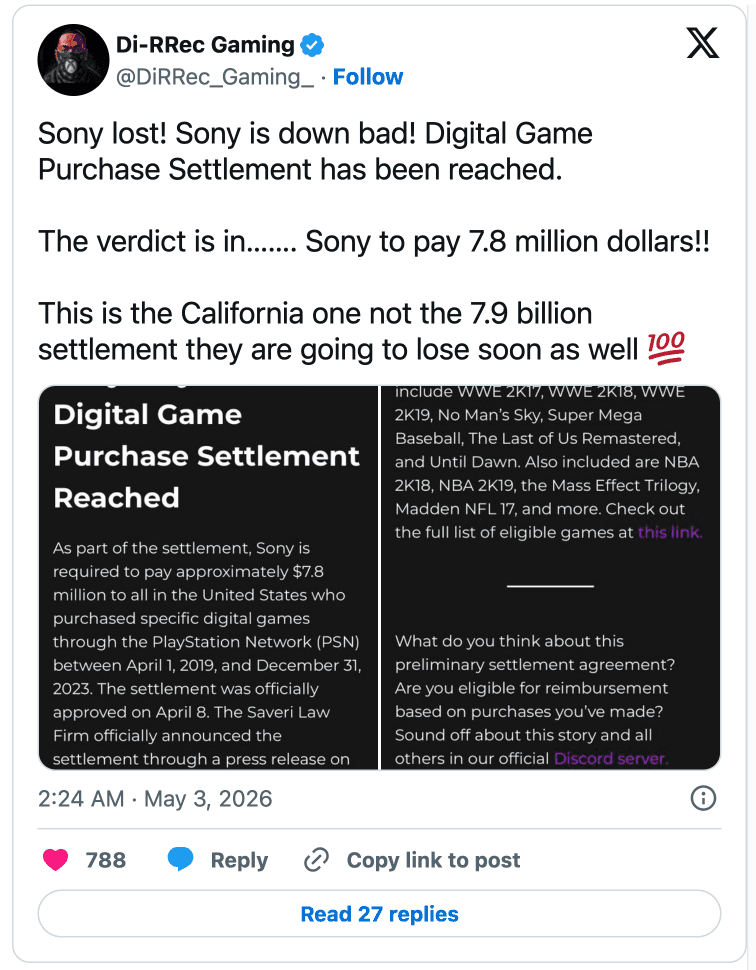
Sony Interactive Entertainment (SIE) has agreed to pay $7.85 million (about 207.24 billion VND) to settle a US class-action lawsuit accusing the company of abusing its dominance in the PlayStation Store. The case, Caccuri v. Sony Interactive Entertainment LLC, began in 2021 and centers on claims that Sony restricted competition by blocking third-party digital game codes through the PlayStation Store.
The settlement applies to US users who bought vouchers for digital games at physical retailers between April 1, 2019 and December 31, 2023. An estimated 4,407,533 PlayStation Network (PSN) members are eligible to receive funds.
Instead of a cash payout by check, the settlement funds will be added directly to users’ PlayStation accounts as store credit after final court approval. Sony will notify eligible users by email. Because of the large number of beneficiaries, the amount per person is expected to be small and unlikely to be enough to buy a new game on PS4 or PS5.
A July 2025 settlement plan was rejected by a judge, but the new agreement received preliminary court approval in California. The final decision will be made at a hearing on October 15 to determine whether the settlement is fair to all parties.
The lawsuit alleges that Sony blocked third-party digital game codes through the PlayStation Store, which the plaintiffs say limited competition. The settlement also notes that the list of eligible games has been updated on the case’s official website.
The dispute comes as Sony faces other legal challenges in different markets. In the UK, the “PlayStation You Owe Us” litigation seeks compensation of more than £2 billion for about 12 million gamers.
Approximately 4.4 million eligible PSN members will receive store credit to their PlayStation accounts rather than a cash payment. Sony will send notification emails to those in the eligible group, with the final settlement terms subject to the October 15 fairness hearing.

Premium gym chains are entering a “golden era” that is ending or already in decline, as rising operating costs collide with shifting consumer preferences toward more flexible, community-based ways to exercise. Long-term memberships are shrinking, margins are pressured by higher rents and facility expenses, and competition from smaller, more personalized…