•
•
•
•
•
•
•
•
•
•
•
•
•
•
•
•
•
•
•
•
•
•
•
•
•
•
•
•
•
•
•
•
•


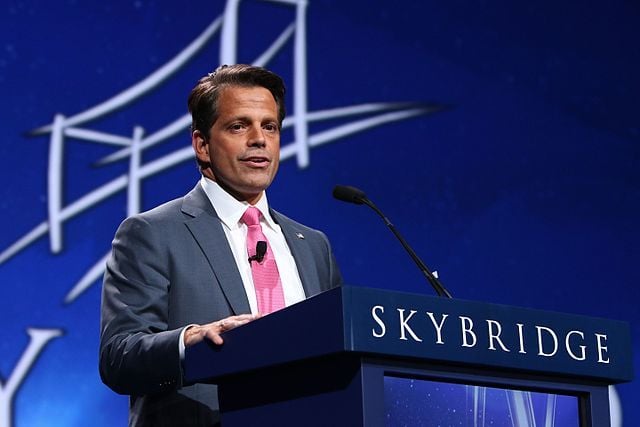
Anthony Scaramucci, founder of SkyBridge Capital, says he is “doubling down” on his view that Bitcoin will soon become a standard line item on corporate balance sheets worldwide. His latest comments follow newly surfaced financial data indicating that SpaceX has retained 8,285 BTC—valued at more than $600 million—despite absorbing $5 billion in losses, which are largely attributed to Elon Musk’s AI venture, xAI.
Scaramucci points to SpaceX’s decision not to liquidate its Bitcoin holdings under significant financial pressure as evidence that the cryptocurrency can function as a long-term treasury asset. He argues that the company’s stance provides a “proof of concept” for other firms to follow, adding that “everyone will soon have Bitcoin on their corporate balance sheet.”
The data also suggests SpaceX’s Bitcoin position has remained completely untouched since mid-2024. On-chain information cited in the report indicates SpaceX may have been accumulating Bitcoin before Tesla’s widely publicized purchase. The initial acquisition is described as dating back to December 31, and Musk publicly confirmed the holdings in 2021, alongside disclosures of his personal stakes in Bitcoin, Ethereum, and Dogecoin.
SpaceX reported revenue of $18.5 billion in 2025, reflecting continued business fundamentals. However, the company’s upcoming IPO is drawing particular attention from the crypto community. Once public, SpaceX will be required to disclose its Bitcoin position in regulatory filings at fair market value, a development analysts expect could further reinforce Bitcoin’s credibility as a corporate reserve strategy.
With institutional focus increasingly directed at SpaceX’s approach, the discussion around Bitcoin treasury adoption is shifting from speculation toward a more established expectation of mainstream corporate use, according to the report.
Premium gym chains are entering a “golden era” that is ending or already in decline, as rising operating costs collide with shifting consumer preferences toward more flexible, community-based ways to exercise. Long-term memberships are shrinking, margins are pressured by higher rents and facility expenses, and competition from smaller, more personalized…