•
•
•
•
•
•
•
•
•
•
•
•
•
•
•
•
•
•
•
•
•
•
•
•
•
•
•
•
•
•
•
•
•
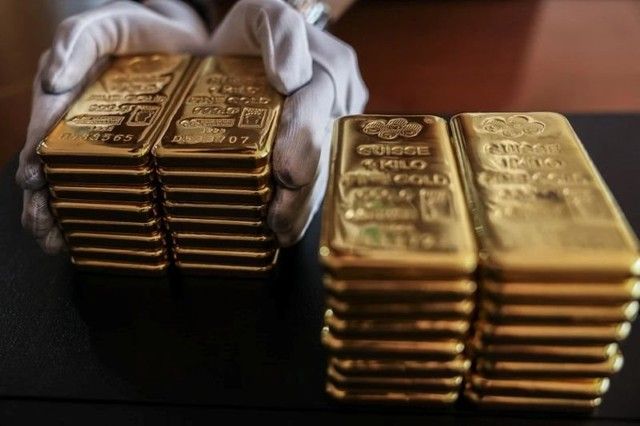
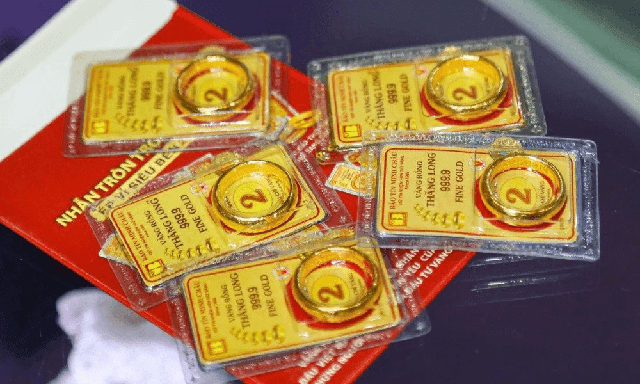
SPDR Gold Trust holdings continued to decline after the latest session, standing at about 1,044 tonnes. Muavangbac.vn reported that the world’s largest gold ETF posted a net sale of 2.3 tonnes of gold on April 27, following a week of net selling totaling more than 14 tonnes and extending a six-session streak. After the trade, SPDR Gold Trust’s holdings were around 1,044 tonnes.
The fund’s outflow trend shows no sign of easing as gold prices pull back. At the close of trading on Tuesday (April 27), gold prices on Kitco fell 0.6% to $4,682 per ounce, slipping below the $4,700 level. Brent crude rose by almost 3% in early week trading on the London market to $108 per barrel, creating a less favourable environment for gold. Over the past week, gold has declined by roughly 3%.
The Fed meeting is scheduled for Tuesday and Wednesday this week and will be the last meeting for Fed Chair Jerome Powell, whose term ends mid-next month. In addition to the Fed, the Bank of Canada (BoC), the Bank of England (BoE), the European Central Bank (ECB) and the Bank of Japan (BoJ) are also expected to meet this week.
In the latest precious metals report, Lorenzo Portelli, Head of Multi-Asset Strategy at Amundi Asset Management, said the current energy shock, driven by the ongoing conflict in Iran, is likely to have only a short-term impact on inflation.
“Looking ahead over the next 12 months, we remain optimistic about gold and see the potential for gold prices to rise to $5,500 per ounce,” Portelli said in a note.
Portelli noted that while energy prices surged due to Middle East turmoil, pushing headline inflation to the highest level in two years at 3.3%, core inflation remained elevated at 2.6% over the last 12 months. He added that although core inflation stayed above the Fed’s 2% target, it did not accelerate.
Portelli also said demand for gold is not driven solely by U.S. rates. He pointed out that with gold prices down about 15% from the January record high, much of the “bad news” has already been reflected in prices.
“Demand from central banks is likely to remain robust, particularly as regulators in emerging markets diversify reserves, reducing reliance on traditional currencies. We do not see this trend reversing in the near term. Gold remains a strategic asset for central banks seeking to lessen dollar exposure and strengthen portfolio resilience,” he said.
Bitcoin (BTC) investors who use steady dollar-cost averaging (DCA) may be underperforming versus strategies that adjust exposure to the market’s cycle, according to new research arguing that Bitcoin’s behavior differs from traditional long-duration assets.
In a report cited by Markus Thielen of 10x Research, Bitcoin’s market…