•
•
•
•
•
•
•
•
•
•
•
•
•
•
•
•
•
•
•
•
•
•
•
•
•
•
•
•
•
•
•
•
•


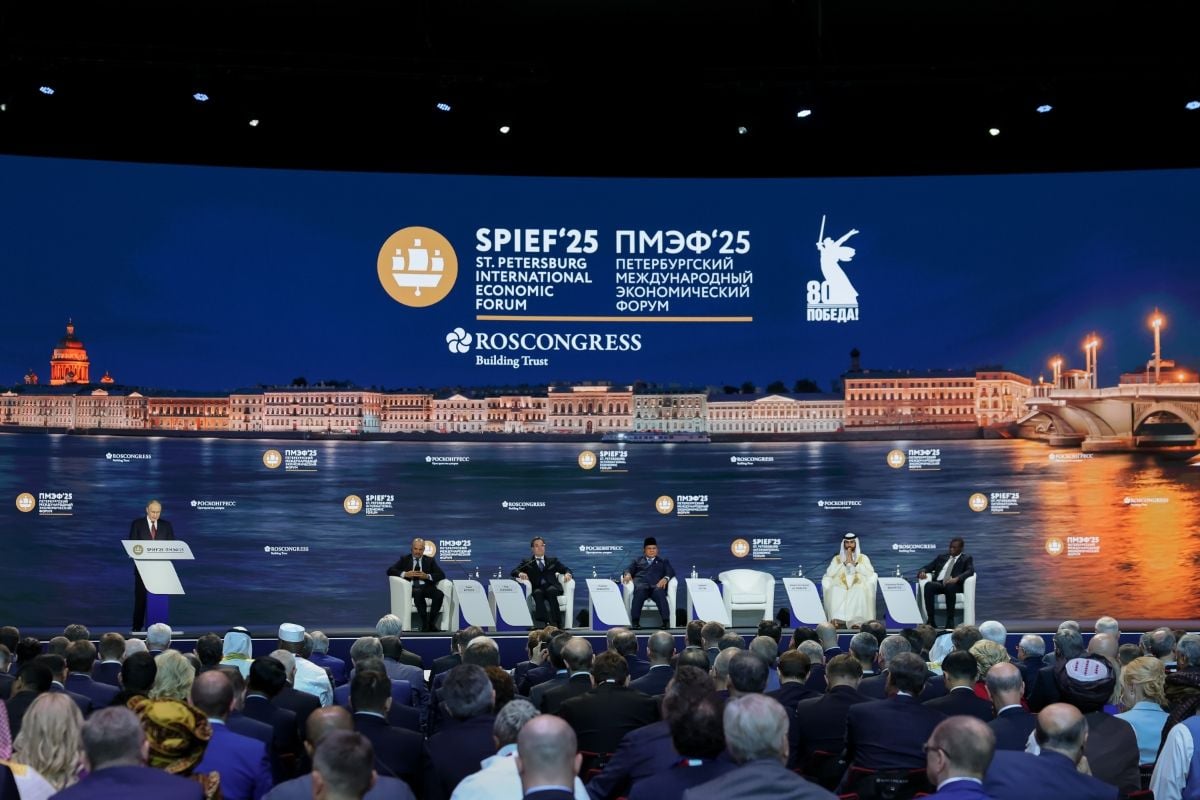
In the run-up to the St. Petersburg International Economic Forum (SPIEF) 2026, Alexander Stuglev, Chairman of the Roscongress Foundation’s Board of Directors and Chief Executive Officer, said economic cooperation between Russia and Vietnam continues to develop, highlighting Vietnam’s role in Russia’s foreign policy. Stuglev noted that international business platforms such as SPIEF help maintain and expand collaboration channels, particularly amid volatile global economic conditions.
The Roscongress Foundation, established by presidential decree of Vladimir Putin, organizes large-scale international events covering economics, trade, and investment, including SPIEF. In 2025, the forum attracted more than 24,000 delegates from 144 countries and territories, and more than 1,060 agreements were signed, totaling approximately 6.3 trillion rubles.
Vietnam is among the active participants at SPIEF. In 2025, the forum hosted the Russia–Vietnam Business Dialogue, aimed at promoting cooperation initiatives and joint projects across multiple sectors.
At the Russia–Vietnam Business Forum in Moscow, Deputy Prime Minister Dmitry Chernyshenko said bilateral trade rose by about 6% in 2025, with both exports and imports showing an upward trend. He added that growth was strongest in tourism, financial services, and industrial manufacturing.
Russia also sees additional cooperation potential in education, science and technology, innovation, digital technologies, finance, and logistics. Vietnamese companies were invited to participate in SPIEF 2026 and the Eastern Economic Forum.
Organizers said SPIEF 2026 will take place from June 3–6 under the theme “Substantive Dialogue: The Road to a Stable Future.” The program is expected to focus on international business dialogues, including EAEU–ASEAN cooperation, Russia–China, Russia–Thailand, and other multilateral mechanisms.
The Roscongress Foundation also said it will continue developing the Roscongress International platform to strengthen links between regulators and the business community, promote joint projects, and expand international economic relations.




Premium gym chains are entering a “golden era” that is ending or already in decline, as rising operating costs collide with shifting consumer preferences toward more flexible, community-based ways to exercise. Long-term memberships are shrinking, margins are pressured by higher rents and facility expenses, and competition from smaller, more personalized…