•
•
•
•
•
•
•
•
•
•
•
•
•
•
•
•
•
•
•
•
•
•
•
•
•
•
•
•
•
•
•
•
•


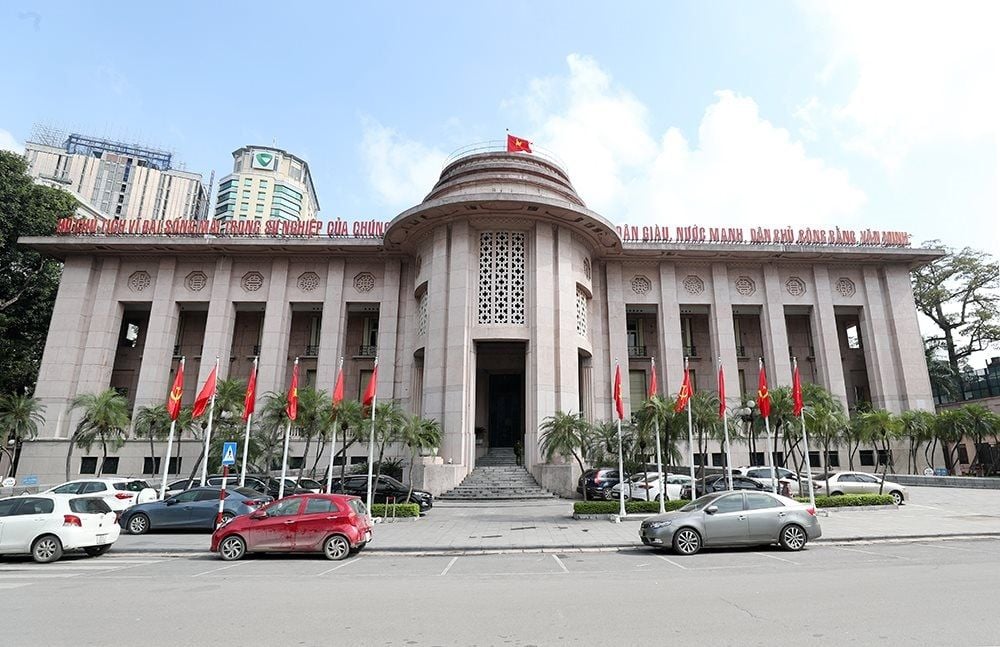
During the week of March 30 to April 3, the State Bank of Vietnam (SBV) injected a substantial amount of Vietnamese dong into the banking system as interbank rates rose at the start of the week.
Specifically, the SBV offered a total of 258,000 billion dong through repo (collateralized lending) across maturities of 7 days, 14 days, 35 days, and 56 days, with the rate set at 4.5% per year.
The total bid volume reached 255,781 billion dong, including:
With bids close to 256 trillion dong, the operation represented the strongest weekly liquidity support for the Vietnamese dong from the SBV in months. The previous instance of weekly OMO bids exceeding 200 trillion dong was in early February 2026, when the SBV offered 323,000 billion dong and 229,790 billion dong was bid.
During the week, 145,628 billion dong matured on the repo channel, and the SBV did not auction treasury bills. As a result, the SBV net pumped 110,154 billion dong into the market.
This brought total outstanding on the repo channel to 354,825 billion dong.
Following the liquidity support, interbank VND rates cooled toward the end of the week after spiking to 12% on Monday (Mar 30).
By April 3, compared with the previous week:
With repo outstanding at 354.825 trillion dong, the SBV’s room to support liquidity via OMO has narrowed, as eligible securities for the operations are finite. If liquidity remains tight, the SBV is likely to continue using foreign exchange swap operations (SWAP) with a 21-day tenor.
In early February, the SBV also injected liquidity via OMO when the overnight rate spiked to 17% per year. In addition, the SBV conducted a 21-day FX swap with credit institutions to support VND liquidity for the banking system.
According to Vietcombank Securities (VCBS), liquidity pressure and the sector’s capital balance have been tight since the latter half of 2025, shrinking buffers at some banks—particularly small- and medium-sized joint-stock banks. Analysts said the ability to absorb short-term liquidity shocks has become limited, leading banks to rely more on interbank funding at higher costs.
VCBS also noted that, amid rising geopolitical tensions, global capital has tended to move toward safe-haven assets such as gold, the U.S. dollar, and U.S. Treasuries, supporting a near-term uptick in the DXY index. The firm added that exchange-rate pressure may persist, keeping interbank funding rates elevated.





Premium gym chains are entering a “golden era” that is ending or already in decline, as rising operating costs collide with shifting consumer preferences toward more flexible, community-based ways to exercise. Long-term memberships are shrinking, margins are pressured by higher rents and facility expenses, and competition from smaller, more personalized…




