•
•
•
•
•
•
•
•
•
•
•
•
•
•
•
•
•
•
•
•
•
•
•
•
•
•
•
•
•
•
•
•
•


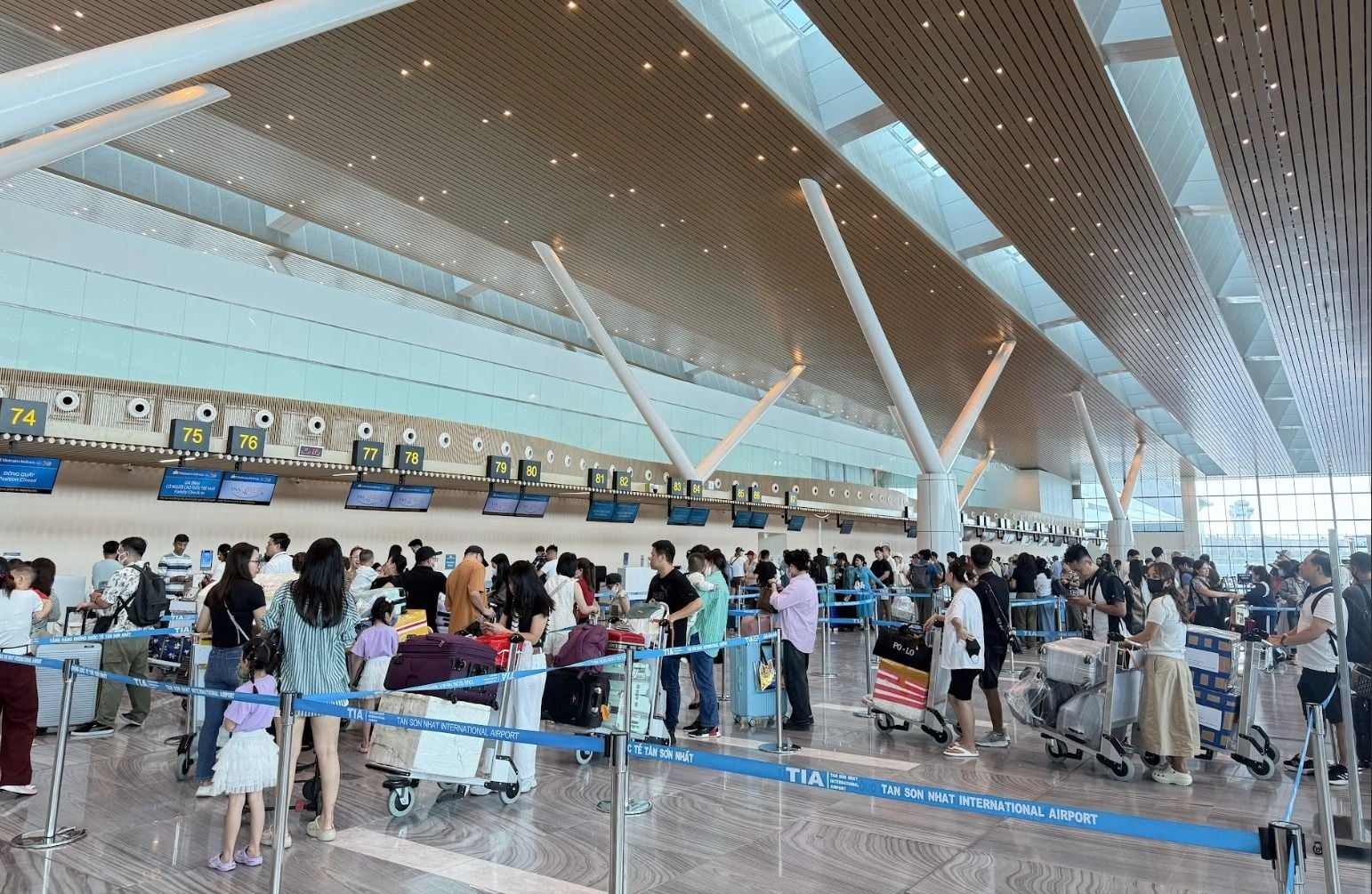
With the Hung Kings' Day holiday extending the 30/4 and 1/5 breaks, Tan Son Nhat International Airport is seeing a surge in travelers. The airport’s management has issued guidance and warnings for passengers during this period.
According to the latest notice from Tan Son Nhat airport management, the new T3 terminal is handling record passenger numbers. On 25/4 alone, T3 served more than 42,000 passengers, significantly higher than the roughly 30,000 passengers handled by the traditional T1 terminal.
The traffic gap has prompted urgent reminders to travelers to double-check ticket information to ensure they arrive at the correct domestic terminal. Going to the wrong terminal could result in additional walking and increase the risk of missing flights.
As peak days approach, including 29/4 and 3/5, the airport is expected to handle up to 770 flights daily, serving about 130,000 passengers.
From 29/4 to 4/5, the entire airport system will implement heightened security checks at Level 1, following a directive from the Immigration Department. This will mean more stringent security screening, luggage checks, and identity document verification, which may lead to longer wait times compared with ordinary days.
To help passengers avoid delays caused by queues, the airport advises travelers to proactively use identity verification applications and biometric recognition technology during check-in.
Flight information displays at both terminals T1 and T3 have also been adjusted to help passengers who enter the wrong concourse quickly orient themselves and move to the correct direction in time.
Meanwhile, airlines are deploying maximum staff at check-in counters and boarding gates. They are prepared to promptly handle incidents such as delays or cancellations, aiming to maintain a smooth flow of passengers during the busiest and most congested days.

Premium gym chains are entering a “golden era” that is ending or already in decline, as rising operating costs collide with shifting consumer preferences toward more flexible, community-based ways to exercise. Long-term memberships are shrinking, margins are pressured by higher rents and facility expenses, and competition from smaller, more personalized…