•
•
•
•
•
•
•
•
•
•
•
•
•
•
•
•
•
•
•
•
•
•
•
•
•
•
•
•
•
•
•
•
•


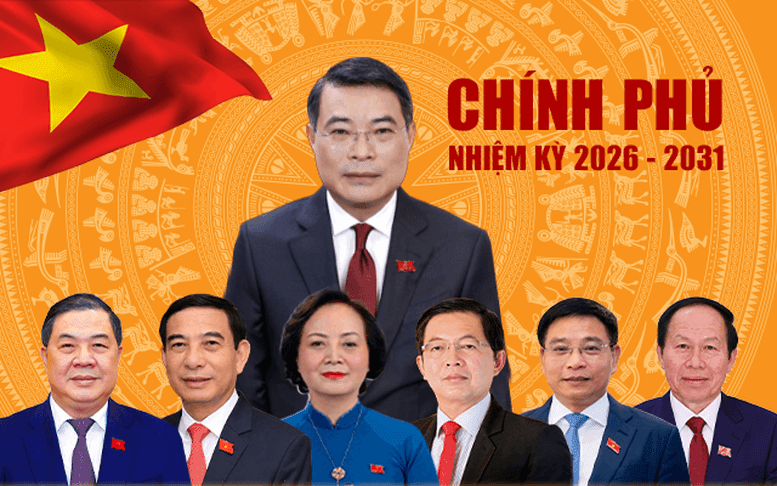
The Prime Minister and Deputy Prime Ministers are assigned duties under Decision No. 666/QD-TTg dated April 9, 2026. The decision sets out responsibilities for the Prime Minister and Deputy Prime Ministers by sector, including the ministries under their charge and relevant steering committees and councils.
Under the decision, Prime Minister Le Minh Hung, Secretary of the Government, is the leader who directs and manages comprehensively all activities within the Government’s functions, duties, and powers.
The Prime Minister directly oversees the Ministry of Public Security and the Ministry of Foreign Affairs.
The Prime Minister also directly directs major areas including national defense strategy, national security and foreign policy; strategy and plans for socio-economic development; and strategy and policy on national finance, credit, monetary policy, and the orientation of state budget use.
In addition, the Prime Minister is responsible for personnel management, organizational structure, administrative reform, administrative boundaries, and general matters of emulation and commendation. The role also includes coordination between the Government and the Party, the National Assembly, the President, the Central Committee of the Vietnam Fatherland Front, and central agencies of political-social organizations.
The decision further assigns the Prime Minister oversight of science, technology, innovation, and digital transformation.
In concurrent duties, the Prime Minister serves as chair or head of several bodies, including the State Committee on the East Sea — Hoang Island; the National Committee on Digital Transformation; the Central Emulation and Commendation Council; the State Steering Committee for key national programs and projects; the National Steering Committee on cybersecurity; and the Government’s Steering Committee on administrative reform, among other councils, commissions, and steering bodies.
Deputy Prime Minister Pham Gia Tuc, Permanent Secretary of the Government, serves as Acting Deputy Prime Minister.
The decision assigns him oversight and guidance across multiple areas, including the ministries responsible for industry and trade (including import/export), fuel reserves and supply, logistics, energy efficiency, transport and road safety, and construction. He is also tasked with resolving project obstacles nationwide, coordinating with the Supreme People’s Court and Supreme People’s Procuracy, approving investment policies, and representing the Prime Minister in certain intergovernmental and bilateral committees.
In addition, Deputy Prime Minister Pham Gia Tuc serves as Chairman of the National Planning Council; Chairman of the National Traffic Safety Council; Chairman of the National Civil Aviation Security Council; Vietnamese head of the Vietnam–Russia Inter-Governmental Commission; Head of the Vietnam–Laos Inter-Governmental Committee; and Head of the Central Steering Committee on housing policy and the real estate market.
He will represent the Prime Minister in performing Government work in his absence and as authorized by the Prime Minister.
Deputy Prime Minister Phan Van Giang, a member of the Government’s Party Committee, is assigned to concurrently hold the post of Minister of National Defense.
He oversees and directs the Ministry of National Defense and certain areas of the Ministry of Foreign Affairs as assigned by the Prime Minister. He directly follows and directs national defense and security; border work and matters related to the East Sea — Hoang Island; foreign aid and non-governmental organizations; relations with international and regional organizations; overseas Vietnamese affairs and foreign nationals in Vietnam; and human rights.
The decision also assigns him investment approval, direction, inspection, and removal of obstacles for projects under his jurisdiction, and oversight of science, technology, innovation, and digital transformation within the sectors he manages.
In concurrent capacity, he is Chairman of the National Defense–Security Education Council; Chairman of the Vietnam–China bilateral cooperation steering body; and Head of the Human Rights Steering Committee, among other national councils and committees.
Deputy Prime Minister Pham Thi Thanh Tra, a member of the Party Central Committee, is assigned to supervise the Ministries of Home Affairs, Health, and Culture, Sports and Tourism.
She directly follows and directs emulation and commendation, administrative reform; labor, employment, and policies for persons with meritorious services; wage policy and social insurance; health, population, families, and children; and social affairs and drug rehabilitation management.
She also oversees culture, tourism, and sports; communications, press, and publications; and implementation of national target programs including anti-narcotics through 2030 and cultural development 2025–2035, as well as healthcare and population and development through 2026–2035.
The decision assigns her leadership roles including President of the National Committee on AIDS prevention and drug abuse, drug use, and prostitution prevention; Head of the National Population and Development Steering Committee; Head of the Central Steering Committee on food safety; Head of the National Tourism Steering Committee; and Head of the National Steering Committee on wage policy reform, social insurance, and preferential treatment for meritorious people.
Deputy Prime Minister Hoang Xuan Dung, a member of the Government’s Party Committee, monitors and directs the Ministry of Agriculture and Rural Development, the Ministry of Science and Technology, and ethnic minority and religious affairs.
He directly oversees ethnic groups and religion; national target programs on rural development, poverty reduction, and socio-economic development in ethnic minority and mountainous regions (2026–2030).
Deputy Prime Minister Dung also oversees science and technology, innovation, and the domestic and international development of the innovation ecosystem; digital transformation; semiconductor and artificial intelligence; resources and environment; climate change; agriculture and rural development; and flood control and disaster response.
He serves as Chair of the National Council on Water Resources; Chair of the Mekong River Commission Vietnam Task Force; Head of the Central Steering Committee on disaster prevention; Head of the National Steering Committee for green growth; and chairs other related steering bodies.
Deputy Prime Minister Nguyen Van Thang, a member of the Government’s Party Committee, oversees the Ministry of Finance, the State Bank of Vietnam, the Vietnam Bank for Social Policies, the Vietnam Development Bank, and the Deposit Insurance of Vietnam.
He is assigned to manage planning and investment; macroeconomic forecasting and management; finances and prices; monetary policy and banking; capital markets and securities; state reserves; and government debt and government bonds.
The decision also assigns him reform of state-owned enterprises; development of enterprises, the cooperative and collective economy; public asset management policies; official development assistance (ODA) and favorable loan mobilization; FDI and outbound investment; and matters related to the international financial center in Vietnam.
He serves as President of the National Financial and Monetary Policy Advisory Council; President of the National Steering Committee on ASEAN One-Stop and One-Stop mechanisms; President of the National Council for Sustainable Development; and Head of the Central Steering Committee on modernization and development of enterprises, along with other specialized boards and steering committees.
Deputy Prime Minister Le Tien Chau, a member of the Government’s Party Committee, is tasked with supervising the Ministry of Justice, the Ministry of Education and Training, and the Government Inspectorate.
He is responsible for institutional development and building a socialist rule-of-law state; handling international disputes and complaints; judicial reform; and education, training, and vocational education.
The decision also assigns him oversight of anti-corruption, anti-bureaucracy, and anti-waste; inspection; handling complaints and denunciations; and implementing the modernization and upgrading of education quality through 2026–2035.
He serves as President of the National Council on Education and Human Resource Development and holds key leadership roles in several councils, committees, and steering bodies related to his area of responsibility.
Decision No. 666/QD-TTg takes effect from April 9, 2026. It replaces Decision No. 401/QD-TTg dated February 25, 2025, on the assignment of duties for the Prime Minister and Deputy Prime Ministers, along with other prior regulations.
Premium gym chains are entering a “golden era” that is ending or already in decline, as rising operating costs collide with shifting consumer preferences toward more flexible, community-based ways to exercise. Long-term memberships are shrinking, margins are pressured by higher rents and facility expenses, and competition from smaller, more personalized…