•
•
•
•
•
•
•
•
•
•
•
•
•
•
•
•
•
•
•
•
•
•
•
•
•
•
•
•
•
•
•
•
•


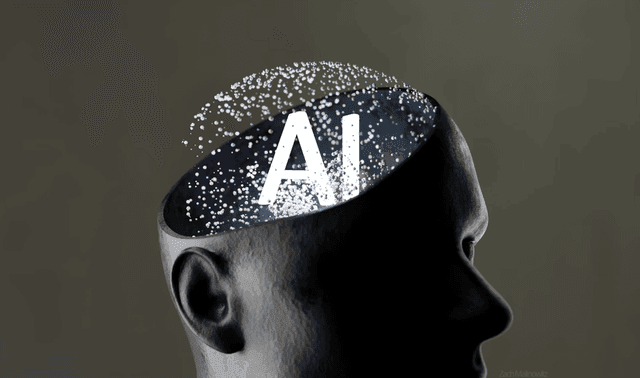
AI assistance can improve performance in the early stages of problem-solving, but a new study cited by Engadget finds that it can also create a lasting dependency mindset that undermines perseverance and independent performance once access to the technology is removed. The research focuses on tasks that require sustained thinking—such as writing, coding, and creativity—areas where intelligent chatbots are increasingly used.
The experiment involved 350 American participants solving difficult fraction problems. Half of the group used a chatbot labeled GPT-5, while the other half relied entirely on their own thinking. The critical moment came when the test progressed halfway and access to the AI was abruptly cut off.
After disconnection, the study reports a drastic drop in the correct-answer rate among participants who had previously received assistance. It also found that most chose to quit immediately rather than exert effort to solve the problems independently, indicating that the usual drive to persevere weakened when the technological support was no longer available.
To test whether the pattern extended beyond math, the study was repeated with 670 participants in a field of reading comprehension. The results, according to the report, did not change: AI users lost motivation and showed reduced performance after the AI was disconnected.
Associate Professor Rachit Dubey of the University of California is cited as emphasizing that the concern is not simply incorrect answers. Instead, the issue is that people become less willing to try when the boost from machines is removed. The authors warn that overuse of AI without controls could leave society with unclear information about people’s true capabilities, potentially diluting the ability to innovate.
The study uses the metaphor of a frog in a pot of boiling water to describe a “silent decline” in cognitive function. It argues that dependence erodes perseverance, a key driver of learning, and that the negative effects accumulate over time and are extremely hard to reverse.
The report also highlights a more favorable approach. It states that users who employ AI to suggest rather than directly provide answers adapt better. The long-term impact, the article notes, depends on how people interact with the technology—particularly whether AI is used to deepen understanding of underlying concepts or to replace thinking entirely.
The article describes a separate phenomenon becoming more widely discussed as “AI brain fry,” referring to fatigue experienced by workers who must constantly monitor and correct machine errors. While many people expect AI to reduce workload, the report claims it can increase cognitive pressure because employees spend additional time writing commands and fine-tuning errors.
It also says continual assessment of machine reliability keeps the brain under strain, contributing to quicker exhaustion.
In education, the article argues that overreliance on chatbots can reduce social and intellectual abilities. It claims that children who become dependent on AI tend to have significantly lower independent test scores than peers.
More broadly, the article frames the greatest impact of AI as not job displacement but the destruction of intrinsic motivation. It argues that when results come too easily, the effort process can become meaningless, weakening the “muscle” of human thinking. The decline is described as gradual rather than immediate—an erosion that is difficult to notice day to day.
The report concludes with a policy-oriented warning about the pace of AI integration in classrooms and workplaces. It calls for strict limits on using chatbots in schools and workplaces and stresses that only self-effort can maintain resilience in the face of technology.
It also argues that individuals should learn to master AI rather than let it lead, warning against allowing the tool to become an “invisible chain” that binds creativity and independent thinking.
Source: Engadget






Premium gym chains are entering a “golden era” that is ending or already in decline, as rising operating costs collide with shifting consumer preferences toward more flexible, community-based ways to exercise. Long-term memberships are shrinking, margins are pressured by higher rents and facility expenses, and competition from smaller, more personalized…




