•
•
•
•
•
•
•
•
•
•
•
•
•
•
•
•
•
•
•
•
•
•
•
•
•
•
•
•
•
•
•
•
•


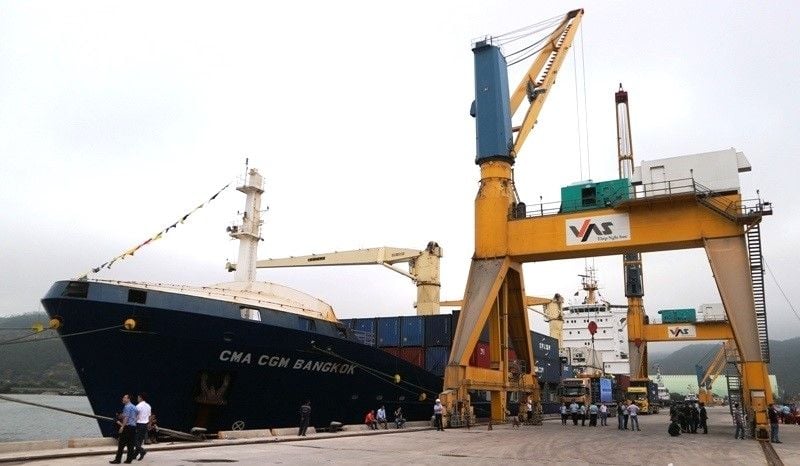
With a determination to make infrastructure a growth driver, Thanh Hóa has been concentrating resources on maritime infrastructure, from deep-water ports and coastal tourism to inter-regional transportation connectivity. Large-scale projects are reshaping the local landscape and opening new growth space, bringing the province closer to its aspiration to become a powerful growth pole in the northern region.
In Thanh Hóa’s maritime infrastructure picture, the Nghi Sơn port system plays a central role. From a few small berths, the province now owns 28 hard berths with a total length of more than 5,343 meters, including 15 general cargo berths totaling 3,341 meters. This is nearly six times higher than in 2010, indicating strong expansion.
Nghi Sơn Port can accommodate crude oil tankers of 320,000 DWT at the SPM buoy and bulk carriers up to 70,000 DWT at the berth. The capacity supports Thanh Hóa’s ability to attract international shipping lines and develop regular container routes.
Port throughput has consistently exceeded forecasts. In 2024, total throughput reached 56.27 million tons. Dry bulk accounted for 64.5%, liquids for 35%, and containers for 21,061 TEU. Nghi Sơn contributed 50% of the total throughput of port group No. 2, on par with the combined throughput through Nghệ An and Hà Tĩnh.
Average annual growth in 2020–2024 stood at 12.7% per year. In 2025, despite market fluctuations, the Nghi Sơn port system recorded throughput of more than 62 million tons, up 11% year on year.
State budget revenues from imports and exports across the province reached over 20.6 trillion đồng, with 98% coming from activities at Nghi Sơn Port. With total throughput ranking fourth nationwide and exceeding the forecast in the Northern Central port cluster plan, Nghi Sơn Port has affirmed its role as the province’s logistics gateway and a growth driver for Thanh Hóa’s budget revenue and economic growth.
In early 2026, handling and ship movements entering and leaving the port remained busy, indicating that the supply chain is operating smoothly and creating momentum for higher growth in 2026.
Despite positive results, Thanh Hóa’s port system still faces constraints. Some projects are delayed, navigational flow standards do not fully meet demand, and stable dredging disposal sites are lacking. Bac Nghi Sơn does not yet have a public traffic route, and the Le Mon dredging socialization project faces obstacles. Logistics linked to the port has not developed strongly, with only a pilot berthing area at Nam Nghi Sơn, limiting access to Bac Nghi Sơn. Large-scale logistics centers and inland ports have not yet formed, which restricts multi-modal cargo transshipment.
Many logistics firms, both domestic and foreign, have opened offices in Thanh Hóa. Major shipping lines such as CMA-CGM and SITC regularly handle containers through Nghi Sơn Port.
A CMA-CGM Vietnam representative said the company wants to accompany Thanh Hóa long-term, diversifying exports and imports and developing the logistics supply chain in the province. Esra Bora, General Director of CMA-CGM Vietnam, stated: “We commit to accompanying Thanh Hoa to ensure regular and efficient container traffic via Nghi Son Port, while expanding the catalog of exports and imports to balance outbound and inbound cargo and better meet regional logistics needs.”
According to Esra Bora, export goods mainly include plastic resin and stone. He also noted that Thanh Hóa has potential in sectors such as textiles and footwear, seafood, and steel. He said that if provincial departments and local businesses cooperate closely to diversify goods and develop logistics service chains, Nghi Sơn Port can become a strategic intermodal hub for the central region.
To bring Nghi Sơn Port to Class I standard and become a leading regional logistics center, the Nghi Sơn Economic Zone Management Board and Thanh Hóa’s industrial zones said the province is focusing on advancing technical infrastructure to meet Class I standards and reposition as a regional logistics hub.
Investors are urged to accelerate container berthing and upgrade handling equipment. The province is also directing dredging to prepare for 100,000 DWT ships, including port channel dredging, to reduce logistics costs.
At the same time, Thanh Hóa assigns departments to study incentives for warehousing, logistics centers, and connecting infrastructure, affirming the resolve to build a modern, sustainable logistics corridor for economic development.
Thanh Hóa’s long coastline and wide sea area have long been seen as potential for marine economic development. From fisheries and coastal tourism to coastal industry and port infrastructure, these pillars are gradually taking shape, creating a multi-dimensional growth picture while also posing challenges on sustainability and competitiveness.
Against this backdrop, the ambition to become a center of marine economy is described as a long-term journey requiring coordinated steps. A series of five articles is intended to clarify Thanh Hóa’s advantages, movements, bottlenecks and directions on the path to achieving this objective.



Premium gym chains are entering a “golden era” that is ending or already in decline, as rising operating costs collide with shifting consumer preferences toward more flexible, community-based ways to exercise. Long-term memberships are shrinking, margins are pressured by higher rents and facility expenses, and competition from smaller, more personalized…




