•
•
•
•
•
•
•
•
•
•
•
•
•
•
•
•
•
•
•
•
•
•
•
•
•
•
•
•
•
•
•
•
•
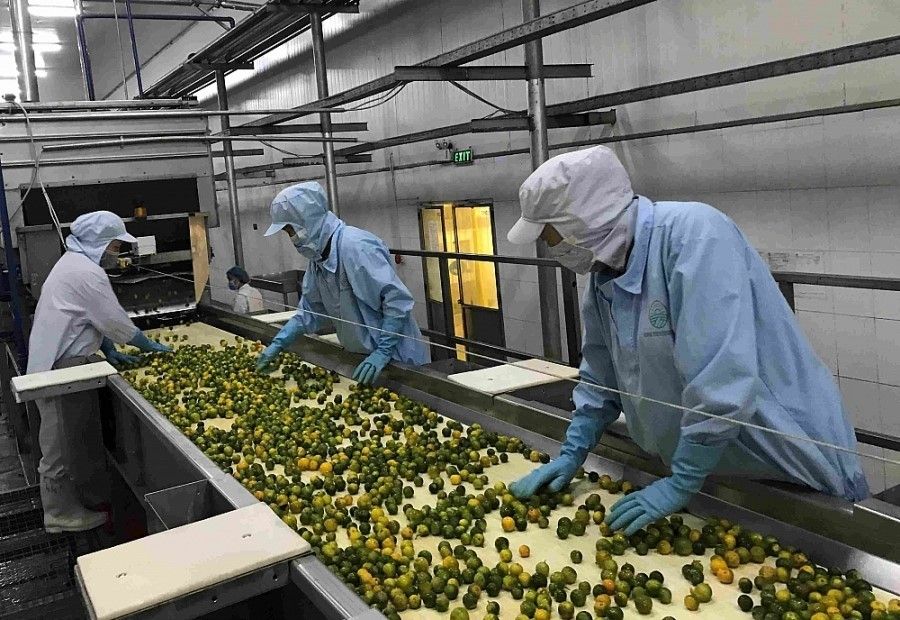
Vietnam currently has a large supply of agricultural by-products, about 156.8 million tons per year, but most are not exploited effectively. In modern production thinking, by-products are no longer considered waste but become input materials for the circular economy and green technology. The biggest change in the health supplement industry today is the shift from traditional processing to deep processing to maximize bioactive compounds from agricultural produce and by-products. The global health supplement market, and Vietnam in particular, is entering a new growth phase as demand for proactive health care, disease prevention, and personalized nutrition increases. Studies show that this product group is no longer centered on vitamins or traditional dietary supplements, but is expanding into functional beverages, fermented foods, bio-based ingredients, “clean-label” products, and multi-functional foods. GOLD MINE OF AGRICULTURAL BY-PRODUCTS The seminar “Technology, improvements and trends in ingredients for health supplements” was part of the Fi Vietnam 2026 International Exhibition for ingredients, flavors, additives for processed foods and beverages. At the seminar, VIAEP representatives noted that the notable trend today is developing health supplements with natural ingredients, transparent formulations, and reduced synthetic additives; at the same time, combining biotechnology and health data to create products tailored to different user groups. One of the biggest changes today is the shift from traditional processing to deep processing to maximize bioactive compounds from farm produce and agricultural by-products. According to Prof. Pham Anh Tuan of VIAEP, Vietnam currently has a large supply of agricultural by-products, about 156.8 million tons per year, but most have not been exploited effectively. Meanwhile, many by-products contain high-value bioactive compounds that can be used in health foods, pharmaceuticals, and cosmetics. According to Mr. Tuan, grape skins can yield polyphenols and resveratrol for antioxidant products. Marine by-products contain omega-3s that support heart and brain health; fish skin and bones can form collagen peptides. Coffee husks contain chlorogenic acid and fiber. Shrimp shells contain chitin, chitosan, and astaxanthin. Dragon fruit peel or gac provide natural pigments and carotenoids. This trend is driving a fundamental shift in production thinking, as by-products are no longer seen as waste but as input materials for the circular economy and green technology. Statistics from the Vietnam Food Science and Technology Association (VAFoST) show that in 2025 Vietnam exported agricultural products worth 71 billion USD, ranking among the top 15 global agricultural exporters. The Mekong Delta region dominates with 90% of rice export volume, securing food security and global standing. The region also contributes 65–70% of seafood export value, especially pangasius and shrimp, and supplies over 60% of the value of key fruit exports. Professor Ngo Xuan Binh, Vice President of VAFoST, poses the question: How can these abundant raw materials enter global value chains through deep processing and advanced technology? Ms. Pham Khanh Phong Lan, Director of the Ho Chi Minh City Department of Food Safety, speaking at Fi Vietnam 2026, emphasizes that in today’s consumer trends, food safety is no longer merely a mandatory requirement but a factor in building trust and sustainable value for enterprises. The city pledges to accompany businesses in ensuring food safety and quality, continue to improve management, facilitate industry growth, and protect public health. Lan stresses that the city’s motto is to develop a clean-label food market alongside anti-food-fraud efforts. The health supplement industry still faces challenges such as high costs of advanced technologies, reliance on imported equipment, origin-tracing requirements, ESG standards, and rigorous demonstration of bioactivity. However, city leaders also note that integrating new global food technologies into Vietnam requires adaptation to local climate and working practices. “There is no such thing as ‘delicious - nutritious - cheap’. Products that comply with standards will not be cheap,” Lan asserts. In relation to cases where authorities uncovered a network using additives to transform pork into fake beef, Lan states: “No reputable company would produce an additive to turn pork into fake beef.” Beyond growth opportunities, the health supplement sector faces many challenges such as the cost of technology investment, dependence on imported equipment, origin-tracing requirements, ESG standards, and stricter verification of biological activity. In this context, deep processing, exploiting agricultural by-products, and developing natural ingredients are key directions to raise agricultural product value and form a new generation of health supplements aligned with clean-labels, the circular economy, and sustainable consumption. Public health initiatives at the community level are increasingly leveraging traditional medicine to reach local populations. Traditional medicine plays a role in the prevention and treatment of stroke. Sâm Ngọc Linh: The essence of Vietnam’s medicinal herbs extending to the international stage. Keywords: deep processing technology; health supplements; Fi Vietnam 2026; VAFoST; agricultural by-products; clean-label; circular economy; sustainable consumption.
Bitcoin (BTC) investors who use steady dollar-cost averaging (DCA) may be underperforming versus strategies that adjust exposure to the market’s cycle, according to new research arguing that Bitcoin’s behavior differs from traditional long-duration assets.
In a report cited by Markus Thielen of 10x Research, Bitcoin’s market…