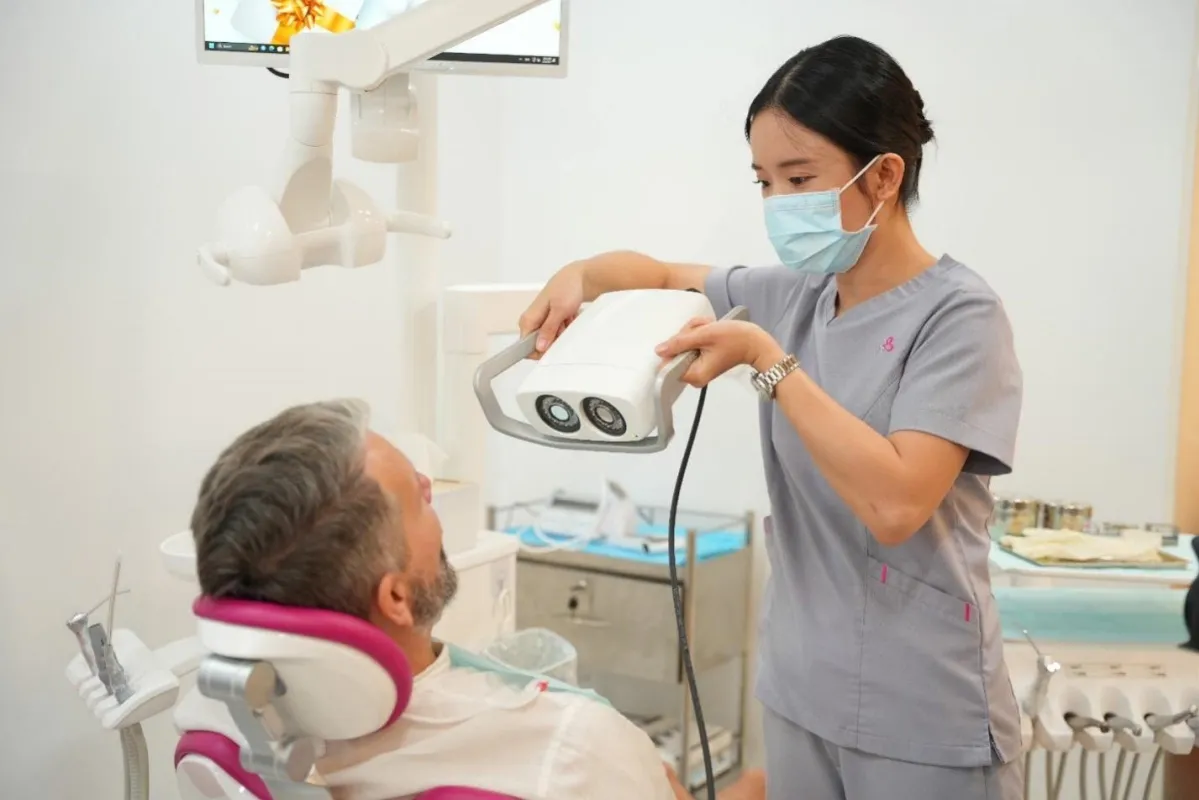
Vietnam is becoming an attractive option for international patients seeking high-quality dental care. In this context, dentistry is regarded as one of the most promising sectors. Unlike some specialties that require long-term follow-up, many dental services can be completed in a short time, with little impact on personal schedules and allowing patients to actively plan their treatment.
Notably, decisions by international patients choosing dental services are not based solely on cost but also on the ability to predict outcomes and the convenience of the journey. Thus, Vietnam is facing opportunities as it brings together competitive costs, a favorable geographic position within the Asia-Pacific region, and a developing tourism industry.
At the Asia-Pacific dental conference in Hanoi, Dr. Ha Anh Duc, Director of the Department of Medical Examination and Treatment, noted that compared with many developed countries, costs for implants, restorations, and orthodontics in Vietnam are considerably lower, while the level of professional expertise is increasingly advanced. This helps Vietnam become an attractive choice for international patients seeking high-quality dental care at reasonable prices.
Vietnam also has a distinct advantage in combining medical treatment with tourism experiences. An international traveler can undergo implants, aesthetic restorations, or orthodontics during a period of leisure in Vietnam.
After a treatment session, they can enjoy the beaches in Da Nang, stroll through the ancient town of Hoi An, or relax in Phu Quoc. The combination of high-quality medical care and a rich tourism experience is creating a unique appeal for Vietnam’s dental tourism.
According to the Ho Chi Minh City Department of Tourism, Vietnam welcomes about 100,000 patients annually for dental examinations and treatment, bringing in roughly 3.5 trillion VND in revenue. This revenue mainly comes from overseas Vietnamese returning home for dental care, alongside an increasing number of international visitors from Australia, the United States, the United Kingdom, France, Cambodia, and Laos.
Ho Chi Minh City currently has around 30 facilities dedicated to dental tourism within a network of over 1,490 dental clinics in the city. The city is implementing a medical tourism development plan, building an international information portal, a help desk, and public assessment of clinic quality to boost tourists’ confidence.
Vietnam also has a strong advantage in linking medical treatment with tourism experiences.
Earlier, at the roundtable on “Biomaterials-based restorations—an inevitable trend in modern dentistry,” leading experts discussed the economic potential of Vietnam’s dentistry sector. Prof. Dr. Luong Ngoc Khuê, Vice President of the Vietnamese Association of Dentistry, noted that the global dental-tourism market is expanding rapidly. The global market is projected to reach about $43.9 billion by 2030, with a compound annual growth rate of around 22%, according to data compiled from Grand View Research and Credence Research.
In this context, Asia-Pacific dominates the market, accounting for 45% or more of global revenue. Countries such as Thailand, India, China, and Malaysia stand out for low costs, high quality, and strong tourism development. The dental market in Thailand is expected to grow from about $777 million in 2023 to $3.24 billion by 2030. China is projected to grow from $763 million (2023) to $3.24 billion (2030), and so on.
However, with an aging population, demand for restorations like implants is rising. Yet treatment costs and waiting times in developed countries drive consumers to seek cheaper options abroad. Coupled with social media effects and dental-tourism travel packages, this fosters the growth of the “smile-export industry.”
According to Prof. Khuê, to advance dental tourism in Vietnam, close coordination among the health, tourism, diplomacy, and media sectors is needed, along with a coherent national branding strategy. The core factor shaping the future transformation of Vietnam’s restorative dentistry is standardizing procedures to international standards—from production, case monitoring, criterion updates, accumulation of scientific evidence, to improvements for affordability. This requires tight collaboration among manufacturers, doctors, and the market, and a strategic
business direction oriented toward the community before broadening and sustaining expansion over the long term, said Prof. Dr. Luong Ngoc Khuê.
According to Dr. Pham Thanh Ha, Deputy Director in charge of professional affairs at Hanoi National Odonto-Maxillofacial Hospital, the quality of service varies greatly among facilities. Some clinics have reached international standards, but most units still operate manually, lacking a comprehensive quality-control system across all stages—from examination and diagnosis to restoration and post-treatment care.
Standardization is a prerequisite to ensure consistency, safety, and effectiveness in all dental procedures from diagnosis to restoration and post-treatment care.
According to the World Health Organization, about 3.5 billion people worldwide live with dental and oral diseases, making this the most prevalent non-communicable disease group today. In Vietnam, more than 90% of people have experienced dental and oral health problems to varying degrees.
Vietnam aims to attract 1–2 million medical tourists from now through 2030.
Vietnam focuses medical tourism development in five key localities.
Vietnam is seizing opportunities as medical tourism surges in Asia.
Keywords:
[cấy ghép implant](https://vneconomy.vn/tag/cay-ghep-implant) [du lịch](https://vneconomy.vn/tag/du-lich) [du lịch nha khoa Việt Nam](https://vneconomy.vn/tag/du-lich-nha-khoa-viet-nam) [du lịch y tế](https://vneconomy.vn/tag/du-lich-y-te) [Vneconomy](https://vneconomy.vn/tag/vneconomy)