•
•
•
•
•
•
•
•
•
•
•
•
•
•
•
•
•
•
•
•
•
•
•
•
•
•
•
•
•
•
•
•
•
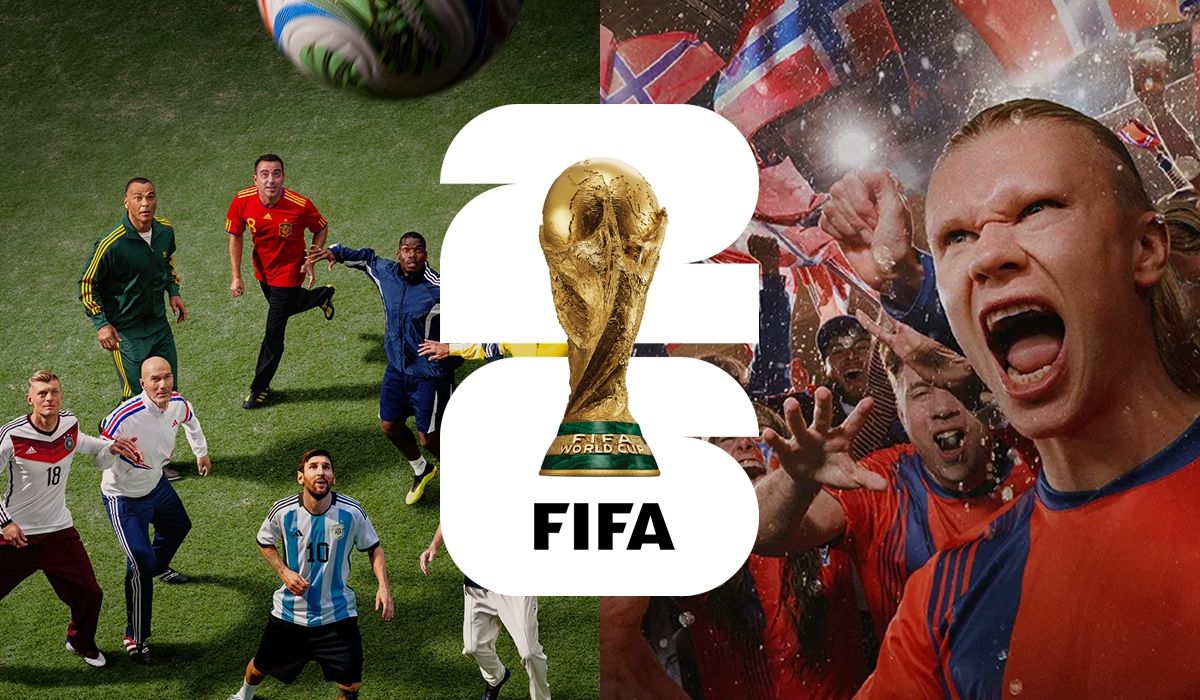
World Cup 2026 is approaching quickly. For FIFA, the challenge is to balance revenue growth with authenticity. For brands, it is how to stand out in a fiercely competitive market. The World Cup will create numerous commercial moments with 104 matches over 39 days. According to FIFA, the World Cup 2026 is expected to generate more than $80 billion in global economic revenue, driven by 6.5 million arrivals from the United States, Canada and Mexico. The tournament of 104 matches is also expected to contribute $40.9 billion to global GDP and support more than 824,000 jobs. Total revenue for the 2023-2026 cycle is forecast to reach $11 billion. During the 39 days, about 6 billion people, equal to 73 percent of the world’s population, will follow the event in some way. For global brands, this is an unprecedented phenomenon that cannot be recreated with any media budget. That is not all; World Cup 2026 is not only bigger in scale. It fundamentally changes the commercial equation of global sport thanks to a factor FIFA has calculated very carefully: time zones. For the first time in World Cup history, the three largest advertising markets—North America, Europe and Latin America—will watch matches in prime-time windows as well. When a match is at 6 pm in New York, viewers in London watch at 11 pm — still in the prime window, and viewers in São Paulo watch at 7 pm. This is the first time this occurs. According to Marketing Dive, brands activating around sports moments enjoy 2.7 times higher likability and 3 times higher purchase intent than standard advertising. The World Cup creates more moments like these than any other event with 104 matches in 39 days. Therefore, this year sponsors will not simply buy logo placements or TV appearances. They will invest in deeper fan interactions, digital interaction platforms, and region-specific activities. Adidas has brought back the Trefoil logo for FIFA World Cup 2026 after 36 years and launched a new away kit collection for 25 national teams in its partner system. Thirteen of these teams have qualified for World Cup 2026. In addition to the new kit collection, Adidas released a short film La Preparación Americana to celebrate 50 years of partnership with FIFA. Through this series of visuals, Adidas aims to portray World Cup 2026 as an event that extends beyond sport, where football connects with music, entertainment and popular culture. Similarly, Coca-Cola is implementing a global campaign welcoming World Cup 2026 with a focus on fan experiences. Through a sequence of advertisements and interactive events, the brand focuses on recreating the emotional arcs of football, from waiting and anticipation to moments of eruption in the stands. In addition to the advertising campaigns, Coca-Cola also organizes the trophy tour of the 2026 FIFA World Cup, giving fans the chance to see the trophy up close. Coca-Cola and Panini Group, a leading publisher and producer of collectibles, have released a sticker collection featuring images of top players and teams. According to The Guardian, when Nike unveiled its World Cup kit line at the end of March, most fans and experts responded positively. The United States team was judged to have the most standout design in many years, while teams such as France, England, Canada and Uruguay also received praise. Official merchandise is no longer limited to jerseys and scarves. FIFA has broadened licensing to include collaborations with streetwear designers, game companies, and food brands. Items from keychains to plush toys — all with the World Cup logo — will be sold. Jazwares, the toy company behind Squishmallows, released the World Cup plush collection with some items already sold online. FIFA has also partnered with Lego to produce the official World Cup Trophy building set, allowing fans to assemble a detailed replica of the trophy. Finally, perhaps the biggest shift in World Cup marketing lies in FIFA's heavy investment in digital online strategies. Recent deals with YouTube and TikTok are evidence. FIFA Secretary General Mattias Grafström called it a groundbreaking collaboration that will connect fans worldwide in ways never seen before. Short videos, collaborations with celebrities and real-time content are becoming core. Sponsors are building dedicated teams to capture viral moments, often within seconds after they occur on the pitch. The second-screen experience, where fans interact on their phones while watching the match, has become an important battleground.
Bitcoin (BTC) investors who use steady dollar-cost averaging (DCA) may be underperforming versus strategies that adjust exposure to the market’s cycle, according to new research arguing that Bitcoin’s behavior differs from traditional long-duration assets.
In a report cited by Markus Thielen of 10x Research, Bitcoin’s market…