•
•
•
•
•
•
•
•
•
•
•
•
•
•
•
•
•
•
•
•
•
•
•
•
•
•
•
•
•
•
•
•
•


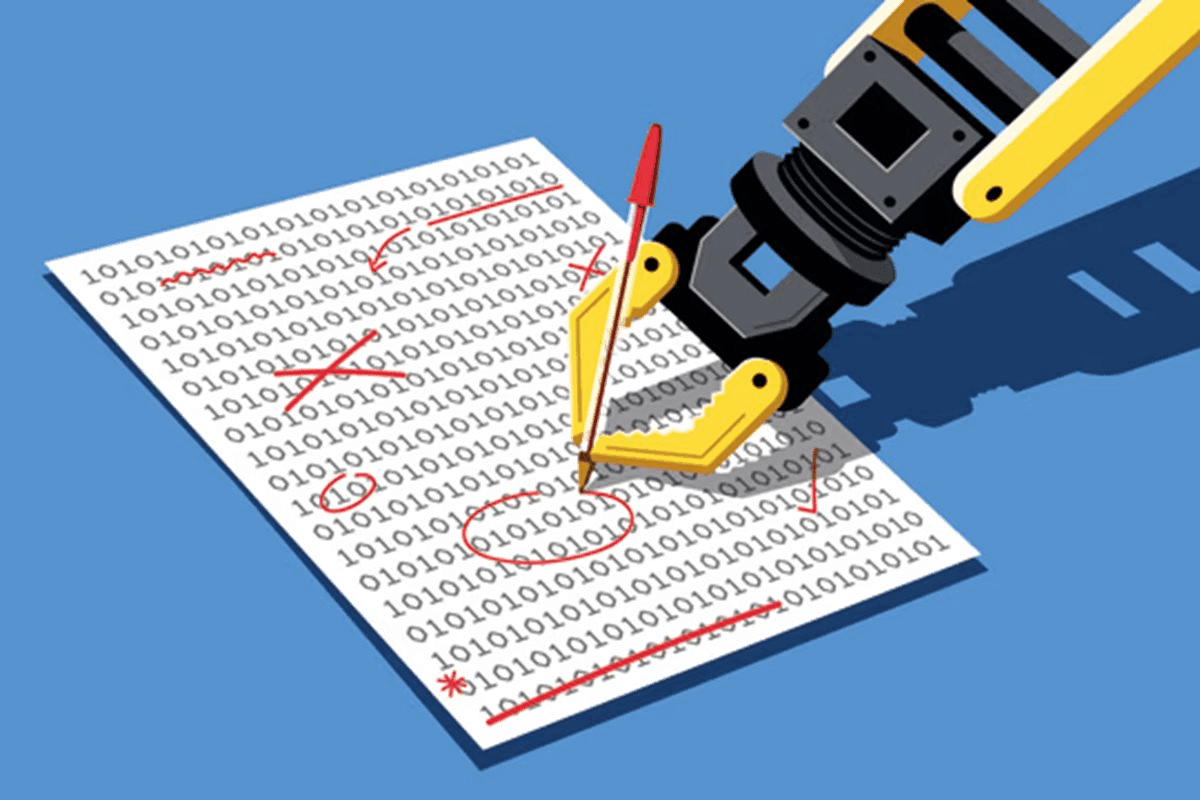
A leaked confidential document has exposed how major technology firms are reshaping the way artificial intelligence systems operate. A report by The Wall Street Journal says a key milestone has been reached on the path toward artificial general intelligence, as engineers have moved AI from probabilistic prediction toward more practical assistance for real-world tasks. The document’s clues were linked to a major software leak involving the Claude Code source code from Anthropic, which analysts describe as reflecting a broader operating philosophy for managing and guiding AI behavior.
Early large language models learned from the open internet, including misinformation and outdated material, which contributed to responses that could be inaccurate, biased, or missing context. To address this, a multi-billion-dollar industry has emerged that hires thousands of experts to tutor AI using carefully constructed question-and-answer sets. The process is described as deep RLHF (reinforcement learning from human feedback), in which experts correct errors and explain why.
Beyond internal training, the report says AI systems increasingly rely on real-time search tools. Instead of depending only on static memory, AI can query trusted sources such as Google Search to obtain up-to-date information when asked about new events.
Analysts say the Claude Code leak points to a system designed to prevent AI from becoming overloaded during long conversations. The document describes overload of data as a key cause of hallucinations, and says the system automatically summarizes and filters noise to maintain focus. It also notes the use of traditional programming safeguards that can intervene if a user becomes angry or uneasy.
The report highlights a major weakness of AI: advanced calculations. Because large language models are built on probabilistic prediction rather than strict logic, complex calculations were previously likened to rolling dice. The leaked material suggests developers now equip AI with tools that enable precise computation.
In the described approach, AI can recognize a calculation request and write Python code, which is then executed in a standard computing environment to produce exact results. The system is framed as a division of labor: AI acts as the cognitive hub, while traditional software handles precise execution.
In addition to summarizing and filtering extraneous information, the leak also describes safeguards implemented through conventional programming. These are intended to intervene when user behavior indicates anger or discomfort, reinforcing the broader theme of controlled, context-aware assistance.
Another development described in the report is a “chain of thought” technique intended to prevent AI from rushing to answer. Rather than responding immediately, the system breaks problems into logical steps and works through them sequentially in front of the user. This is said to allow the AI to self-check for gaps as it progresses, and to correct earlier missteps before delivering a final response.
The report also describes a Council of Models approach, in which multiple models from different vendors jointly vet answers before they are presented to users. It gives an example in which a response from a model such as ChatGPT may be cross-checked by Claude before reaching the end user. The governance and balance network is described as reducing random errors and improving credibility for enterprise AI services. Pavel Kirillov is cited as saying that results from the council are consistently higher quality and meet stringent customer standards.
The report frames the improvement of AI as not only a matter of models becoming smarter, but also of creators learning to manage and augment AI using established human knowledge. It says AI is increasingly trusted because it can search, use tools, and verify outputs—along with other systems—so it can function as a more reliable and attentive assistant.
Source: The Wall Street Journal






Premium gym chains are entering a “golden era” that is ending or already in decline, as rising operating costs collide with shifting consumer preferences toward more flexible, community-based ways to exercise. Long-term memberships are shrinking, margins are pressured by higher rents and facility expenses, and competition from smaller, more personalized…




