•
•
•
•
•
•
•
•
•
•
•
•
•
•
•
•
•
•
•
•
•
•
•
•
•
•
•
•
•
•
•
•
•


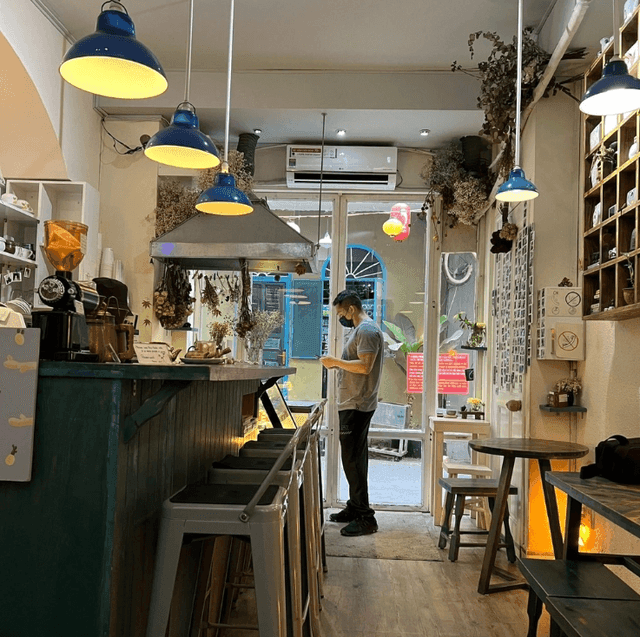
Tokyo Moon cafe in Saigon’s Japan Town area on Thái Văn Lung Street announced it will cease operations from April 12. The cafe, founded and run by a Korean couple since 2016, is described as one of the best-known spots in the Japan Town cluster, known for a private, low-key atmosphere.
In a notice, the owners said the decision was not easy after a decade of support from customers. “It’s hard to say goodbye, and our hearts are full of regret and apology for not being able to continue,” the notice said. Speaking to Dan Tri, the owner confirmed the cafe would close on April 12, adding that it was difficult to end the business despite more than ten years of operation and customer support.
The announcement disappointed many guests, particularly because the cafe had previously drawn controversy online due to its unusual house rules.
According to the report, customers could sit for a maximum of 1.5 hours. If customers ordered only pastries, an additional 20,000 VND per person would be charged for tea and seating.
The cafe also did not encourage laptop use. If customers used laptops, the maximum time was limited to 20 to 30 minutes. Customers were allowed to read books if they wished.
Restroom access was reserved for women. The report said customers needing to use the restroom should not sit for more than 30 minutes, must not make phone calls in the toilet, and should keep things light. If a customer came alone, they were advised to sit at a single-person table.
Drink prices range from 50,000 to 150,000 VND. The menu is described as diverse, focusing mainly on tea, coffee, and light pastries.
In practice, when customers stayed beyond 1.5 hours, staff would remind them to make room for new guests, given the venue can serve a maximum of 15 guests at once. A representative previously told Tri Thuc – Znews that the rules had been applied for a long time and were publicly posted in both Vietnamese and English.
Beyond Vietnam, the cafe also has a branch in Pocheon, South Korea.





Premium gym chains are entering a “golden era” that is ending or already in decline, as rising operating costs collide with shifting consumer preferences toward more flexible, community-based ways to exercise. Long-term memberships are shrinking, margins are pressured by higher rents and facility expenses, and competition from smaller, more personalized…