•
•
•
•
•
•
•
•
•
•
•
•
•
•
•
•
•
•
•
•
•
•
•
•
•
•
•
•
•
•
•
•
•
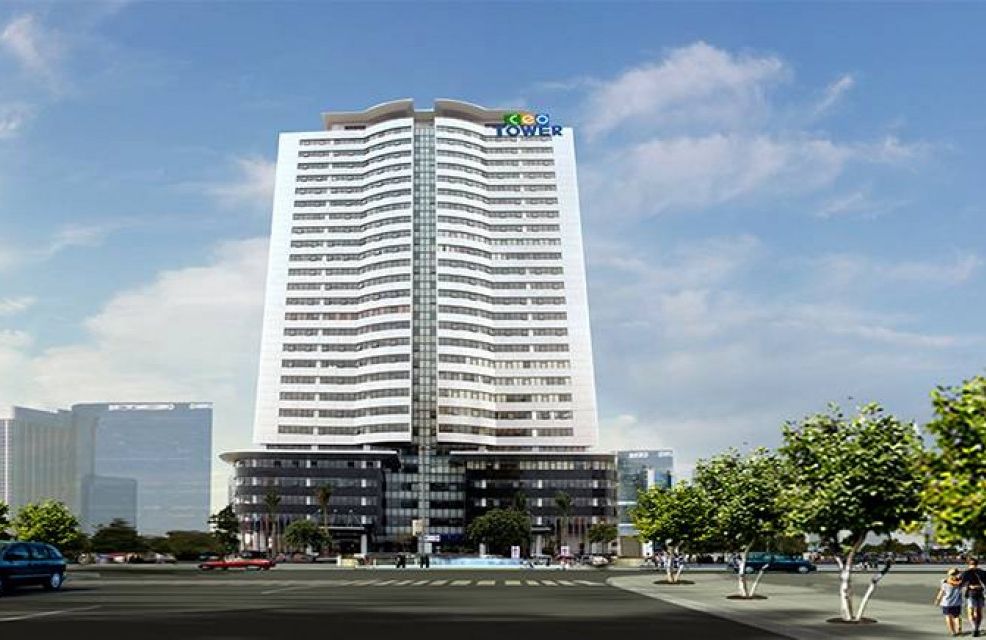
Truong Thuan Trading and Investment Co., Ltd. has reduced its stake in CEO Group to 6.67% of charter capital after selling a total of 9 million CEO shares.
The company reported its trading results for CEO Group shares. Truong Thuan sold 7 million CEO shares on April 8, 2026 to meet financial needs, lowering its holdings from nearly 44.9 million shares (about 7.91%) to about 37.9 million shares (6.67%).
Previously, on April 7, 2026, Truong Thuan also sold 2 million CEO shares for personal financial reasons.
Truong Thuan became a major shareholder in CEO Group after purchasing 42.5 million CEO shares on September 29, 2023, equivalent to 8.26% of charter capital.
According to public data, Truong Thuan was established on May 17, 2013, with its main business being the selling of motorcycles.
As of July 29, 2025, Truong Thuan’s charter capital is 30 billion VND, held by two shareholders: Mr. Tran Hieu Thuan (30%) and Mrs. Tran Da Thao (70%).
Separately, CEO Group recently approved the 2026 annual general meeting (AGM) for session 2, scheduled for April 24, 2026 in Hanoi.
The AGM for 2026 held on March 27, 2026 did not meet the quorum, with only 30.6% of total voting shares represented. This is the fourth consecutive year the company has had to hold a second meeting due to the first failing.
Based on meeting materials, CEO Group will seek approval of its 2026 business plan with consolidated revenue of 3,000 billion VND and net profit after tax of 300 billion VND. These figures represent increases of 124% and 50%, respectively, compared with 2025 results.
For the full year 2025, CEO Group reported revenue of 1,338.7 billion VND, up 2.35% year-on-year. Net profit after tax was 200.5 billion VND, up 20.8%, while net profit attributable to the parent company stood at 172.3 billion VND.
Net cash flow from operating activities in 2025 was negative 147.7 billion VND, and total net cash flow was negative 212.5 billion VND. The company indicated that cash collection from sales lagged operating and investment costs.




Bitcoin (BTC) investors who use steady dollar-cost averaging (DCA) may be underperforming versus strategies that adjust exposure to the market’s cycle, according to new research arguing that Bitcoin’s behavior differs from traditional long-duration assets.
In a report cited by Markus Thielen of 10x Research, Bitcoin’s market…