In Q4 2025, Intel Foundry posted the second-largest revenue globally in chip manufacturing and packaging services, behind TSMC. In Q1 2026, TSMC reported revenue of $35.9 billion, up 6.4% from the prior quarter. At the earnings briefing, Chairman and CEO C.C. Wei updated progress on current fabrication projects, outlined the roadmap for upcoming process technologies, and assessed competition and developments in the supply chain.
On the Intel–Tesla alliance in the Terafab project, Wei said he particularly views Intel Foundry as a formidable rival in semiconductor manufacturing. Observers note that Intel may improve its position by joining Terafab, a large-scale semiconductor fabrication complex pursued by Elon Musk’s Tesla. The move could help Intel expand its capabilities and increase its presence in the global semiconductor supply chain.
Wei also emphasized that TSMC did not reach its current position overnight, citing multiple phases of challenges to build technology leadership, manufacturing capability, and market trust. He said any company entering this field would have to go through similar steps.
Wei said that merely building a chip fabrication plant takes at least 2–3 years, followed by another 1–2 years to optimize operations and raise output. He added that Tesla’s Terafab project, as planned, would start with an initial capacity of about 3,000 wafer starts per month during the pilot phase. To reach large-scale production, more time will be needed, meaning Tesla would still rely on other semiconductor manufacturers to secure chip supply.
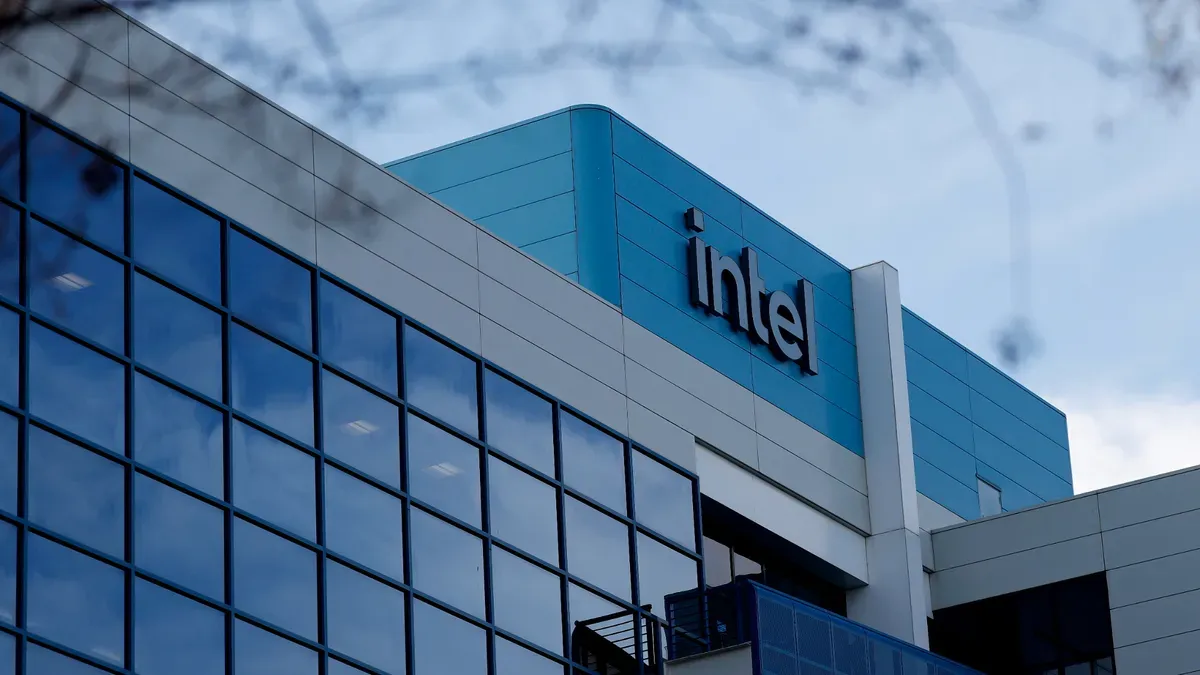
Meanwhile, Intel is accelerating its manufacturing roadmap with advanced technologies including 18A, 14A, and related variants. Among them, 14A is seen as the “trump card” in Intel’s revival strategy for its wafer fabrication business, with expectations of attracting major customers. Although not officially announced, NVIDIA is predicted to be a potential partner.
Wei said semiconductor fabrication success requires convergence of three elements—technology leadership, superior manufacturing capability, and customer trust—along with service quality.
In revenue from manufacturing and packaging services, TSMC remains far ahead of rivals. In Q4 2025, TSMC posted revenue of $33.731 billion, while Intel Foundry recorded $4.5 billion. That places Intel second globally, but well behind TSMC.
TrendForce estimates for the same period put Samsung Foundry at $3.399 billion, SMIC at $2.489 billion, UMC at $1.993 billion, and GlobalFoundries at $1.83 billion.
Intel Foundry Services recently announced on X that Han Seung-hoon (Shawn Han), Vice Chairman of Samsung Electronics, will join Intel next month as Senior Vice President and head of the chip-foundry division. Naga Chandrasekaran, Executive Vice President in charge of Intel’s foundry business, said Han will join as Intel accelerates its comprehensive chip-foundry capabilities, spanning manufacturing technology and advanced packaging solutions.
Intel first entered the chip-foundry market in 2012 but withdrew after about six years due to disappointing business results. In 2021, the company said it would return to the field, but has not yet broken into the world’s top 10 wafer-fabrication companies.