•
•
•
•
•
•
•
•
•
•
•
•
•
•
•
•
•
•
•
•
•
•
•
•
•
•
•
•
•
•
•
•
•


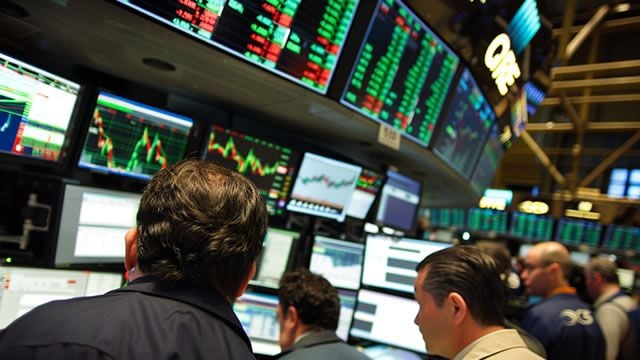
Federal prosecutors in Manhattan late Thursday announced charges against an Army officer who allegedly traded on classified information tied to a U.S. military operation to capture former Venezuelan strongman Nicolás Maduro, according to the report. The alleged trades generated $400,000.
In contrast, the Securities and Exchange Commission (SEC) has taken a quieter approach to a separate surge of suspicious trades in futures and prediction markets. Legal sources say the SEC is probing well-timed, high-dollar trades that appear to have capitalized on surprise news developments, though details of the investigation have not been confirmed publicly.
Futures trading activity can be tracked through exchanges such as the Chicago Mercantile Exchange (CME), the report said. The U.S. Department of Justice (DOJ) has also been meeting with officials from prediction markets, where other well-timed bets are reportedly being placed.
One securities lawyer specializing in high-profile insider trading cases said they had not heard indications that the SEC’s interest is major or that the DOJ is mounting an aggressive case in connection with the broader trading activity. The lawyer also said they would typically hear signals through industry channels if something significant were underway, but that there had been no such chatter.
The SEC does not comment on investigations. A spokesman did not return a request for comment, and the Commodity Futures Trading Commission (CFTC)—which has front-line authority over futures markets—also declined to comment, saying it cannot comment on whether an investigation is happening.
On Thursday, the U.S. Attorney for the Southern District, Jay Clayton, announced charges against Gannon Ken Van Dyke, who was involved in planning and execution of the operation to capture Maduro.
Authorities said Van Dyke signed nondisclosure agreements and, on Dec. 26, allegedly created a Polymarket account and began trading on Maduro- and Venezuela-related markets. Prosecutors said he took “yes” positions on various questions about whether the U.S. would knock out Maduro by the end of January, betting a total of about $33,034.
The report also included a White House statement noting that federal employees are subject to government ethics guidelines that prohibit the use of nonpublic information for financial benefit, adding that any implication of Administration officials engaging in such activity without evidence is baseless and irresponsible reporting.
Both Polymarket and Kalshi said they have rules barring insider trading that they enforce.
Polymarket said it “sets, maintains and enforces the highest standards of market integrity” and proactively works with regulators and law enforcement to enforce those standards. Kalshi said insider trading and market manipulation violate its rules and that it bans both.
Amid regulatory scrutiny, Kalshi recently suspended three politicians for potentially using insider trading on their own campaigns, the report said.
The report cited examples of trading activity during periods that are typically slower. In March, it said about 7,200 oil futures contracts betting on a decline in price changed hands with a value of $760 million, according to veteran commodities trader Mike Khouw. Around the same time, it said there was frenzied buying of S&P futures—6,000 contracts with an underlying or “notional” value of $2 billion.
Those trades were reportedly made just before President Trump signaled a pause on Iran attacks, which sent stock futures higher and oil prices lower. Sources told On The Money that the resulting windfall was likely worth between $40 million and $50 million.
The report said regulators have surveillance tools that can track trades before market-moving events. However, it noted that insider trading—generally defined as buying or selling based on “material non-public information”—is often difficult to prove outside of “classic” cases where the trader has direct access to information, such as when someone with firsthand access trades before it becomes public.
It added that there is no single guiding law and that court precedent shapes how cases are brought. It also said recent court decisions have made prosecutions harder in some situations, including when the information does not involve out-and-out theft or when there is no money changing hands between the tipper and the trader.
Another factor discussed was the possibility that some suspicious-looking trades could be explained by legal “mosaic” information—patterns assembled from lawful sources—rather than illegal insider knowledge. The report also suggested that additional information, such as a report in an obscure news source, could contribute to trading activity that appears unusual.
While futures markets trade financial instruments such as stocks, bonds and commodities, prediction markets allow wagers on a wider range of outcomes. The report said much of prediction market volume is tied to sports, but an increasing segment involves bets related to Wall Street and political events.


Premium gym chains are entering a “golden era” that is ending or already in decline, as rising operating costs collide with shifting consumer preferences toward more flexible, community-based ways to exercise. Long-term memberships are shrinking, margins are pressured by higher rents and facility expenses, and competition from smaller, more personalized…