•
•
•
•
•
•
•
•
•
•
•
•
•
•
•
•
•
•
•
•
•
•
•
•
•
•
•
•
•
•
•
•
•


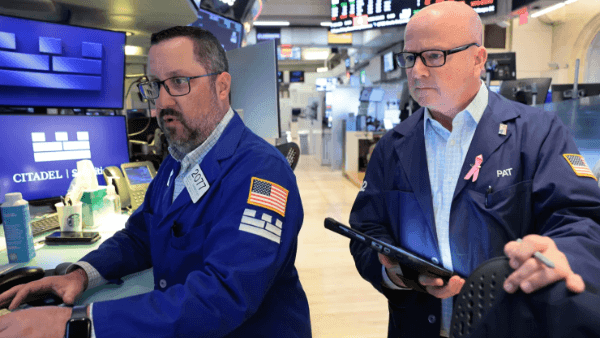
US stocks rose sharply in Tuesday’s trading session (April 14) as investors weighed hopes that the United States and Iran could reach a peace agreement. At the close, the S&P 500 climbed 1.18% to 6,967.38, remaining just under 1% below its 52-week high. The Dow Jones Industrial Average rose 317.74 points, or 0.66%, to 48,535.99, while the Nasdaq Composite gained 1.96% to finish at 23,639.08.
In an interview with the New York Post, Donald Trump said US-Iran peace talks could resume in Pakistan within two days. The comment followed last weekend’s talks, which did not produce an agreement, and came after the US widened sanctions on Iran’s ports since Monday.
Separately, the US State Department said Israel and Lebanon have agreed to direct talks after a Washington meeting brokered by the United States on Tuesday.
Tuesday’s rally also drew support from US inflation data. US producer prices (PPI) rose less than expected, with overall PPI increasing 0.5% in the previous month, compared with a 1.1% forecast in a Dow Jones survey. Core PPI—excluding energy and food—rose 0.1%, versus a 0.5% gain previously reported.
In addition, CME’s FedWatch Tool showed markets priced in a 33% probability of the Federal Reserve cutting rates once this year, up slightly from 29% the previous day.
Stocks were further supported by an early positive start to the Q1 2026 earnings season. Financial companies including BlackRock and Citigroup gained after quarterly results beat expectations.
“The market seems to have moved past the peak of uncertainty. There has been too much uncertainty from the Iran conflict, AI disruption fears, inflation concerns, and Fed policy,” said Anthony Saglimbene, a strategist at Ameriprise.
Energy was the only one of the 11 major S&P 500 sectors to decline, falling 2.2% as oil prices dropped sharply. Technology led the advance, with Oracle among the standout gainers, up about 4.7%.
“I do not rule out tensions in the Gulf escalating again and the market turning lower. But I think the probability is low. The market has priced in a degree of Iran-related concerns, and the indices appear to be returning to record levels... and this earnings season should also propel the uptrend,” said Ross Mayfield, a strategist at investment bank Baird, in an interview with CNBC.
“There is no solution to end the war yet, but investors do not want to miss this market rebound,” said Burns McKinney, a portfolio manager at NFJ Investment Group, in a Reuters interview.
Oil prices remained highly sensitive to Middle East developments, influencing inflation expectations and interest-rate outlooks that feed into equity valuations.
In energy markets, West Texas Intermediate (WTI) crude for delivery in New York fell 7.87% to $91.28 per barrel. Brent crude for delivery in London dropped 4.6% to $94.79 per barrel.
Vivek Dhar, an analyst at the Commonwealth Bank of Australia, said US sanctions on the Hormuz Strait threaten Iran’s crude exports through the chokepoint. He noted that in March Iran exported about 1.7 million barrels per day via Hormuz, adding that sanctioning Hormuz tightens available supply of crude and refined products in the physical market.
In its monthly report released Tuesday, the International Energy Agency (IEA) projected that the oil supply shock from the Iran conflict would weigh on global oil demand this year. The IEA forecast global oil demand would fall by 1.5 million barrels per day in the second quarter of 2026, the largest quarterly drop since the Covid-19 pandemic.





Premium gym chains are entering a “golden era” that is ending or already in decline, as rising operating costs collide with shifting consumer preferences toward more flexible, community-based ways to exercise. Long-term memberships are shrinking, margins are pressured by higher rents and facility expenses, and competition from smaller, more personalized…




