•
•
•
•
•
•
•
•
•
•
•
•
•
•
•
•
•
•
•
•
•
•
•
•
•
•
•
•
•
•
•
•
•


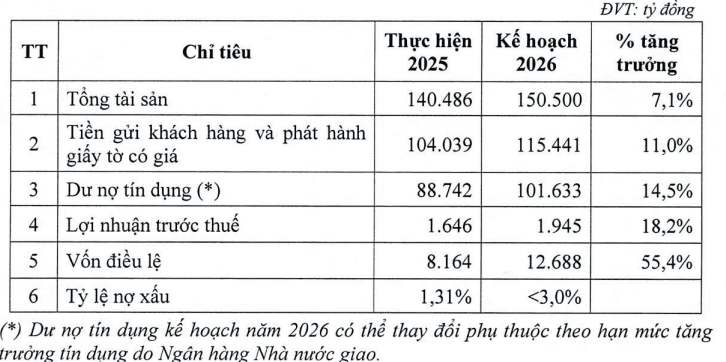
VietABank posts 44% increase in pre-tax profit in Q1 2026. According to the consolidated financial statements for Q1 2026, VietABank (HOSE: VAB) reported pre-tax profit of over 508 billion dong, up 44% year over year, driven by growth in both core income and non-interest income and lower credit risk provisions. In the first three months of 2026, the bank's core operating income remained on a stable growth path with net interest income reaching nearly 676 billion dong, up 10% YoY. In addition, non-interest income also contributed positively, with service income rising 64% to nearly 66 billion, mainly due to expanded payment services and product diversification. Investment securities trading improved, turning from a loss to a profit. Other operating income contributed nearly 25 billion, up about twofold. Along with scale expansion, operating expenses rose to 256 billion, up 14%. However, thanks to faster income growth, net operating income reached 520 billion, up 18% YoY. Credit risk provisioning declined significantly due to improved asset quality and better control of new non-performing loan formation, with provisions falling 87% to nearly 12 billion. As a result, pre-tax profit reached over 508 billion, up 44%. The result shows VietABank achieving 26% of its annual profit target of 1,945 billion for 2026. Balance sheet remained solid: total assets at end of Q1 rose 1% to 142,390 billion; customer loans up 2% to 90,752 billion; customer deposits up 3% to 102,351 billion. NPLs stood at 1,172 billion as of 31/03/2026, up 1% year-to-date, though the loan mix shifted from substandard to doubtful, the NPL ratio declined slightly to 1.29% of total loans. Source: VietstockFinance



Premium gym chains are entering a “golden era” that is ending or already in decline, as rising operating costs collide with shifting consumer preferences toward more flexible, community-based ways to exercise. Long-term memberships are shrinking, margins are pressured by higher rents and facility expenses, and competition from smaller, more personalized…