•
•
•
•
•
•
•
•
•
•
•
•
•
•
•
•
•
•
•
•
•
•
•
•
•
•
•
•
•
•
•
•
•


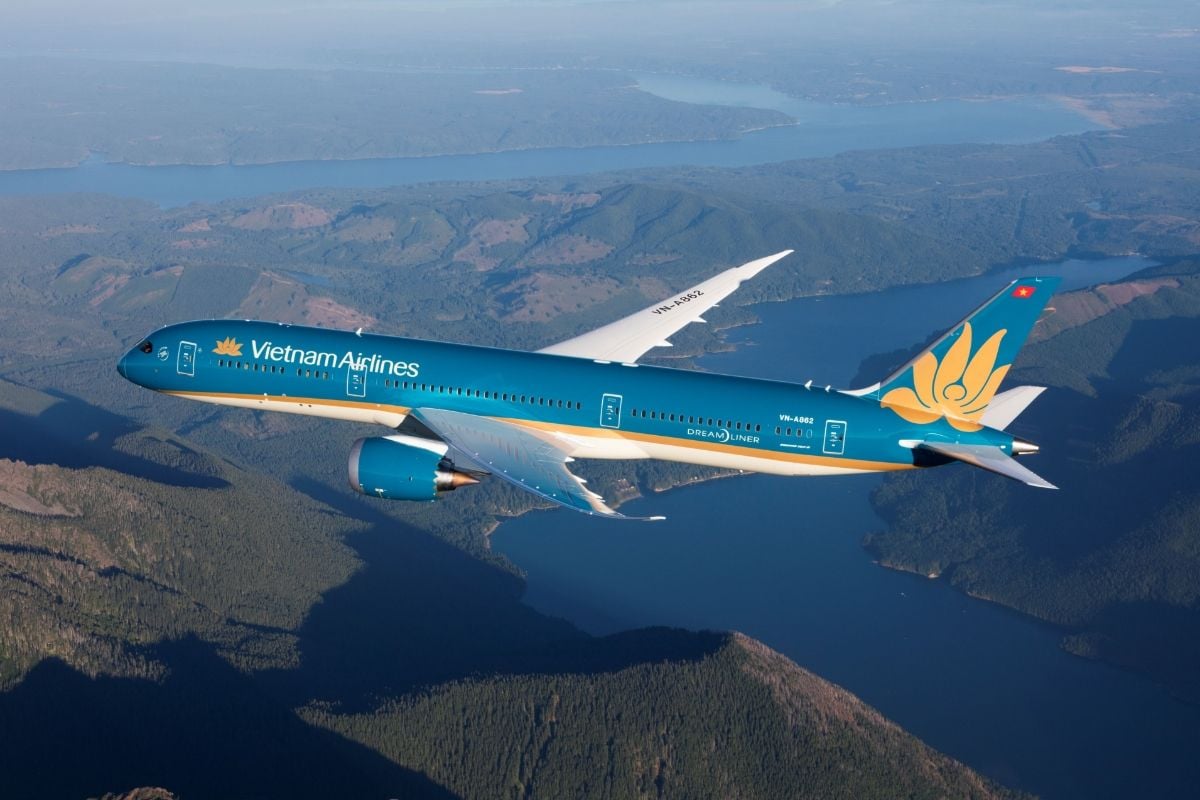
Vietnam Airlines (ticker HVN) released its first-quarter 2026 business results amid uncertainty in the international aviation market, driven by the ongoing conflict in the Middle East. The airline said performance remained positive, supported by operational actions designed to manage changing supply and demand.
In Q1 2026, Vietnam Airlines operated nearly 43,000 flights and served more than 6.9 million passengers. The airline reported year-over-year growth of 11% in flights and nearly 12% in passenger volume, reflecting both improving market conditions and proactive capacity management aligned with supply-demand dynamics.
During the Lunar New Year peak, when demand was highest, Vietnam Airlines said it operated safely and efficiently with daily flight frequencies reaching 660–670, up more than 13% year-over-year from 2025.
Vietnam Airlines also highlighted fleet modernization efforts. On a business trip to the United States, the corporation signed a contract to purchase 50 Boeing 737-8 aircraft, which it said is intended to support higher utilization and strengthen competitiveness over the medium and long term.
On routes, the airline reported growth in its international core routes of 28.6% year-over-year in Q1 2026. Vietnam Airlines currently operates 11 direct routes to Europe using a modern wide-body fleet, including Airbus A350 and Boeing 787, maintaining direct connections to key markets.
From 16 June 2026, the Hanoi–Amsterdam route will begin service. From 1 July, the Hanoi–Moscow route frequency will be increased to four flights per week to meet market demand.
The airline reaffirmed its operational performance with an on-time departure performance (OTP) of 80.4% in March 2026, the highest in Vietnam’s aviation sector, up 22% year-over-year.
Vietnam Airlines also cited multiple recognitions in Q1 2026, including a ranking in AirlineRatings’ Top 25 Traditional Safest Airlines in the World at 19th globally, recognition by SkyTeam for its 2025 Aviation Challenge award category, inclusion in the Asia-Pacific Top 500 Enterprises 2026, and an improvement in international standing for its Premium Economy class.
Based on the reported results, Vietnam Airlines said its first-quarter 2026 business continued a positive trajectory. Consolidated revenue reached over VND 37,500 billion, while net profit after tax was VND 4,514 billion. For the parent company, revenue was over VND 29,500 billion and net profit after tax was VND 3,948 billion.
The airline attributed the growth to recovering international demand and said the Middle East conflict had not yet shown clear impact on the aviation sector in Q1, although it began affecting the global energy market from March 2026.
Vietnam Airlines said its results also reflected the effectiveness of proactive management, including tracking supply and demand, strengthening dispatch discipline, optimizing flight schedules, and controlling costs across the system.
Looking ahead to Q2 2026, the airline expects cost pressures to rise as the market faces greater risks. It pointed to fuel price dynamics as a key factor: jet fuel accounts for about 30–40% of operating costs, and each USD per barrel change translates into more than VND 300 billion of annual costs for Vietnam Airlines.
By the end of April 2026, Jet A-1 prices remained high at an average of USD 190–220 per barrel, with occasional spikes above USD 240 per barrel due to geopolitical factors. The airline said this is nearly three times the usual range of USD 80–90 per barrel. It also noted that a USD 1 per barrel increase can raise annual costs by more than VND 300 billion, compressing margins and posing a near-term challenge to profitability.
To address volatility, the government introduced measures to ensure energy security, including diversification of import sources and fuel supply chains, flexible price management, use of stabilization tools, and adjustment of fuel-related taxes and fees.
Vietnam Airlines said it has built flexible operating scenarios to cope with market fluctuations, focusing on optimizing the domestic and international network, tightening cost controls, and improving fleet utilization.
The airline reiterated its role as the national carrier, maintaining connectivity and supporting trade, tourism, and international economic integration. It said governance is aligned with Party and Government directives and that it aims to sustain two-digit growth in 2026, contributing to macroeconomic stability and sustainable development.
Going forward, Vietnam Airlines said it will continue monitoring market developments and geopolitical factors closely, operating flexibly while maintaining absolute safety, network stability, cost control, and improved resource efficiency to support air transport amid ongoing volatility.


Premium gym chains are entering a “golden era” that is ending or already in decline, as rising operating costs collide with shifting consumer preferences toward more flexible, community-based ways to exercise. Long-term memberships are shrinking, margins are pressured by higher rents and facility expenses, and competition from smaller, more personalized…




