•
•
•
•
•
•
•
•
•
•
•
•
•
•
•
•
•
•
•
•
•
•
•
•
•
•
•
•
•
•
•
•
•
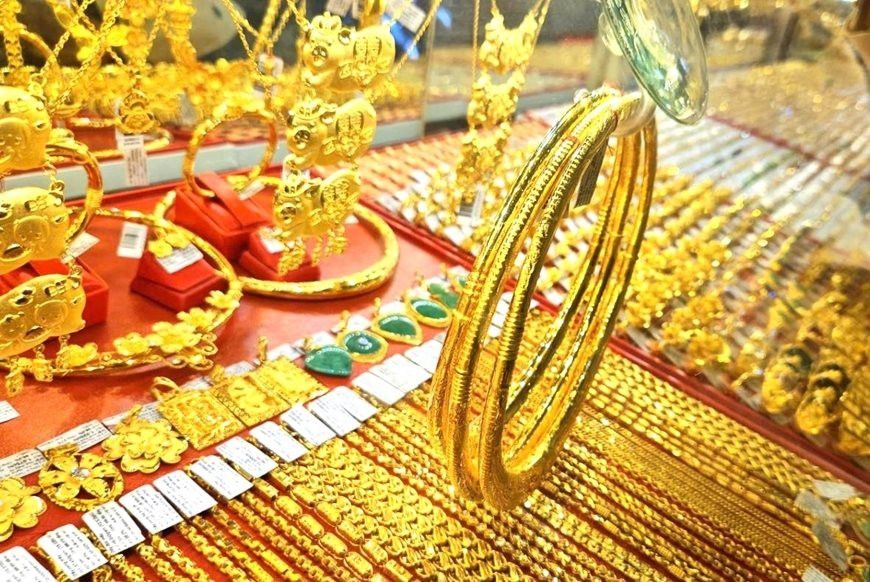
Early morning on June 25, domestic gold prices were generally stable, though some firms continued to trim buying prices for both bullion and jewelry gold. In the bullion segment, SJC and DOJI kept the buying range at 144–147 million VND per tael versus the June 24 close. Bao Tin Minh Chau kept the selling price at 147 million per tael, but reduced the buying price to 142.5 million per tael, 1.5 million lower than SJC and DOJI.
Meanwhile, Bao Tin Manh Hai cut 2 million per tael on both sides to 142–146 million. Phu Quy reduced 300,000 VND per tael on the buying side to 143.7 million per tael, while keeping the selling price at 147 million per tael.
For jewelry gold, SJC and DOJI kept prices unchanged at 143.9–146.9 million VND per tael and 144–147 million per tael, respectively. Bao Tin Minh Chau reduced 1 million per tael on the buying side and 1.5 million per tael on the selling side to 142.5–146 million per tael. Bao Tin Manh Hai cut 1 million per tael on both sides to 141.5–146 million per tael.
Phu Quy reduced 0.5 million per tael on both the buying and selling sides to 143.5–146.5 million per tael.
After moving sideways on 24/6, domestic gold prices showed mixed moves this morning as some firms continued to cut buying prices. The current spread between buy and sell prices for bullion ranges from 3 to 5 million VND per tael, while jewelry gold typically trades around 3 to 4.5 million per tael. With this spread, investors buying and selling immediately could incur losses depending on the brand.
World prices fell to the lowest in more than seven months in the session, pressured by a stronger USD and expectations that the Federal Reserve will continue to hike rates. Spot gold briefly dropped to $3,973.79 per ounce before recovering to around $4,012 per ounce.
The dollar index strengthened, making gold priced in USD more expensive for holders of other currencies and weighing on demand. Analysts cited Tai Wong, who said the market is pricing a Fed rate hike as early as September, while a strong USD and easing inflation expectations are pressuring precious metals.
Wong noted that gold has support just below $3,900 per ounce and that central-bank buying demand remains, suggesting a collapse is unlikely. However, he said a prolonged range-bound phase is possible as gold loses appeal as a non-yielding asset.
Since the late January high of $5,594.82/oz, spot gold has fallen by more than $1,600/oz. ING analysts cut forecasts, now expecting an average of $4,300/oz in Q3 2026 and $4,600/oz in Q4 2026, down from prior projections.
The market remains focused on U.S. PCE inflation data due Thursday, with the Fed’s path still a key driver. Senior analyst Lukman Otunuga of FXTM warned that sustained hawkish signals or inflation data supporting high rates could push gold lower.
The crypto bear market remained in force on Wednesday, with bitcoin slipping back toward the $60,000 area. Sharp pullbacks in gold and oil also weighed on the 2025 “debasement trade,” which had supported hard assets amid concerns about government debt and fiat currencies. Meanwhile, tech—particularly the AI boom—continued…