•
•
•
•
•
•
•
•
•
•
•
•
•
•
•
•
•
•
•
•
•
•
•
•
•
•
•
•
•
•
•
•
•


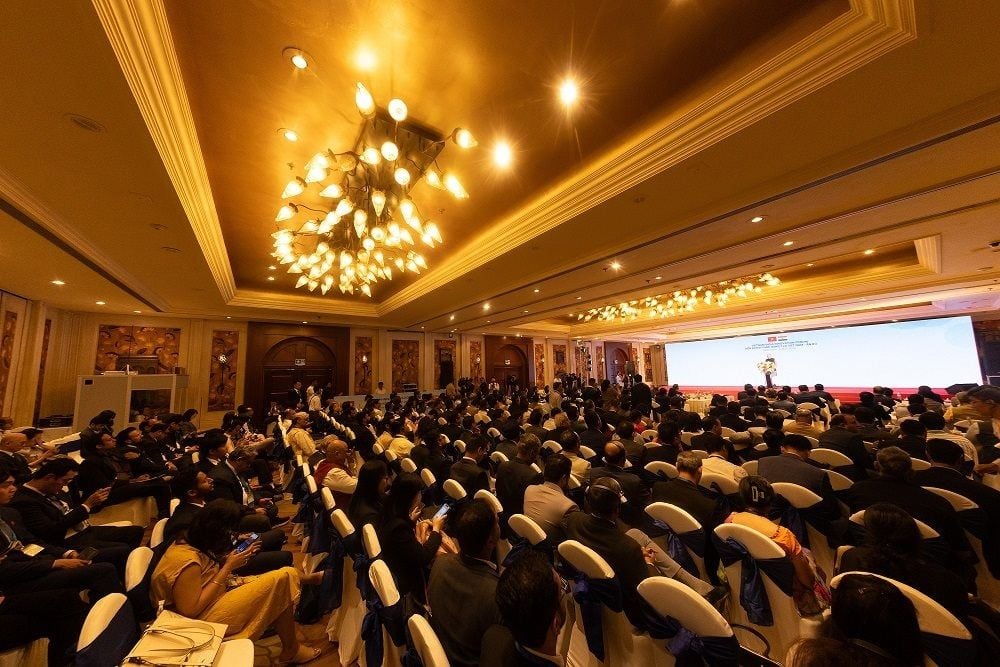
Vietnam-India cooperation in developing human resources, science and technology, innovation and digital transformation will move into a new phase: more substantive, broader, and more effective. On May 9, 2026, the Vietnam-India Forum on Innovation and Creativity took place in New Delhi as part of the State visit to India by General Secretary and President To Lam.
The event drew attention not just for its agenda but for its distinctive approach: focusing on strategic technologies, connecting the entire innovation ecosystem, and aiming at lasting practical value.
In his remarks at the Forum, General Secretary and President To Lam praised the agencies of both countries for coordinating the event under the theme “very timely and appropriate” amid rapid breakthroughs in science and technology that are fundamentally changing production methods, growth models, and the global economic structure.
He also stressed that “knowledge, data, technology, and high-quality human resources should become the new materials of Vietnam-India strategic cooperation.” This guiding thought was reflected throughout the Forum’s content and organization, which experts and technology enterprises valued for its practical focus.
The Forum’s structure combined policy-level discussion with technical and business engagement. The policy layer focused on core technologies of the era, including AI, semiconductors, and strategic technologies, laying groundwork for exchanges and cooperation agreements in R&D and human resources development. The business layer then focused on sharing practical experiences in fintech, IT outsourcing, automotive software, and deeptech.
According to the Forum’s design, the aim is to connect the full chain to build technology capacity. More broadly, it reflects a shift in how Vietnam and India view strategic cooperation—from isolated connections toward building long-term technology capabilities and jointly creating an innovation ecosystem.
Beyond program design, the technical content reflected several long-term strategic cooperation directions mentioned in the General Secretary’s remarks, including building a “Vietnam-India Digital Partnership,” promoting “joint research, joint development, joint production,” forming a “high-tech talent corridor,” and strengthening links among innovation centers, universities, and technology enterprises of both nations.
He emphasized the need to shift from traditional cooperation models to partnerships based on knowledge, technology, data, and innovation. The Forum’s technical themes were closely linked to factors shaping national competitiveness in the digital era, including AI talent development, semiconductor research, deeptech, the digital university model, and core technologies.
The sessions underscored the ability to conduct joint research, co-develop products, train talent, and participate more deeply in new technology value chains.
The Forum’s quality was reflected in the breadth of participants. On the Indian side, participants included IIT Madras, the National Association of Software and Services Companies (NASSCOM), MeitY Startup Hub, and Infosys. On the Vietnamese side, participants included Ho Chi Minh City National University, the Posts and Telecommunications Institute of Technology (PTIT), and the Vietnam Software and IT Services Association (VINASA), along with technology and innovation companies such as VNPT, FPT, and VCCorp.
Experience and issues raised by senior leaders of these organizations and enterprises highlighted development challenges Vietnam faces, including shortages of AI and semiconductor personnel, the need to build a digital university, advance core technology research, and commercialize research.
At the Forum, workforce development emerged as a central theme. Many sessions focused on AI training, developing semiconductor research programs, and training talent, as well as digital university models applying AI in governance. Cooperative documents were exchanged between training and research institutions of the two countries.
Given Vietnam’s push for AI and semiconductors, with a target to train 100,000 high-quality engineers in this field in the coming years, the Forum’s focus was seen as practically significant for addressing talent shortages for technology firms.
Beyond talent, the Forum addressed business needs through corporate cooperation sessions in high-demand areas such as fintech, AI, SaaS, IT outsourcing, and automotive software. Discussions also covered experience in commercializing technology, expanding markets, and turning capabilities into competitive advantages.
Startup deeptech content further showed that the Forum was not limited to large enterprises, and instead aimed to open the innovation ecosystem for startups. This was presented as a promising direction given India’s large startup ecosystem and Vietnam’s emergence as a dynamic innovation hub in Southeast Asia.
Overall, the Vietnam-India Innovation Forum was not positioned as a one-off technology cooperation event. It was described as demonstrating the potential to form a new cooperation structure between the two nations, with strategic technology as a core focus, aimed at delivering long-term practical value for researchers and technology enterprises.
In the context of AI, semiconductors, and digital technology shaping global competition, the approach reinforced the message of substantive, deeper, and more effective bilateral science-technology cooperation.
Premium gym chains are entering a “golden era” that is ending or already in decline, as rising operating costs collide with shifting consumer preferences toward more flexible, community-based ways to exercise. Long-term memberships are shrinking, margins are pressured by higher rents and facility expenses, and competition from smaller, more personalized…