•
•
•
•
•
•
•
•
•
•
•
•
•
•
•
•
•
•
•
•
•
•
•
•
•
•
•
•
•
•
•
•
•



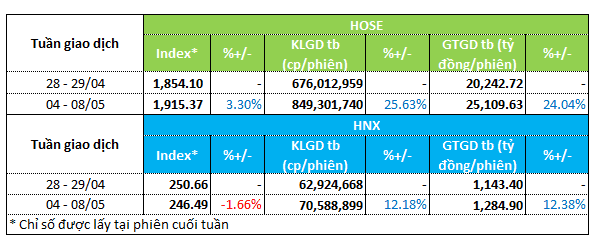
At the end of April, Vietnam’s stock market indices on the Ho Chi Minh City Stock Exchange (HOSE) recorded positive growth of around 10% and continued the momentum into May 2026, according to the latest exchange information. However, despite the index reaching new highs, liquidity remains cautious and results are not uniformly reflected across sectors and stocks.
HOSE’s total stock market capitalization rose 10.82% versus the previous month, equivalent to 67.92% of 2025 GDP. Still, the market shows strong dispersion across sectors and individual stocks, and not all investors are profitable even as the benchmark advances.
Three main barriers are contributing to a cautious liquidity stance:
While the stock market often reflects the future, it can move more slowly than fundamentals or overreact to short-term risks. Macro and micro conditions are described as favorable: growth targets appear positive, enterprise-supportive policies are in place, and quarterly results for 1/2026 reportedly grew impressively.
Despite this, the market appears to reflect more caution than outright negativity. Current investors focus less on broad themes and more on specific company niches. Over the last four months, profits did not clearly determine stock price movements. For example, several sectors reported positive profit growth in Q1 2026, yet stock prices fell or rose only modestly, including personal care, household goods, food and beverage, and retail. In contrast, some sectors with sharply declining profits still rose due to high expectations, creating a gap between earnings and price.
Over the long run, profitability data is expected to drive stock prices more clearly. A comparison chart of VN-Index (price) and market profit growth from 2010–2026 is described as showing a long-term positive correlation. When there are gaps between profits and price, they are typically corrected over time through re-pricing, such as changes in P/E depending on investor optimism. In the short term, however, profits can be overlooked as expectations and liquidity take the lead.
In the short term, dispersion is likely to persist. The market may undergo technical corrections to refresh ownership and re-anchor support levels, helping prevent overheating. Once upgrade bottlenecks are fully resolved in Q3 and Q4/2026, liquidity is expected to spread toward sectors with cheaper valuations and clearer recovery stories.
Regarding trading strategy, Mr. Le Quang Chung, Deputy CEO of Smart Invest Securities Joint Stock Company (AAS), said the market is not a time for swing-trading every stock. The priority should be value and VN30 exposure when selecting leading companies with steady quarterly profit growth.
He also recommended strengthening risk management and maintaining a reasonable cash ratio of about 20–30% to be ready to deploy when deeper corrections occur. The current market P/E is described as still attractively positioned relative to the region, supporting accumulation of fundamentally solid stocks over the next 6–12 months.
Banking and VN30 are suggested as portfolio anchors due to stable profits. Retail and food & beverages are also described as opening opportunities as results recover but prices remain low. For the equities group, expectations tied to the upgrade are considered clear, but selective screening is required.
Conversely, investors are advised to exercise caution with real estate and speculative stocks when legal bottlenecks have not been fully resolved, and to avoid chasing stocks that lack solid profitability fundamentals.
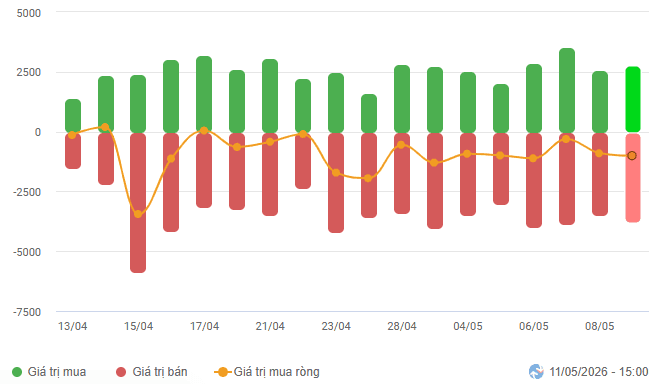
Foreign ETFs continued to post net outflows on the Vietnamese market. The outflows were concentrated mainly in the Fubon FTSE Vietnam ETF with net outflows of -226.6 billion VND.







Premium gym chains are entering a “golden era” that is ending or already in decline, as rising operating costs collide with shifting consumer preferences toward more flexible, community-based ways to exercise. Long-term memberships are shrinking, margins are pressured by higher rents and facility expenses, and competition from smaller, more personalized…



