•
•
•
•
•
•
•
•
•
•
•
•
•
•
•
•
•
•
•
•
•
•
•
•
•
•
•
•
•
•
•
•
•


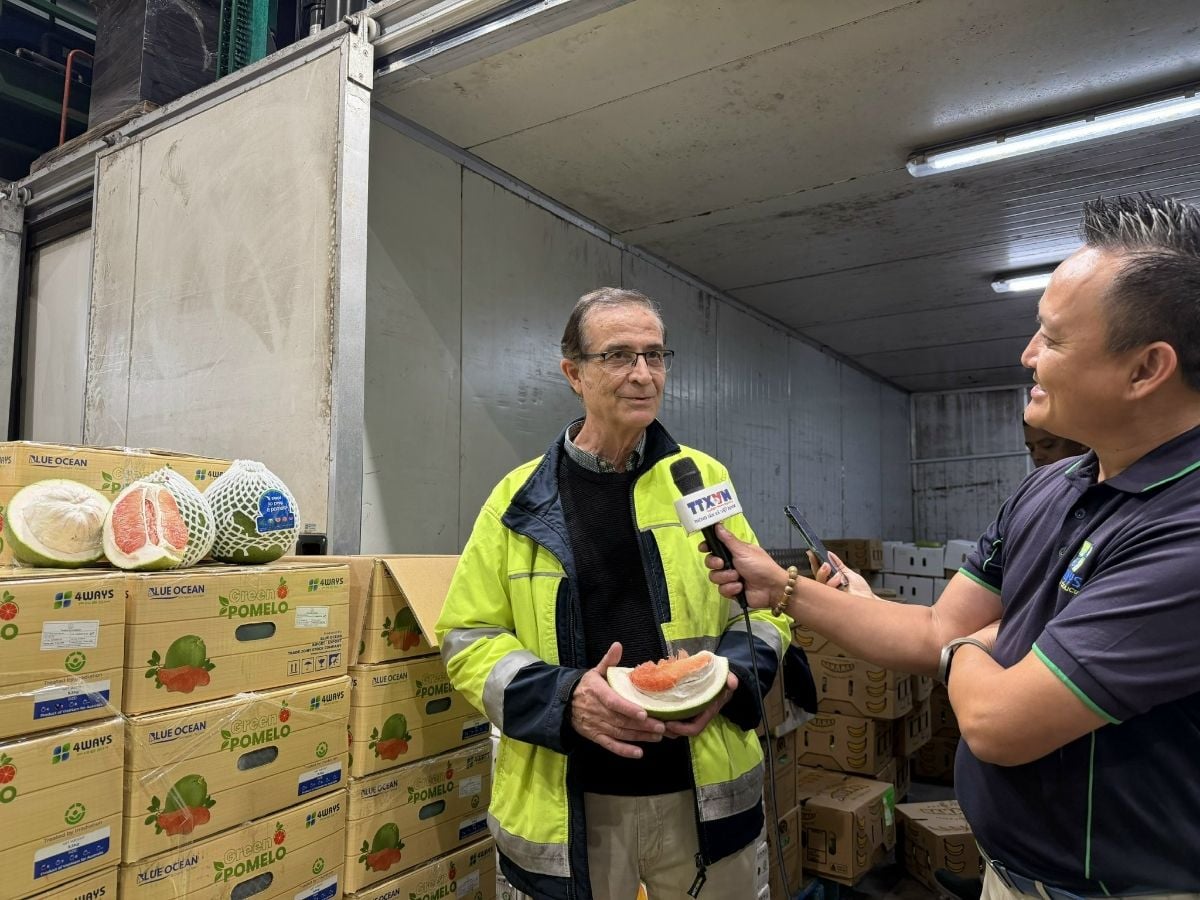
On 23 April 2026, the first batch of Vietnamese fresh grapefruits completed customs clearance in Australia. Earlier, on 22 April 2026, in Dong Thap Province, the first shipment of Vietnamese fresh grapefruits was officially exported to the Australian market, marking a milestone in the market-opening process for the fruit.
The Plant Protection Department (under the Ministry of Agriculture and Rural Development) said that on 9 October 2025, Vietnam and Australia completed an agreement allowing the import of Vietnamese fresh grapefruits. During the negotiation and the completion of technical dossiers, the Plant Protection Department acted as the lead agency, working directly with Australian authorities to develop technical standards and phytosanitary procedures.
After the agreement, the two sides continued to cooperate to finalize technical requirements covering growing areas, packing facilities, pest control, traceability, irradiation processing, and import procedures. The Plant Protection Department also issued technical guidelines and organized inspections and coordination with localities and enterprises to ensure the full production-to-post-harvest-to-processing-to-export chain complied with Australian regulations.
The first shipment weighed 940.5 kg and was transported by air. It completed clearance overnight on 22 April 2026 (Vietnam time), corresponding to the early hours of 23 April in Australia. The process—from harvest, preprocessing, post-harvest treatment, irradiation, to transport and distribution—was carried out in a coordinated manner with participation from companies and units across the supply chain.
After import, the product was introduced and offered at the Sydney Market to support local distribution and reach consumers.
Under Australian regulations, imported grapefruit shipments must undergo strict phytosanitary and biosecurity checks at the border. Authorities review documentation, including phytosanitary certificates, and inspect packaging, labeling, and storage conditions.
Shipments may be sampled for inspection up to 600 fruits for large lots. If violations are identified, goods may be processed, re-exported, or destroyed in line with regulations. Authorities of both countries will cooperate to ensure full compliance with import requirements.
Looking ahead, the next commercial shipment, estimated at about 5 tons and sourced from Dong Thap, is being prepared according to the export plan.
The successful opening of the fresh grapefruit market to Australia reflects collaboration among state management agencies, businesses, scientific organizations, and international partners. The Plant Protection Department worked with the Agricultural Machinery Institute and Post-Harvest Technology, as well as the United Nations Industrial Development Organization under the Global Quality and Standards Program in Vietnam (GQSP), funded by the Swiss State Secretariat for Economic Affairs (SECO), to complete quality control processes along the chain.



Premium gym chains are entering a “golden era” that is ending or already in decline, as rising operating costs collide with shifting consumer preferences toward more flexible, community-based ways to exercise. Long-term memberships are shrinking, margins are pressured by higher rents and facility expenses, and competition from smaller, more personalized…




