•
•
•
•
•
•
•
•
•
•
•
•
•
•
•
•
•
•
•
•
•
•
•
•
•
•
•
•
•
•
•
•
•


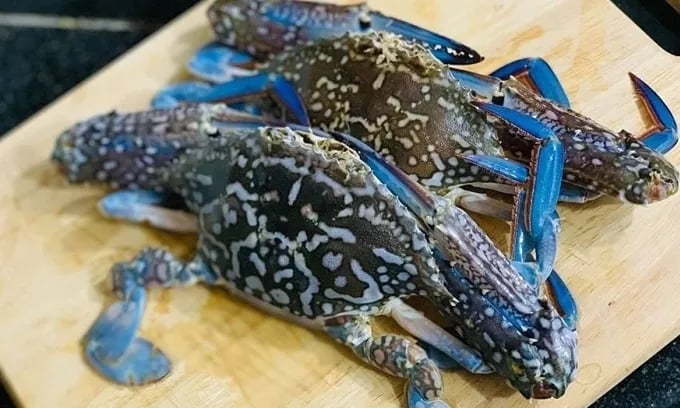
The United States has again allowed imports of Vietnamese blue crab after NOAA announced a finding that Vietnam's crab harvesting is equivalent to U.S. standards under the Marine Mammal Protection Act (MMPA). According to VASEP, NOAA concluded that four Vietnamese crab fishing methods (Fishery IDs 13164, 13206, 13204 and 13205) are equivalent in terms of management effectiveness. This means crabs and other seafood harvested by Vietnam's crab fisheries can continue to be imported into the U.S. market. The result implies that crab exports to the United States can proceed as before, without COA (certificate of origin) requirements for domestically sourced materials. This is a positive signal for the crab sector amid the U.S. being a key market. In 2025, Vietnam exported 4,143 tons of crab to the U.S. According to NOAA, in January Vietnam separated the old fishery code into four independent methods by target species and gear. After reviewing files, technical data, and additional information, the U.S. determined all four methods meet the equivalence requirement for management effectiveness. This finding is notable because previously, in an August 2025 preliminary determination, the U.S. NMFS categorized Vietnam's crab fishing as not meeting MMPA requirements, along with Indonesia, Sri Lanka, and the Philippines. However, companies should still monitor raw material origins. If raw materials come from other countries, materials from fishing methods not recognized as equivalent by the U.S. should not be used. If using materials from other fishing methods, COA from the country of origin remains a mandatory requirement. The equivalence recognition for Vietnam is valid through 12/31/2029 and could be revised or terminated if the program no longer meets the applicable conditions. NOAA also recommended Vietnam to strengthen measures to reduce the risk of mortality or serious injury to marine mammals, such as expanding observer programs, increasing electronic monitoring, and promoting conservation of species like the Irrawaddy dolphin. In this review, the Philippines did not meet the requirements for crab-related fisheries, while Indonesia and Sri Lanka were recognized as equivalent. The U.S. says the ban could block more than 2,000 tons of blue crab imports from the Philippines. NMFS also issued a separate report on crab fisheries using traps, pots, and nets in the Philippines, noting the lack of mandatory reporting of deaths or injuries of marine mammals in fishing activities.
Premium gym chains are entering a “golden era” that is ending or already in decline, as rising operating costs collide with shifting consumer preferences toward more flexible, community-based ways to exercise. Long-term memberships are shrinking, margins are pressured by higher rents and facility expenses, and competition from smaller, more personalized…