•
•
•
•
•
•
•
•
•
•
•
•
•
•
•
•
•
•
•
•
•
•
•
•
•
•
•
•
•
•
•
•
•


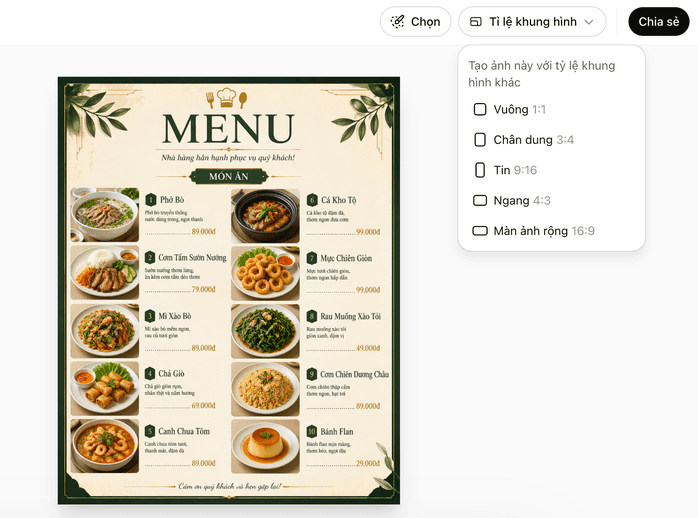
OpenAI’s new image-generation model, Images 2.0, integrated into ChatGPT, is drawing attention from the tech community and users in Vietnam after demonstrating near-perfect accuracy when processing text embedded in images, including Vietnamese. The improvement addresses a longstanding weakness in earlier AI image generations, which often struggled to reproduce written content correctly.
Two years ago, tools such as DALL-E 3 frequently produced misspellings or even invented terms when generating images that contained text. In contrast, Images 2.0 can generate complete, readable content—such as a full restaurant menu—with natural-looking text that is difficult to distinguish from human-made work.
In practical tests conducted in Vietnamese, Images 2.0 (compared with the Image 1.5 version released late last year) reportedly offers faster image generation and higher accuracy within ChatGPT. Vietnamese text is described as displaying almost perfectly, with no spelling errors or letter distortion even for longer passages.
Users can also select multiple aspect ratios, including square, portrait, landscape, and wide-screen formats.
Community feedback suggests Images 2.0 is increasing competitive pressure on rival offerings, including Google’s Nano Banana Pro. One social media user said: “After Google released Nano Banana Pro, ChatGPT finally joined the game with Image 2.0. It understands Vietnamese better and the command structure is more detailed. This way, those guys can design a menu and take orders freely.”
Although OpenAI has not published detailed technical information, the company says Images 2.0 includes a “thinking capability,” which can check results, search for information, and generate multiple image variations from a single request.
OpenAI also states the model can produce complex outputs such as marketing publications, interfaces, and multi-panel comics with high detail.
The ability to render text beyond Latin alphabets—such as Japanese, Korean, or Hindi—has reportedly improved significantly. Output resolution can reach 2K, which is described as helping reproduce small details, icons, and densely packed layouts—areas that were major limitations for earlier AI image-generation models.
Images 2.0 is available to all ChatGPT and Codex users. Paying users can access additional advanced options. OpenAI has also opened the gpt-image-2 API, with pricing that depends on quality and output resolution.
With improvements that largely resolve the problem of misspelled text in AI-generated images, the model is positioned to unlock more practical applications in design and communications, reducing a key barrier that previously limited real-world usability.




Premium gym chains are entering a “golden era” that is ending or already in decline, as rising operating costs collide with shifting consumer preferences toward more flexible, community-based ways to exercise. Long-term memberships are shrinking, margins are pressured by higher rents and facility expenses, and competition from smaller, more personalized…