•
•
•
•
•
•
•
•
•
•
•
•
•
•
•
•
•
•
•
•
•
•
•
•
•
•
•
•
•
•
•
•
•


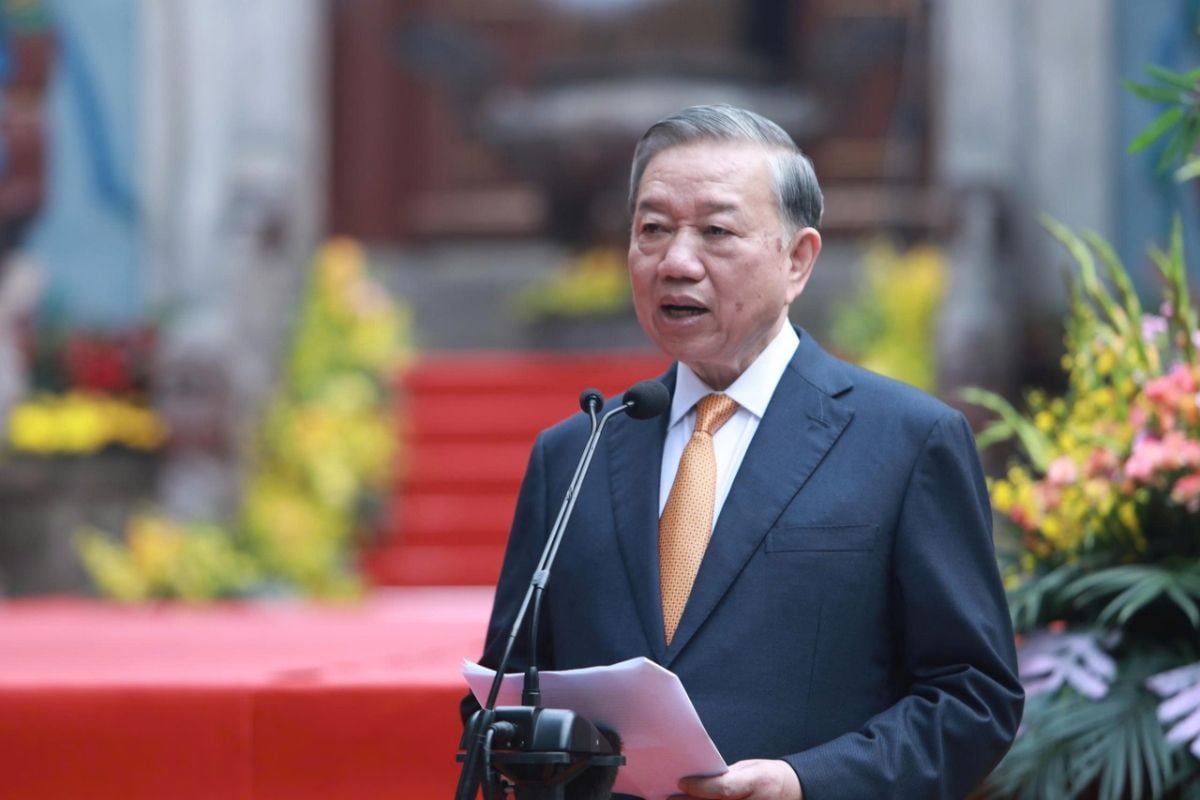
On April 26, 2026, at Hung Temple, General Secretary and State President Tô Lâm delivered a solemn address on the occasion of Hung Kings’ Memorial Day, highlighting the sacred meaning of national origin and the strength of national unity.
Opening his remarks, Tô Lâm said: “In the sacred atmosphere of Hung Kings’ Memorial Day, I am deeply moved to meet the people here at Hung Temple. On the 10th day of the third lunar month, I, along with the people from across the country, whether on the mainland or abroad, share the same origin, the same homeland, and the same Vietnam.”
He noted that people come from different regions and backgrounds—some traveling from plains to highlands, others from far places in the Central and Southern regions, island communities, or from abroad—yet when they step onto the sacred land, they share “one heart: to return to the roots, to our ancestors, and to the homeland of brotherhood.”
Tô Lâm said the phrase “fellow people” carries deep meaning, describing the community as one that shares joys and sorrows, supports one another through hardship, and bears responsibility for the fate of the country.
He pointed to the historical throughline from the Hung Kings to the Ho Chi Minh era, emphasizing patriotism and unity. He cited President Hồ Chí Minh’s message to cadres and soldiers at Giếng Temple: “The Hung Kings built the country; we, the people, must safeguard it.”
Tô Lâm said safeguarding the country means defending independence, sovereignty, and territorial integrity, while protecting peace and the people’s peaceful life. He added that it also involves preserving culture, values, faith, and national dignity, and enabling Vietnam to stand alongside global powers.
He emphasized that defending the country today is not only about weapons on the battlefield, but also about preserving forests, safeguarding water resources, maintaining social peace, upholding family norms, preserving good customs among ethnic groups, maintaining the integrity of cadres, and maintaining the people’s trust in the Party, the State, and the country’s future.
“Keeping the country also means making the country richer and the people more prosperous, and development is about standing shoulder to shoulder with other nations,” he said.
Tô Lâm referenced Hồ Chí Minh’s return to Hung Temple in 1962, recalling the reminder: “If you go, you must reach the destination.” He said the message applies not only to reaching a physical destination, but also to carrying out revolutionary work, serving the people and the country, and fulfilling commitments once a goal or pledge is made.
Expressing gratitude to the people of Phú Thọ, Tô Lâm said generations have regarded preserving Hung Temple as a sacred duty, from those who manage the site to the elderly, artisans, ceremonial teams, dragon dance performers, teachers, students, and nearby households.
He urged the Party apparatus, government, and the people of Phú Thọ to continue safeguarding Hung Temple as a solemn, green, clean, safe, and friendly site, saying preservation should go hand in hand with protecting the environment and cultural space.
He also called for tourism development to align with the legitimate interests of the people, civilized living, and long-term sustainability, noting that local residents are hosts of the festival and that considerate, courteous, and sincere hospitality helps visitors remember, value, and want to return.
Addressing young people and students, Tô Lâm said those visiting Hung Temple should not come only to take photos or enjoy the festival. He said ancestors left the younger generation a country, and the next generation must continue developing it—making it more humane and with higher standing.
He urged them to study and train well, remember the ethics of the Vietnamese people, and understand the nation’s history and culture.
Tô Lâm said the Party and the State always place the people at the center, and that policies should aim to improve living conditions. He said developing the country requires addressing concrete questions, including whether children have easier access to school, whether health facilities serve people better, whether workers have stable jobs, and whether villages are clean and well-kept.
He also asked whether the poor receive better care, whether cadres are close to the people and act with respect and for the people’s benefit, and urged all levels of government, the Fatherland Front, and mass organizations to continue listening to the people, engaging in dialogue, and solving issues people need, worry about, and hope for.
He said grassroots cadres must explain policies to the people, earn their trust, and remove obstacles, and that in areas with ethnic minorities and mountainous regions, policies must reach every village, every household, and every person. He added that resources must be used appropriately so that outcomes are reflected in real improvements in people’s lives.
Tô Lâm said he hopes those returning from Hung Temple will carry with them “a pure joy”—the joy of living in a country with roots, peace, and humanity—and will live up to the contributions of ancestors by doing their jobs better, caring for families, and contributing more to the homeland and the country.
He also expressed the hope that the media will continue to spread positive images of the festival, stories of decency and civilized actions, and the cultural values of Hung Temple and the homeland—helping people understand correctly, act correctly, and take pride correctly.
Leaders of the Party and State paid respects at Hung King Memorial Day at Hung Temple.
Premium gym chains are entering a “golden era” that is ending or already in decline, as rising operating costs collide with shifting consumer preferences toward more flexible, community-based ways to exercise. Long-term memberships are shrinking, margins are pressured by higher rents and facility expenses, and competition from smaller, more personalized…