•
•
•
•
•
•
•
•
•
•
•
•
•
•
•
•
•
•
•
•
•
•
•
•
•
•
•
•
•
•
•
•
•


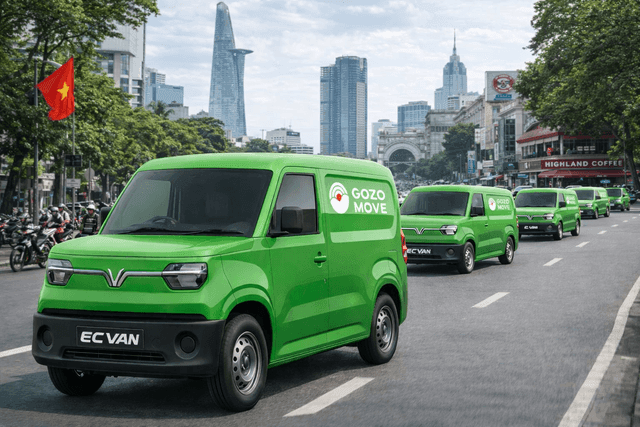
In Vietnam’s digital economy, logistics is no longer limited to physical transportation. However, market data indicate that most Vietnamese logistics companies still operate under a linear logistics model, where supply chains are fragmented into separate touchpoints, disrupting information flow.
This lack of a centralized coordination platform keeps Vietnam’s logistics share of GDP high while also wasting existing resources. The resulting value chain is less flexible and has reduced adaptability to macroeconomic changes.
The drawbacks of the traditional logistics model are reflected not only in asset scale but also in weak synchronization across infrastructure layers. Data disconnection across operating tiers leads to efficiency losses, particularly in three areas:
To address internal bottlenecks, the logistics industry is shifting toward redefining core capabilities. This is not only an expansion of physical infrastructure, but a structural change in operations—from a fragmented supply chain to an integrated ecosystem.
The traditional model emphasizes local optimization at each step. In this linear structure, enterprises face repeated risks of value chain disruption and cost pressures due to insufficient synchronization across links. Focusing on single-unit efficiency can raise overall logistics costs and reduce the ability to respond to market fluctuations.
The market is increasingly recognizing the need to establish a comprehensive Logistics OS that connects the digital layer with physical infrastructure. Such a shift enables the unification of cargo flow and information flow on a centralized management platform.
As a result, logistics can be repositioned from a cost center to a strategic competitive advantage. Through multi-layer coordination optimization, the ecosystem model accelerates the movement of goods and supports preventive mechanisms to maintain supply chain resilience amid market volatility.
In a market moving toward greater stability and transparency, GOZO positions itself as an infrastructure developer rather than a pure transport operator. Its approach focuses on integrating three infrastructure layers to create synergistic value and reduce fragmentation in the traditional supply chain.
By structuring logistics into a unified OS, GOZO aims to improve system performance and set new standards for execution capability in the industry.
GOZO’s competitive advantage is shaped by a 6-pillar ecosystem: System, Platform, Franchise, Operational Branding, Data & AI, and Culture. Within these, “Green” and “Digital” are integrated as strategic directions. The company builds a data-centered governance system to optimize resources and reduce waste from the central coordination layer.
From a system economy perspective, GOZO’s model does not focus on direct speed competition with express couriers or on building global-scale infrastructure alongside international players. Instead, its competitive advantage is proactive operation and the accumulation of brand trust through performance.
“Our direction does not stop at a pure transport company but aims to build a trust infrastructure. GOZO's goal is to establish an ecosystem where every transaction is controlled by transparent technology, standardized HR processes, and sustainability,” said Phan Duy Minh, Founder & CEO of GOZO.
GOZO’s approach measures success by system efficiency and network stability rather than asset scale. In a market characterized by volatility, the combination of physical infrastructure and an operating system is expected to help domestic enterprises optimize costs and deepen Vietnam’s participation in global value chains.
Source: Nhịp sống thị trường, 04/21/2026 12:11 (GMT+7)
Original link: markettimes.vn/logistics-viet-nam-he-dieu-hanh-khai-tu-tu-duy-van-hanh-cu-115655.html


Premium gym chains are entering a “golden era” that is ending or already in decline, as rising operating costs collide with shifting consumer preferences toward more flexible, community-based ways to exercise. Long-term memberships are shrinking, margins are pressured by higher rents and facility expenses, and competition from smaller, more personalized…