•
•
•
•
•
•
•
•
•
•
•
•
•
•
•
•
•
•
•
•
•
•
•
•
•
•
•
•
•
•
•
•
•


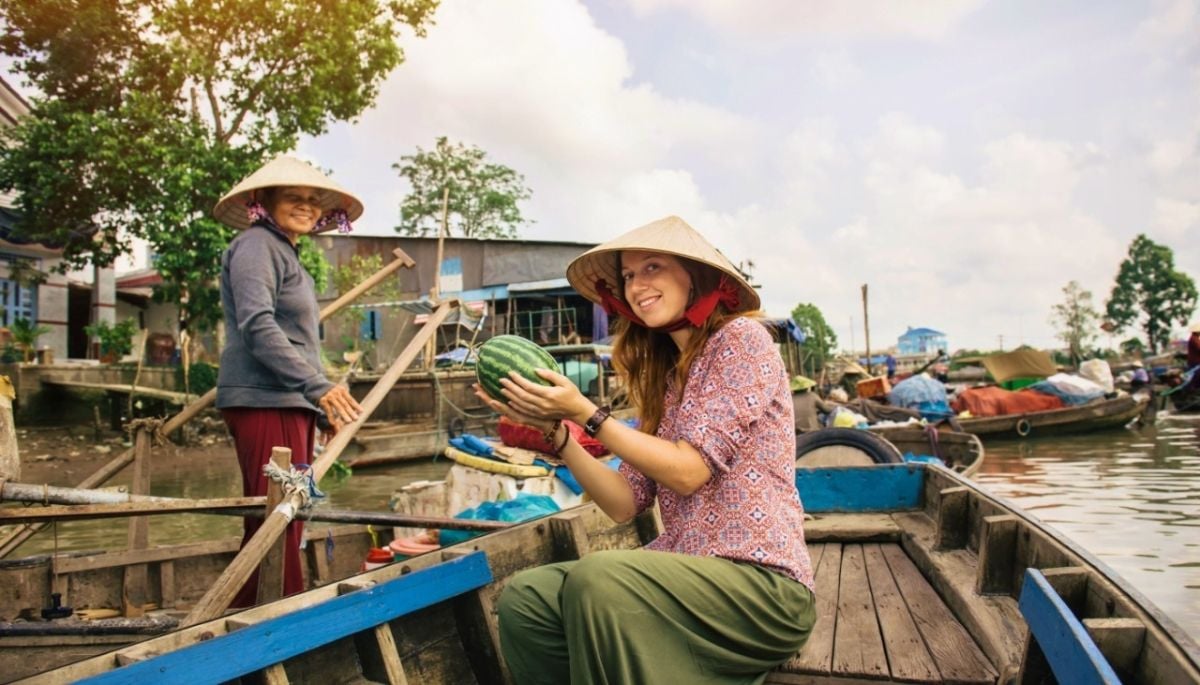
Rural tourism is gradually reshaping how communities view their own countryside, turning many areas into more livable destinations. Across upland villages and riverine orchards, farm visits and craft-village experiences are increasingly designed to let travelers participate in everyday agricultural life. The trend aligns with growing demand for sustainable and responsible experiential travel, which UNWTO Secretary-General Zurab Pololikashvili said enables visitors to generate positive impacts at the destinations they visit.
Statista projects the global experiential travel market will reach $360 billion by 2025. A GetYourGuide survey also found that 98% of travelers say promises of unique experiences strongly influence their destination choice.
UNWTO data further shows that travelers engaging in rural tourism account for about 10% of the global tourism market, with annual revenue around $30 billion.
In recent years, many international travelers have paid to experience life as farmers in Vietnam. Instead of relaxing on a sun lounger, visitors wear work clothes, join activities such as wading into rice fields, herding water buffalo, and casting nets—experiences that many describe as among the most memorable of their vacations.
The story of Klabińska, a 26-year-old woman from Poland, visiting Que Son Trung commune in Da Nang, highlights how rural tourism can extend beyond farm work. She initially planned to stay for a week but remained for a month due to the slow pace of rural life. In addition to farming tasks such as cutting grass, watering plants, and tending cattle, she spent afternoons teaching free English to local children, with classes sometimes reaching nearly 60 students.
In Bong Lai village, Bo Trạch commune (Quảng Trị), everyday farm activities have been turned into experiential products. A tourist holding food becomes the leader of hundreds of ducks gathered around, while guided activities also include mounting water buffalo and walking along rural paths. Feeding ducks, plowing fields, and herding buffalo are presented as part of the visitor experience.
In Da Lat, Lang Biang ward offers conditions that support agriculture-linked tourism. Mr. Pham Van Vinh in Dang Len hamlet invested two years ago in high-tech sericulture and converted 1.5 hectares of land into a site for visitors to explore and experience. According to Mr. Vinh, strawberry harvest sold directly to visitors accounts for about 40–50% of the farm’s total yield.
Rural tourism is presented as more than an income source. It can help preserve culture, improve the environment, and raise living standards. When visitors come to villages, they participate in production, enjoy local cuisine, and buy handicrafts—creating a value chain linked to the community.
In response to the trend, many localities have collaborated with farms to offer free English lessons, helping residents communicate more effectively to sell agricultural products and showcase local culture. The article notes that community capacity has improved and that local economies have benefited from growing international tourism.
Nguyen Le Phuc, Deputy Director of the National Tourism Authority, said rural, ecological, and craft village tourism has been integrated into plans of the Ministry of Agriculture and Environment and approved by the Prime Minister.
Despite its potential, experts cited in the article say rural tourism still faces obstacles. Pham Hai Quynh, President of the Vietnam Tourism Association, argued that in many localities, planning and conservation of traditional farming crafts have not been linked with tourism and have not been directly addressed in economic development plans.
The article also states that Vietnam has not yet established a standard for agro-tourism products, leaving operators uncertain about management, promotion, and product development. It adds that tour guides and local hosts have not received formal training, and that policy mechanisms have not been sufficiently attractive to encourage business investment.
To address these issues, Hanoi Tourism Association chair Phung Quang Thang said localities need systematic planning and investment in rural tourism, and should involve experts to develop attractive, unique products—aiming for high impact while avoiding over-investment with low utilization.
To help agro-tourism expand, the Ministry of Culture, Sports and Tourism and the Ministry of Agriculture and Environment signed a joint program to develop effective and sustainable agro-tourism and rural tourism from 2024–2030. Under the collaboration, the two ministries will support businesses and localities in developing agro-tourism linked with building new rural areas.
Premium gym chains are entering a “golden era” that is ending or already in decline, as rising operating costs collide with shifting consumer preferences toward more flexible, community-based ways to exercise. Long-term memberships are shrinking, margins are pressured by higher rents and facility expenses, and competition from smaller, more personalized…