•
•
•
•
•
•
•
•
•
•
•
•
•
•
•
•
•
•
•
•
•
•
•
•
•
•
•
•
•
•
•
•
•


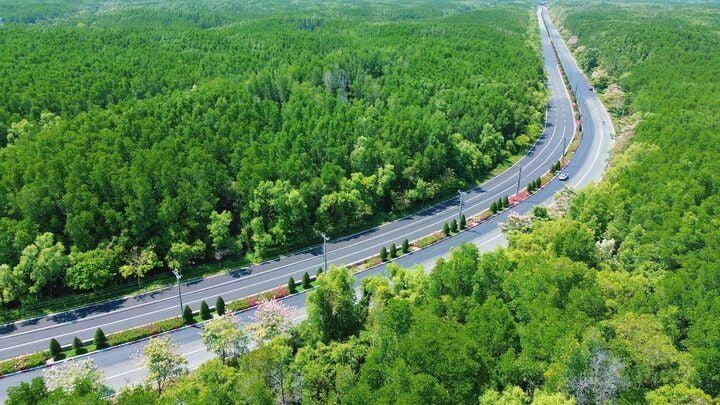
Rừng Sác Road, the main corridor linking central Ho Chi Minh City with Can Gio, has been upgraded to about six lanes. Vingroup has proposed expanding the route to ten lanes to connect to the Can Gio coastal urban area, and the Ho Chi Minh City Department of Finance has provided feedback, including a proposal to study an upgrade plan.
Under the proposal, the developer requests permission to submit a project dossier to construct the section connecting 15B within Tan My Ward (old Nha Be) and to upgrade Rừng Sác Road (Can Gio) with a total length of about 37 km. The investor plans to implement the project in 2026–2028, subject to the city approving the investment policy.
The project would be financed through a PPP Build-Transfer (BT) contract. The payment method could be cash or land compensation, to be determined after the city approves the policy. Total capital is estimated at about 19,000 billion VND, including land compensation and interest during construction.
The proposal divides the work into two segments:
Vingroup also asks Ho Chi Minh City to allow Can Gio Urban Tourism Joint Stock Company (a member unit under Vingroup) to study and prepare a proposal for the project’s investment policy. The company states it has sufficient capacity, financial resources, and local knowledge to implement the road upgrade connecting downtown Ho Chi Minh City to Can Gio.
According to the city’s master plan to 2040, with a vision to 2060, the Nguyen Lương Bằng – 15B – Can Gio bridge – Rừng Sác corridor is identified as the main urban axis, aiming to create a continuous corridor from the city center to the sea in Can Gio and to support completion and connection along the north-south axis toward the coast.
Specifically, Segment 15B directly links to the Nguyen Lương Bằng axis (the former District 7), passes through Nha Be, and connects directly to the Can Gio bridge. At present, travel between the city center and Can Gio relies on the Bình Khánh ferry.
The Planning and Architecture Department says connecting the city center with southern communes via Rừng Sác Road is strategic and urgent. The Project Investment Steering Committee for Traffic and the wards and communes along the route also agree on the need for the project to support Can Gio development and connect the regional corridor.
The Planning and Architecture Department further notes that Can Gio’s master plan includes the Can Gio bridge, the Ben Thanh – Can Gio urban rail line, Rừng Sác Road, and related projects. It recommends studying the capacity of Rừng Sác in combination with the Ben Thanh – Can Gio urban rail line to assess whether upgrading Rừng Sác under the PPP (BT) model is necessary.
The Department of Finance states the entire project is consistent with the city’s master plan guidelines. It proposes that the city approve the investor’s proposal and instruct the investor to conduct research and finalize details based on recommendations from relevant departments and the wards and communes along the route.
Rừng Sác Road, about 35 km long, has been in development since 1986 and remains a key artery linking Can Gio with central Ho Chi Minh City. Can Gio is about 50 km from the city center, with an area of over 71,300 ha. The area is implementing major projects including a 2,870-hectare coastal urban area, the Ben Thanh – Can Gio metro, Can Gio Bridge, the Can Gio – Vũng Tàu sea crossing, and the Rừng Sác – Ben Luc expressway interchange.
The master plan through 2040 (vision to 2060) envisions an urban axis from Nguyen Luong Bang to 15B to Can Gio Bridge to Rừng Sác, connecting to the sea. It forecasts Can Gio’s population at 500,000–600,000 by 2040, with a development focus on protecting the biosphere reserve and mangrove ecosystems, while enabling ecologically controlled residential growth in rural areas.
Can Gio also hosts a special ecosystem recognized as a UNESCO World Biosphere Reserve since 2000.


Premium gym chains are entering a “golden era” that is ending or already in decline, as rising operating costs collide with shifting consumer preferences toward more flexible, community-based ways to exercise. Long-term memberships are shrinking, margins are pressured by higher rents and facility expenses, and competition from smaller, more personalized…