•
•
•
•
•
•
•
•
•
•
•
•
•
•
•
•
•
•
•
•
•
•
•
•
•
•
•
•
•
•
•
•
•


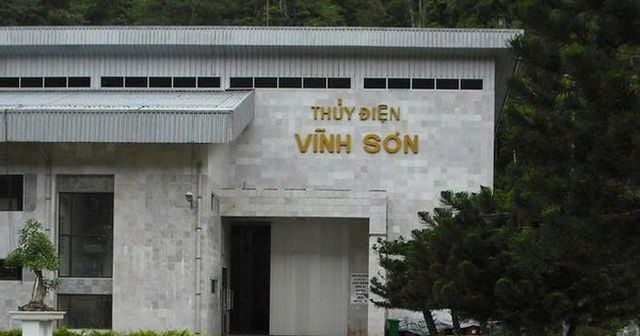
Vinh Son – Song Hinh Hydropower Set Record Date for 5% Cash Dividend payout. CTCP Vinh Son - Song Hinh Hydropower (ticker: VSH, HoSE) has announced that May 14, 2026 will be the record date for exercising rights to receive the fourth cash dividend for 2025. Accordingly, Vinh Son - Song Hinh Hydropower is expected to pay shareholders a 5% dividend, meaning that a holder of 1 share will receive 500 đồng. The payment date is May 29, 2026. With more than 236.2 million VSH shares outstanding, the company is projected to pay about 118.1 billion đồng for this dividend payout. As of December 31, 2025, REE Energy Co., Ltd. — a subsidiary of Cold Electric Refrigeration & Electric (ticker: REE, HoSE) — holds 52.58% of the charter capital of Vinh Son - Song Hinh, equivalent to more than 124.2 million VSH shares, and is estimated to receive over 62.1 billion đồng in dividends. Additionally, Three Electricity Generating Company - JSC (ticker: PGV, HoSE) holds 30.55% of Vinh Son - Song Hinh’s charter capital, corresponding to nearly 72.2 million VSH shares, with an expected dividend of about 36.1 billion đồng. At the 2026 Annual General Meeting held on March 26, 2026, shareholders approved a cash dividend plan of 35%, i.e., 3,500 đồng per share, to be paid to shareholders. Previously, Vinh Son - Song Hinh had advanced 2025 dividends three times totaling 30%. Thus, after this payout, the company will have completed its 2025 dividend distribution. For 2026 business plans, Vinh Son - Song Hinh expects revenue of over 1,886.5 billion đồng and net profit after tax of over 583.8 billion đồng, representing declines of 19.7% and 32.3% respectively versus 2025 results. Additionally, the company projects electricity production in 2026 to exceed 1.9 million MWh, down about 19% from 2025; commercial electricity output is expected to exceed 1.92 million MWh, down about 19.3%. Read more: (read more items are listed on the site but not part of the main article text)
Premium gym chains are entering a “golden era” that is ending or already in decline, as rising operating costs collide with shifting consumer preferences toward more flexible, community-based ways to exercise. Long-term memberships are shrinking, margins are pressured by higher rents and facility expenses, and competition from smaller, more personalized…