•
•
•
•
•
•
•
•
•
•
•
•
•
•
•
•
•
•
•
•
•
•
•
•
•
•
•
•
•
•
•
•
•


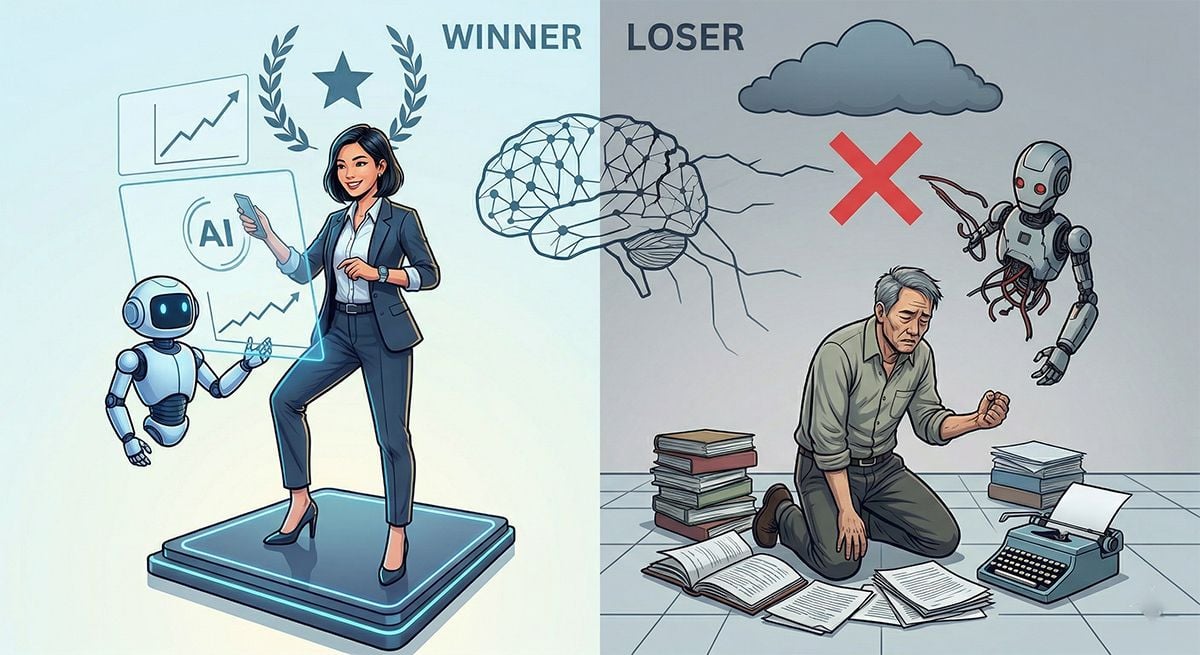
Instead of merely encouraging the use of AI in the workplace, employees now face a demand: 'Use AI as effectively as possible, or risk being laid off.' Amid the wave of artificial intelligence, the fear that AI will steal human jobs has become increasingly real. Stories of companies downsizing staff and replacing them with AI have become not rare, amid expectations of cost-cutting and productivity gains. However, it's not uncommon for reliance on AI to lead to unpredictable glitches, especially when systems aren't stable enough or lack human oversight. Additionally, the tech sector reassures workers that the real worry isn't AI substituting humans, but that those who know how to leverage AI effectively will gradually replace those who do not. In this context, the pressure is not only on how companies deploy the technology but also on forcing employees to adapt. To achieve this, most leaders still pursue relatively familiar approaches. They run internal training, integrate AI tools into workflows, or set productivity targets related to the use of new technology. These measures are encouraging and safe, but do not always yield clear change. When traditional approaches have not yielded clear results, some CEOs have begun to pursue more 'creative'—yet harsher—methods. Recently, a post circulating on X drew attention by describing a special method to promote AI adoption within a company. According to a post on X, the content shared described the CEO of a company selling on TikTok Shop who fired the entire team of his agency, then asked them to 're-take' to regain their positions—this time with the condition of leveraging AI in their work—to meet targets for increasing user engagement through a vast amount of media. That CEO said they are currently selling 600 dietary supplement products from different brands, linked to a large network of content creators who post more than 1,000 videos per month on TikTok Shop. The scale and automation of this operation make effective AI adoption a mandatory condition. Not stopping there, this 'retake' is also like a survival battle among employees. Those who perform better by using AI will keep their jobs, and may even earn a salary twice as high as before, while those who are less effective will be laid off. At this point, AI has truly become a lifeline tool for employees who want to stay with the company. This also brings a notable shift in how work is organized. If previously many firms emphasized collaboration and teamwork, with AI, some environments may shift toward personal performance, even giving rise to the concept of a one-person company—since most of the underlying tasks are performed by AI. However, such approaches are not without risk. Putting employees in a highly competitive environment can boost short-term productivity but also raises questions about corporate culture and long-term sustainability. A highly competition-centric environment can undermine collaboration, which remains a key factor in many fields.


Premium gym chains are entering a “golden era” that is ending or already in decline, as rising operating costs collide with shifting consumer preferences toward more flexible, community-based ways to exercise. Long-term memberships are shrinking, margins are pressured by higher rents and facility expenses, and competition from smaller, more personalized…