•
•
•
•
•
•
•
•
•
•
•
•
•
•
•
•
•
•
•
•
•
•
•
•
•
•
•
•
•
•
•
•
•
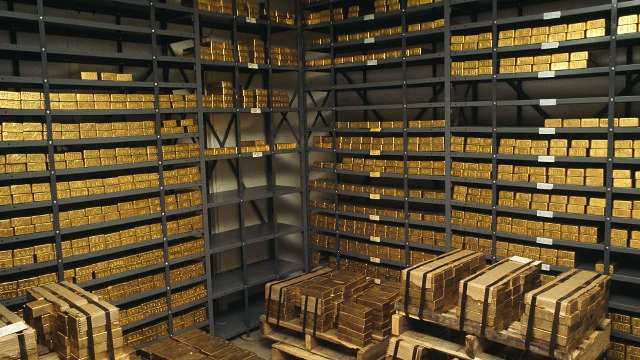
More and more central banks are choosing to store gold domestically rather than at foreign financial centers, amid rising expectations that such reserves will continue to grow to address increasing geopolitical risks. The shift is highlighted in the World Gold Council (WGC) annual survey of central bank gold reserves.
The survey indicates that monetary authorities continue to view gold as an important hedge against inflation, geopolitical shocks, and currency risk, even as gold prices have recently corrected during the Iran–U.S. conflict.
According to the WGC survey, central banks bought an average of about 1,000 tonnes of gold per year over the past four years—double the average of the previous decade.
Nearly 90% of central banks participating in the survey expect global central bank gold reserves to rise over the next 12 months. At the same time, 45% expect their core gold reserves to increase, while only 1% anticipate a decline.
The survey was conducted from February to May and included 74 central banks.
The WGC survey also shows a growing preference for holding the bulk of gold reserves domestically rather than storing them at traditional foreign locations such as the Bank of England or the Federal Reserve Bank of New York.
In the past 12 months, 9% of respondents reported increasing domestic gold storage, up from 5% in the previous year. Separately, 10% said they diversified the locations of foreign gold storage, compared with 2% in last year’s survey.
Experts cited the deterioration of global geopolitical relations as a driver of reserve strategy reassessment.
Following Russia’s military campaign in Ukraine and the freezing of about $300 billion of Russia’s foreign reserves, many countries became concerned about access to assets stored abroad during periods of political tension.
Giovanni Staunovo, a commodities analyst at UBS, said the worry that assets may be inaccessible when stored abroad has led some central banks to bring gold home since 2022.
He also noted that gold has symbolic significance as a national asset, which can further encourage countries to store it within their own borders.
Staunovo said the Bank of France recently reduced its exposure to the U.S. by selling a portion of gold stored in the U.S. and buying an equivalent amount in Europe, while not moving physical gold.
UBS forecasts that central banks will buy 750–1,000 tonnes of gold this year.
Staunovo added that while this level of demand may not be sufficient to push gold prices higher, it is expected to provide a stabilizing foundation for the market and help offset weaker jewelry and investment demand.
Looking ahead, the WGC survey shows 7% of central banks expect to increase domestic gold storage next year, while 9% plan to diversify storage locations abroad—up sharply from 2% last year.
Dan Coatsworth, Head of Market Analysis at AJ Bell, said the survey results reflect a broader trend toward reducing concentration risk.
He noted that diversification of risk is prudent, including choosing where to store assets.
The survey suggests the role of gold is evolving: it is still viewed as a reserve asset and inflation hedge, but it is increasingly also seen as a tool to safeguard financial sovereignty in a more polarized environment. For many countries, the focus is shifting from how much gold to hold to where it is stored to maintain absolute control during geopolitical shocks.