•
•
•
•
•
•
•
•
•
•
•
•
•
•
•
•
•
•
•
•
•
•
•
•
•
•
•
•
•
•
•
•
•


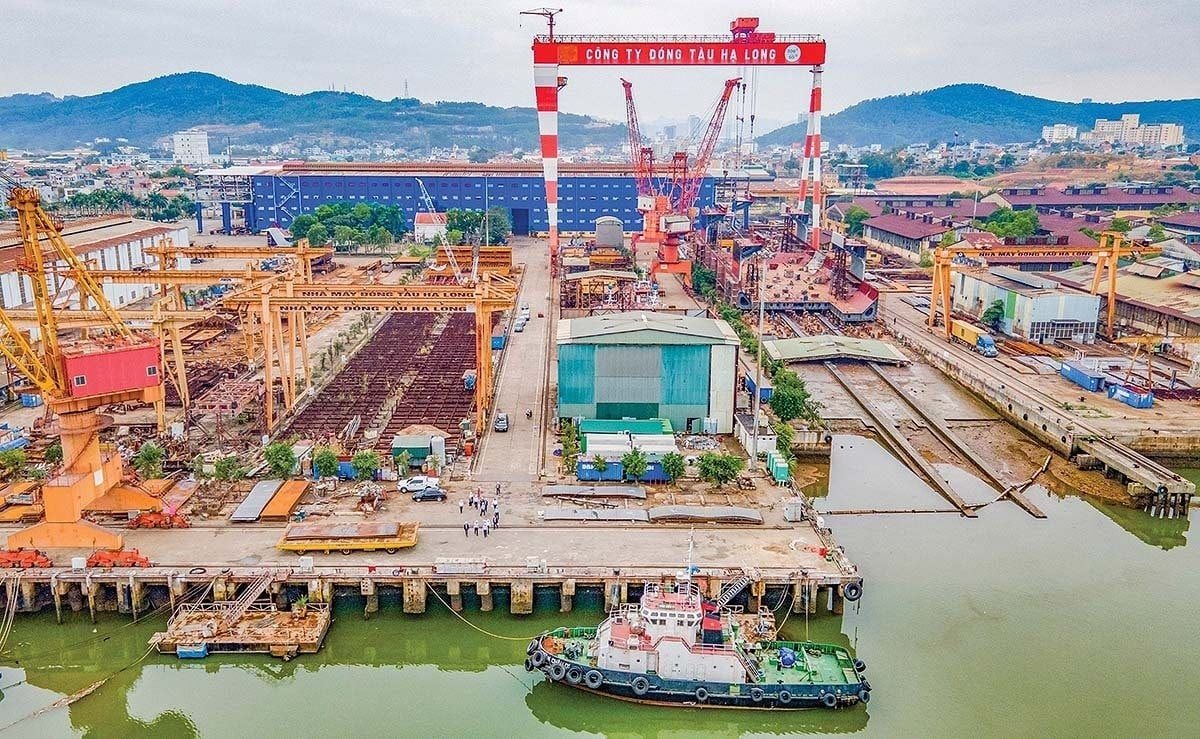
Ha Long Shipyard is mobilizing about 2,400 workers to implement 19 new shipbuilding contracts, according to Mr. Nguyen Van Manh, General Director of Ha Long Shipbuilding LLC, as reported by Xay Dung Newspaper. Most of the orders are high-value vessels for export to foreign shipowners.
The company is building one dry cargo ship with a deadweight of 45,000 DWT, 14 CSOV wind farm service vessels, and one dredger with a capacity of 1,000 m3 for Damen Group (Netherlands). In addition, Ha Long Shipyard is constructing three passenger ships for Scenic Luxury Cruises & Tours (Australia), including two 120m ocean-going yachts and one 85m river cruise ship.
Mr. Manh said the vessels require high engineering and aesthetic standards. The CSOV wind farm service vessels, designed to support offshore wind projects, are built with technologies meeting green criteria, including flexible fuel capability (ethanol blended with low-sulfur diesel), a battery system to help reduce emissions, and multi-stage exhaust gas treatment technology.
The CSOV vessels are also designed with a heliport, a dedicated gangway system to bring engineers and workers to offshore wind turbine towers, and about 90 enclosed cabins to support living needs for more than 100 people, including crew and maintenance staff.
For the 120m yachts, Mr. Manh noted they are built to strict international standards and can serve more than 100 passengers and around 100 crew members. The operating technology emphasizes environmental performance, using low-sulfur fuel and a cooling system using water instead of gas.
Mr. Manh said the total value of the contracts exceeds 5,500 billion VND (excluding materials provided by shipowners). He added that the company has maintained annual revenue above 1,000 billion VND in recent years, with a growth rate of about 10% per year.
Large-scale orders are also expected to support stable employment through 2030 for about 1,000 direct workers at the plant and about 1,400 subcontracted workers.
The plant has been granted land for production facilities and workers’ housing since 1969, covering more than 40 hectares in Giếng Đáy, Bai Cháy town, Quảng Ninh province (now Viet Hung ward, Quảng Ninh). The company is currently facing a plan by Quảng Ninh provincial authorities to adjust zoning of land and water areas where Ha Long Shipyard operates.
Ha Long Shipbuilding LLC is among the large shipbuilding enterprises that previously belonged to Vinashin’s ecosystem. After Vinashin’s collapse in 2010–2012, the company was transferred to the Vietnam Shipping Industry Corporation (SBIC) and continued shipbuilding and repair operations.
Unlike some units that had to halt operations or dispose of assets, Ha Long Shipbuilding has remained in production and is described as one of the remaining bright spots of SBIC.
Vinashin was once viewed as the “steel fist” of Vietnam’s shipbuilding industry in the 2005–2010 period. At its peak, the group managed hundreds of subsidiaries and received favorable terms for loans, land, and heavy industry development. However, Vinashin later faced a serious crisis attributed to excessive expansion and diversification.
Instead of focusing on shipbuilding, the group invested in many sectors outside its core business, including real estate, maritime transport, finance, tourism, and thermal power. In the years leading up to 2010, Vinashin borrowed heavily from domestic and international banks to expand shipyards nationwide. When the global shipping market contracted after the 2008 financial crisis, shipbuilding demand fell, and many contracts were delayed or canceled, leaving Vinashin’s cash flow unbalanced.
In 2010, Vinashin officially defaulted on several large debts, with total outstanding debt reported at about 86,000 billion VND, one of the biggest shocks in Vietnam’s state-owned enterprise sector. After the crisis, the government carried out comprehensive restructuring: Vinashin was downsized and renamed to the Vietnam Shipbuilding Industry Corporation (SBIC) in 2013. Some segments were transferred to Vietnam Ocean Shipping Company (Vinalines), now Vietnam Maritime Corporation (VIMC), while many projects and weak plants were suspended, assets sold, or debt resolution extended.
Premium gym chains are entering a “golden era” that is ending or already in decline, as rising operating costs collide with shifting consumer preferences toward more flexible, community-based ways to exercise. Long-term memberships are shrinking, margins are pressured by higher rents and facility expenses, and competition from smaller, more personalized…