•
•
•
•
•
•
•
•
•
•
•
•
•
•
•
•
•
•
•
•
•
•
•
•
•
•
•
•
•
•
•
•
•


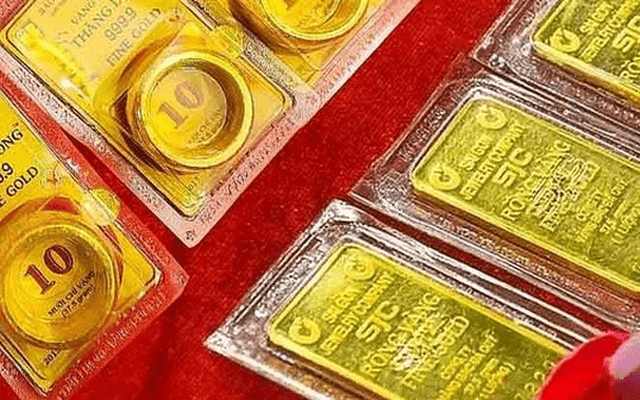
After nearly three consecutive days of declines, domestic gold prices reversed and edged higher on the afternoon of April 17, gaining about 500 thousand dong per tael.
As of early afternoon on April 17, SJC gold ingots were commonly priced at 167.5 – 171.5 million dong per tael. Gold jewelry listed by SJC was at 167.0 – 170.5 million dong per tael.
Other major retailers quoted the following ranges for SJC-listed prices: Bao Tin Minh Chau at 167.5 – 170.0 million dong per tael, and DOJI and PNJ at 167.5 – 170.5 million dong per tael.
Spot gold on the international market was quoted at 4,783 USD per ounce at the same time.
At 10:00, domestic gold prices fell about 700 thousand dong per tael compared with the end of the previous day. At SJC, gold ingots were priced at 167.0 – 170.5 million dong per tael, down 700 thousand dong per tael in both buy and sell directions. Gold jewelry also declined to 166.5 – 170.0 million dong per tael.
At PNJ, gold ingots were adjusted to 167.0 – 170.5 million dong per tael, while gold jewelry was at 167.0 – 170.0 million dong per tael.
World spot gold also retreated, falling to 4,775 USD per ounce.
Earlier on April 17, domestic gold prices hovered around 171 million dong per tael after a sharp drop of about 2.5 million dong per tael the previous day.
At SJC, ingots were quoted at 167.7 – 171.2 million dong per tael, and gold jewelry at 167.2 – 170.7 million dong per tael. At DOJI, both ingots and jewelry were quoted at 167.7 – 171.2 million dong per tael.
At Bao Tin Manh Hai, ingots were quoted at 167.7 – 171.2 million dong per tael, while jewelry was at 167.5 – 170.2 million dong per tael.
On the international market, spot gold slipped away from an important threshold, standing at 4,789 USD per ounce, down about 40 USD per ounce from the morning.
According to Kitco News, the gold market may continue to lack momentum from safe-haven demand as the Philadelphia Fed's manufacturing index remained solid, easing investors’ recession concerns.
The regional Fed's manufacturing outlook index for April rose to 26.7 from 18.1 in March, compared with an economist forecast of around 10.3. The report said manufacturing activity generally continued to expand, with indices for overall activity, new orders, and shipments all rising, while the employment index declined and turned negative.
Kitco News reported that even after gold retook the 4,800 USD/ounce level, the market had not seen significant buying momentum.
In an interview with Kitco News, Michael Brown, senior market analyst at Pepperstone, said the 4,800 USD/ounce level is the first barrier gold needs to overcome to reinforce investor confidence in an uptrend. Brown added that investors remain cautious despite a market leaning toward the possibility of a peace deal, arguing that gold still needs to “digest” the speculative component that pushed prices to record highs in January.
Brown also noted that gold has been trading more like a high-beta risk asset than a safe haven, and that gold ingots are almost no longer clearly correlated with traditional factors such as the USD index or real yields. He said gold’s outlook depends on whether the Middle East conflict cools down, adding that if it persists, he expects gold to stay supported and the short-term trend to be upward.







Premium gym chains are entering a “golden era” that is ending or already in decline, as rising operating costs collide with shifting consumer preferences toward more flexible, community-based ways to exercise. Long-term memberships are shrinking, margins are pressured by higher rents and facility expenses, and competition from smaller, more personalized…




