•
•
•
•
•
•
•
•
•
•
•
•
•
•
•
•
•
•
•
•
•
•
•
•
•
•
•
•
•
•
•
•
•


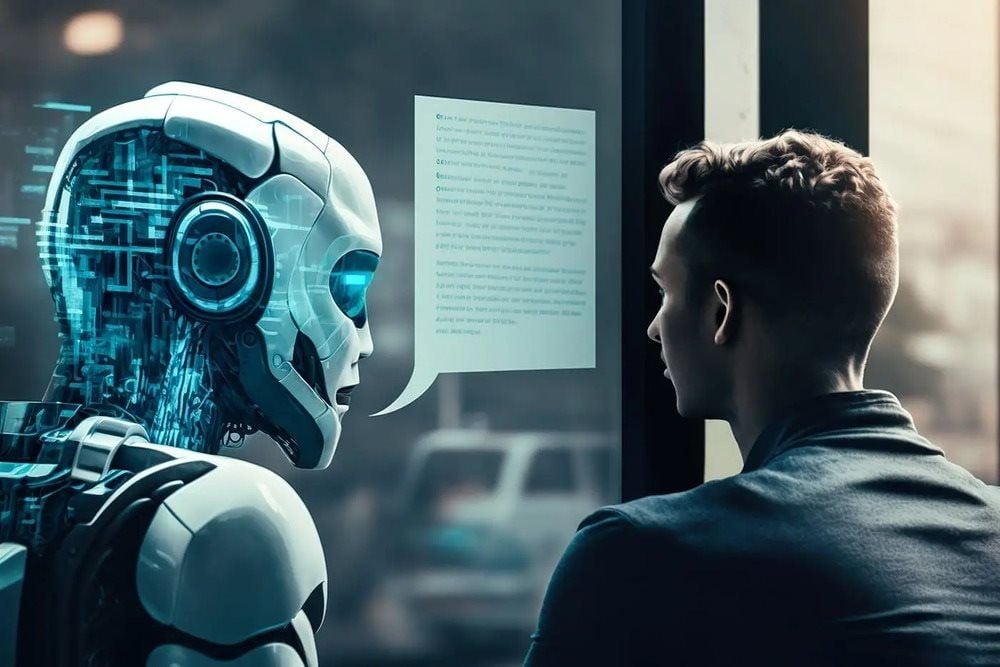
AI is being rolled out to accelerate performance, but an “invisible” set of workplace effects is being overlooked. While organizations measure deployment speed, automation levels, cost savings and productivity gains, the behavioral and psychological impacts on employees are often not tracked—creating risks that may not show up on standard dashboards.
In many organizations, AI discussions focus on familiar operational metrics that support competitive efficiency. However, a Gartner report cited in the article highlights a major gap: 91% of CIOs and IT leaders say they devote little or no time to tracking the behavioral impacts of AI.
The result is a paradox. Performance is measured in detail, yet factors such as psychological stress, productivity influences, corporate culture and employee trust are largely ignored. The article warns that these unmeasured dynamics can accumulate over time and create systemic risk that no dashboard can easily detect.
At the start of AI deployment, outcomes often look positive: output rises, processing times fall and quality improves. But the human response to faster work can lag behind the operational improvements.
As AI takes on tasks that previously required specialized expertise, employees may begin to question the value of long-developed skills. The article also notes that this shift can undermine ownership and intrinsic motivation.
In parallel, employees may experience insecurity—not necessarily fear of job loss, but ambiguity about roles. As AI systems take a larger role in decision-making, responsibility boundaries can become harder to define, particularly with black-box models where results may be difficult to explain. The article frames this as a pressure point: if errors occur, who is responsible?
AI-based monitoring tools can also change how employees perceive their work environment. For some, such tools may feel supportive; for others, they can create a sense of constant surveillance that erodes trust.
The article cites research referenced by HR Reporter indicating that when employees feel threatened by AI, they tend to conceal information rather than cooperate, and the spirit of sharing declines in favor of protective behaviors.
A Harvard Business Review study cited in the article finds that AI-generated insights can improve productivity while reducing intrinsic motivation by about 11% and increasing boredom by 20%. This produces a trade-off: efficiency rises while engagement declines.
The article also notes that AI may not reduce workload as initially expected. As processes speed up, expectations can rise, leading employees to work harder, faster and more continuously to demonstrate capability and learn new skills—an environment that can contribute to burnout, described as an “invisible cost” of performance.
Even when dashboards prioritize tangible metrics such as output and costs, intangible factors—confidence, belonging and recovery time after mistakes—are rarely tracked. The article adds that AI stress does not always appear as open resistance; it can show up as employees taking on too much work to prove their value or withdrawing from daily collaboration.
Isolation is another signal. When AI mediates more processes, human-to-human interaction can decline. Work may become more efficient, but it can lose the community element that supports corporate culture.
At the leadership level, AI can assist with drafting reports, analyzing data and planning. But the article cites McKinsey & Company to emphasize that AI cannot replace core leadership duties such as ethical judgment, guiding people and building trust.
If leaders lean too heavily on AI for relational responsibilities, employees may feel unsupported—an impact the article describes as invisible but long-term.
The article highlights psychological resilience, adaptability and maintaining stability during change as an approach now emphasized in the context of AI adoption. It cites a Nature study stating that people with high resilience tend to preserve self-confidence and optimism when confronted with AI-related job risks.
It also argues that resilience is measurable and improvable, and should be treated as a strategic factor alongside technical indicators in AI deployment.
To reduce anxiety driven by uncertainty, the article calls for clarity on how AI will be deployed, what will change, and what remains human. It also stresses the importance of clearly defining responsibility so employees understand the boundary between AI decisions and human judgment.
Reskilling is described as crucial—not only to preserve current roles but to help employees adapt to future roles. Finally, the article emphasizes that trust should be preserved as a strategic asset, with oversight and analytics systems deployed with controls, transparency and consensus.
The article concludes that the question is no longer whether to apply AI, but how to deploy it wisely. Metrics such as speed, productivity and profits are easier to measure, but longer-term determinants of success—confidence, safety and employee trust—are less tangible. With 91% of leaders not tracking these factors, the article frames the gap as an opportunity to redefine management in the AI era.
Source: CIO






Premium gym chains are entering a “golden era” that is ending or already in decline, as rising operating costs collide with shifting consumer preferences toward more flexible, community-based ways to exercise. Long-term memberships are shrinking, margins are pressured by higher rents and facility expenses, and competition from smaller, more personalized…