•
•
•
•
•
•
•
•
•
•
•
•
•
•
•
•
•
•
•
•
•
•
•
•
•
•
•
•
•
•
•
•
•


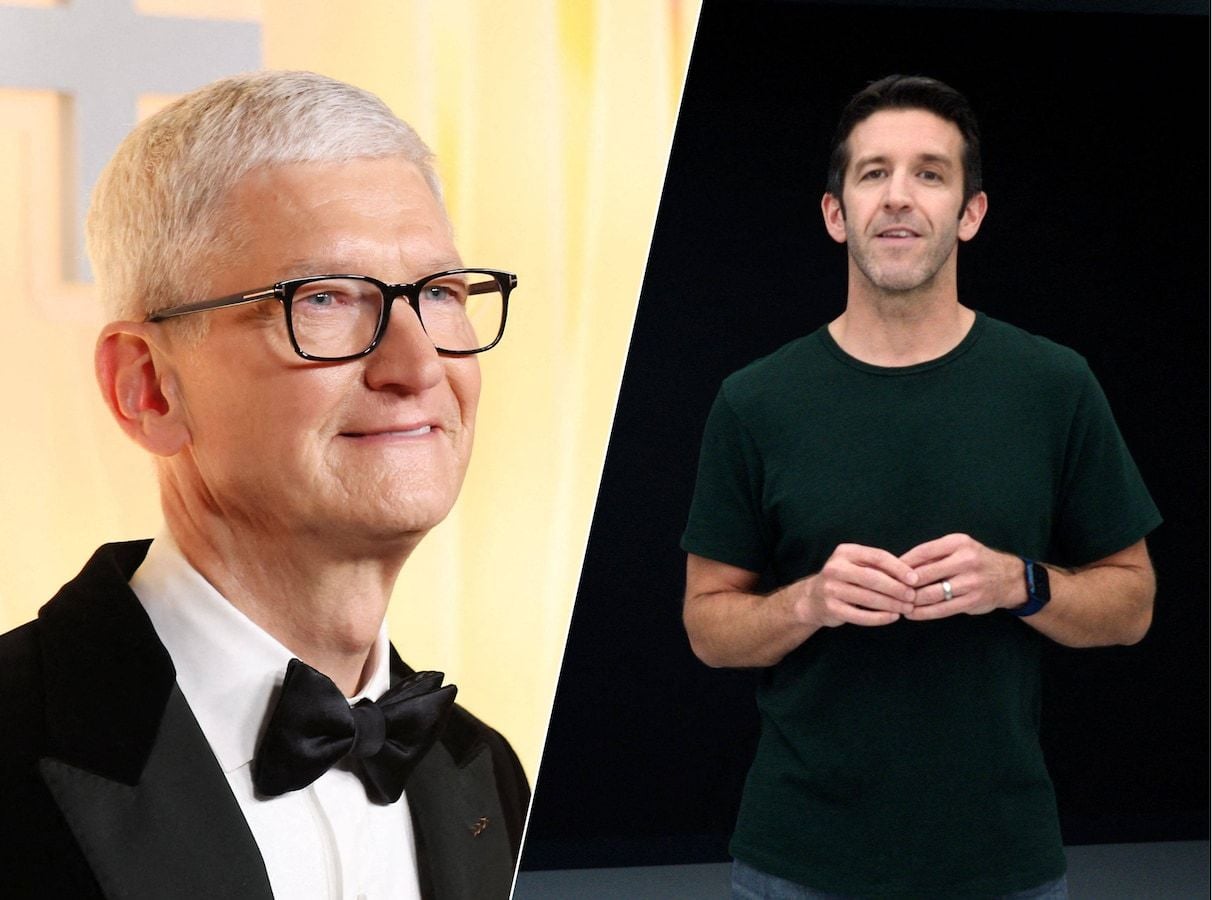
After extensive speculation, Apple has confirmed that Tim Cook will step down as CEO. On September 1, 2026, Apple will appoint a new chief executive, with the company’s hardware leadership taking center stage at a time when artificial intelligence is reshaping the technology sector.
Apple’s current hardware chief, John Ternus, will assume the CEO role starting September 1, 2026. The appointment comes as major technology companies accelerate AI integration across their product ecosystems, including Google’s push to embed AI into its offerings, Microsoft’s deployment of Copilot across Windows and Office, and OpenAI’s continued release of stronger models. Anthropic’s ongoing AI tooling also signals disruption across software categories.
Apple’s transition arrives amid questions about how quickly its AI capabilities are meeting user and market expectations. Siri remains behind newer AI assistants, and Apple Intelligence—an AI feature anticipated to launch in 2024—received mixed reactions from users and analysts. Apple Vision Pro, Apple’s major bet on a future computing platform, has also yet to achieve commercial traction.
John Ternus, 50, is Apple’s senior vice president responsible for hardware engineering. He joined Apple in 2001 and earned a mechanical engineering degree from the University of Pennsylvania. He has been with the company for 25 years.
Ternus has been closely associated with many Apple products released over the past decade, including iPhone, iPad, AirPods, and Apple Silicon chips—the in-house hardware platform Apple built as a core foundation for its devices. He has served as SVP of hardware engineering since 2013 and has appeared at major product launches in recent years.
The appointment reflects a broader direction in Apple’s AI strategy. Ternus is described as known for a meticulous, hardware-centric approach, particularly for display devices. Apple’s long-standing model as a hardware-centered company is positioned as an advantage in the AI era, where the company’s differentiation is framed as the integration between hardware and software.
Rather than focusing on building massive cloud-based AI models like some competitors, Apple’s approach emphasizes on-device AI. This requires powerful chips, optimized hardware architecture, and deep hardware-software integration—areas aligned with Ternus’s career.
Alongside naming Ternus as CEO, Apple also promoted Johny Srouji, chief architect of Apple Silicon, to Chief Hardware Officer. Together, the two moves are presented as signals that Apple is betting on hardware as a core competitive edge in the AI era.
Even with a hardware advantage, the article notes that Apple’s relative weakness remains in software, data, and AI models. It also highlights that Ternus has not led a standalone software business, has not faced CEO-level investor pressure, and has not previously served as the public face of the company in the way a CEO must.
The article compares the situation to Apple’s earlier leadership shift in 2011, when Steve Jobs died. At the time, some questioned Apple’s choice to promote a COO focused on supply chain and operations rather than a designer with a more vision-driven profile.
It then points to Tim Cook’s subsequent record: Apple’s market capitalization grew from about $350 billion to over $4 trillion, the company built a services business that generates about $109 billion in annual revenue, and it turned the global supply chain into a competitive advantage described as difficult for rivals to replicate.
With AI reshaping the technology industry again, the article frames a central question: whether John Ternus can replicate the kind of transformation Tim Cook delivered, or whether Apple will need a different path to adapt to the new competitive landscape. The outcome is described as unresolved.
[Source: Nguyen Hai]





Premium gym chains are entering a “golden era” that is ending or already in decline, as rising operating costs collide with shifting consumer preferences toward more flexible, community-based ways to exercise. Long-term memberships are shrinking, margins are pressured by higher rents and facility expenses, and competition from smaller, more personalized…