•
•
•
•
•
•
•
•
•
•
•
•
•
•
•
•
•
•
•
•
•
•
•
•
•
•
•
•
•
•
•
•
•


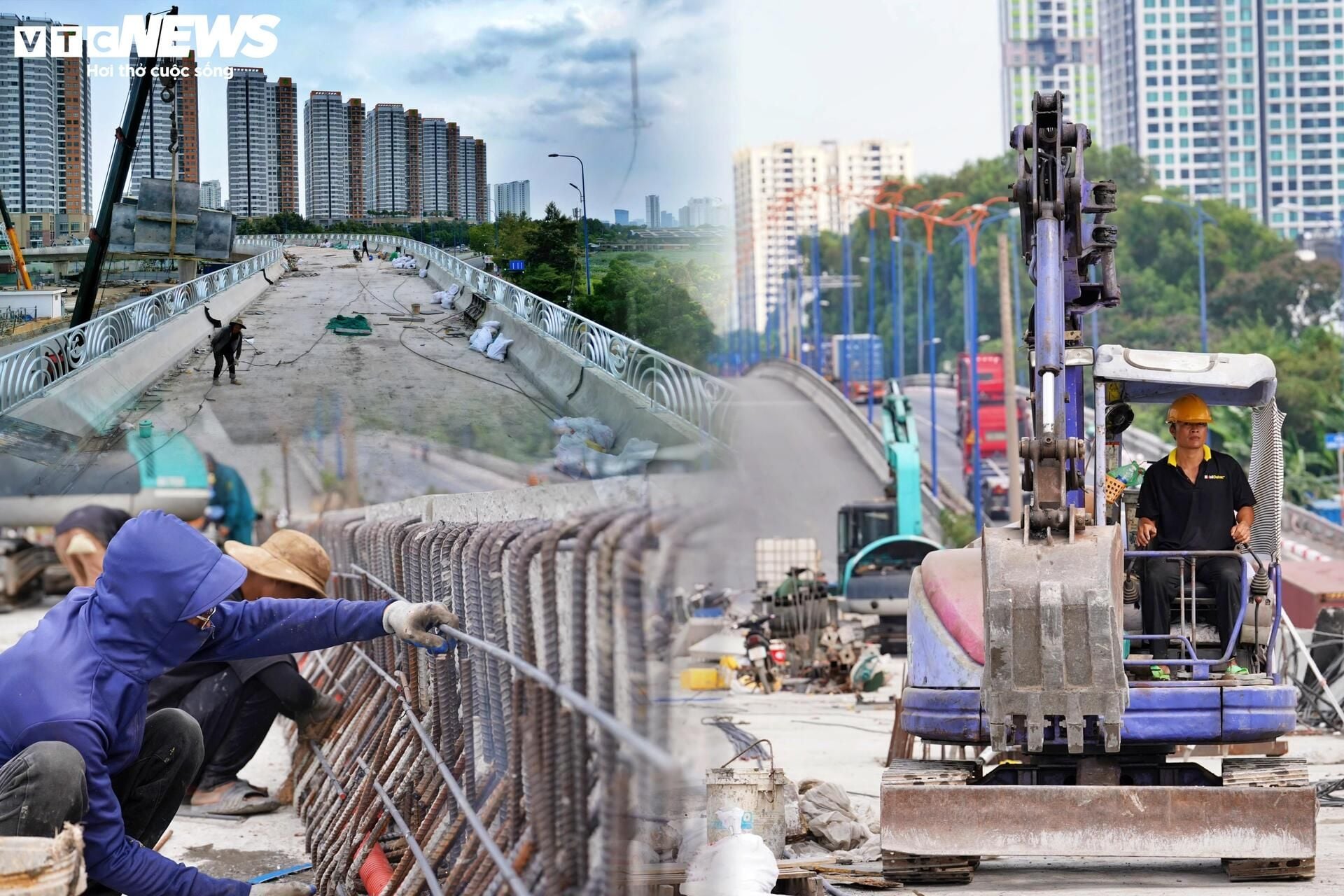
Work is underway at the An Phú Interchange construction site in Ho Chi Minh City in mid-April under hot conditions, with dozens of engineers and workers operating in continuous shifts to complete the N3 overpass on schedule. The N3 branch has reached about 99% completion, with remaining tasks mainly including railing installation, curb finishing, surface cleaning, and comprehensive technical checks before commissioning. The contractor said that although the work is largely finishing touches, the required technical standards and aesthetics remain high.
The N3 branch is about 400 meters long and 9 meters wide. It is designed to help relieve traffic currently concentrated on Mai Chí Thọ Street through Đồng Văn Cống toward Cat Lai Port, a long-standing congestion hotspot.
Work is also accelerating on the remaining N4 branch (from Đồng Văn Cống to Mai Chí Thọ). The leading portion is progressing, and the N4 branch is expected to finish by late June 2026.
According to the project management board, the overall An Phú interchange project has completed more than 70% of its total scope. Several major components are already in use or largely complete, including the HC1 tunnel, the HC1-02 and N2 overpass, and related works such as the Ba Dat Bridge and the Giồng Ông Tố Bridge.
Despite the progress, the project faces difficulties at the N1.2 branch due to ground clearance on Luong Dinh Cua Street. The management board said that if about 22,000 square meters of clear land is delivered, this component is expected to be completed by November 2026.
The An Phú Interchange began in 2021 with total investment of around 3.4 trillion dong. Upon completion, the project is expected to ease congestion at the eastern gateway of Ho Chi Minh City and improve connectivity between major traffic corridors in the southern economic region.
Premium gym chains are entering a “golden era” that is ending or already in decline, as rising operating costs collide with shifting consumer preferences toward more flexible, community-based ways to exercise. Long-term memberships are shrinking, margins are pressured by higher rents and facility expenses, and competition from smaller, more personalized…