•
•
•
•
•
•
•
•
•
•
•
•
•
•
•
•
•
•
•
•
•
•
•
•
•
•
•
•
•
•
•
•
•


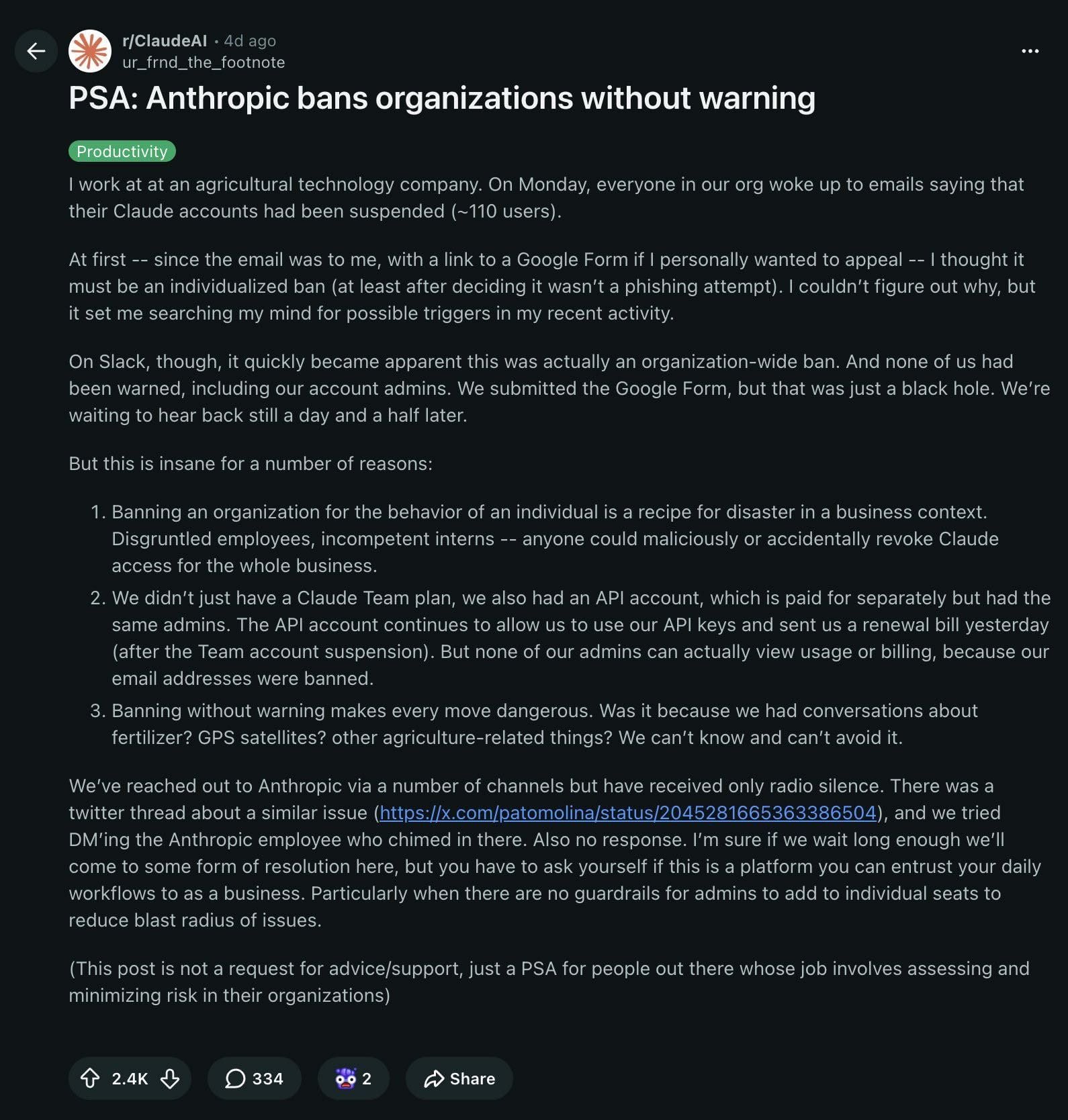
Anthropic, the AI platform provider, has drawn scrutiny over its enterprise reliability as a suspension incident raises questions about trust in the company. On Monday, all 110 employees at a US agriculture-tech firm found their Claude accounts suspended without warning; administrators were also unable to access the system. Initially, staff thought it was a personal ban, but Slack exchanges revealed the entire organization was locked with no exceptions. The company submitted an appeal following the incident, but 36 hours later there had been no official response. Efforts to reach Anthropic through various channels, including direct messages to employees previously active in similar discussions on social media, went unanswered. Meanwhile, even as user accounts were blocked, the API accounts at the vendor continued to operate and incur costs; one day after the lock, renewal invoices arrived. Administrators could not log in to check usage or costs because their emails were blocked as well. In short, the organization was paying for a service it could not access. Many questions remain about the cause—whether internal-related content moderation triggered by work terms or a resource constraint—but there is no official explanation. The lack of transparency highlights the risk for enterprises relying on automated tools as critical infrastructure. The founder argues the core issue is platform design: a single employee's action could shut down access for the entire organization, posing a major risk for business operations. The incident spread quickly in the user community, with voices noting similar experiences and delays after appeals. Some hypotheses cite overly aggressive moderation on sensitive terms, while others point to resource pressures; but all remain speculative given limited information from Anthropic. As of now, the affected company has not received an official response. In the meantime, it remains in a difficult position: cut off from the platform but still paying for a service it cannot use.





Premium gym chains are entering a “golden era” that is ending or already in decline, as rising operating costs collide with shifting consumer preferences toward more flexible, community-based ways to exercise. Long-term memberships are shrinking, margins are pressured by higher rents and facility expenses, and competition from smaller, more personalized…