From the start of the year, international astronomy calendars have collectively marked 2026 as a year when skywatchers have many memorable “appointments,” including solar eclipses, total lunar eclipses, supermoons and dense meteor showers. The heightened interest is also reshaping travel demand, with more tourists seeking night-sky experiences tied to sustainable tourism.
Spain is preparing to welcome a rare total solar eclipse expected on August 12, 2026. Spanish tourism authorities estimate the event could attract around 10 million international visitors, many of whom are expected to head to rural regions along the eclipse path.
At the Galactica Observatory in Arcos de las Salinas, telescopes are ready for the event described as the rarest in more than a century. Local businesses are also benefiting from “astro-tourism,” including night-sky watching and astronomy experiences.
In eastern Spain, in the village of Camañas, hotel owner Sara Ros of La Carrateria said bookings for August have surged, primarily from international visitors. “This year I’ve received many bookings from the UK, the US, and Germany, even more than from Spain,” she said.
According to NASA and Space.com, on August 12 the Moon’s shadow will sweep across Greenland, Iceland, Spain, Portugal and a portion of Russia, creating conditions for millions to observe the Sun being completely blocked for a few rare minutes.
According to Intrepid Travel, 2026 total-eclipse tours sold out quickly. In response to rising demand, the number of trips to Egypt in 2027 has been doubled. Intrepid Travel also said most registrants are middle-aged travelers and multi-generational families, reflecting broad appeal for this type of travel.
If solar eclipses are the peak events, meteor showers are the recurring “appointments” of the sky in 2026. Space.com and international astronomical calendars indicate familiar showers will continue, including the Lyrids in April, the Eta Aquariids in early May, and the Perseids in mid-August 2026.
In India, destinations such as Hanle and the Spiti Valley—known for pristine night skies—have seen rapid hotel-booking fills. Other emerging locations mentioned include Dhordo, Kaza, Munsiyari, Shaheed Dweep, Turtuk, Kalpa, Coorg and the Pench Tiger Reserve, as night-sky tour offerings expand.
The article also notes that some Indian states are identifying villages that could be transformed into “Astronomy Villages,” aiming to curb light pollution while generating income for residents. The shift is presented as closely linked to sustainable travel.
In the Americas and Europe, the April Full Moon—described as an unusually large and brighter supermoon—has influenced air travel demand. Throughout April, airlines serving flights to night-sky destinations in Mexico, Canada and the U.S. Southwest reported load factors above 95% for many consecutive nights.
Industry data cited in the article show searches for flights combining astronomy-tourism destinations with April travel dates rose 340% since mid-March. One example given is Flagstaff Pulliam Airport (FLG) in Arizona, which typically handles 5–7 departures per day but rose to 18–22 departures during peak stargazing periods.
In Europe, Swiss airports including Zurich (ZRH) and Basel-Mulhouse (BSL) reported overcapacity due to passenger traffic bound for observation sites in the Jura mountains and southern Valais. German airlines added seasonal flights to remote runways in Bavaria and the Harz mountains in April 2026.
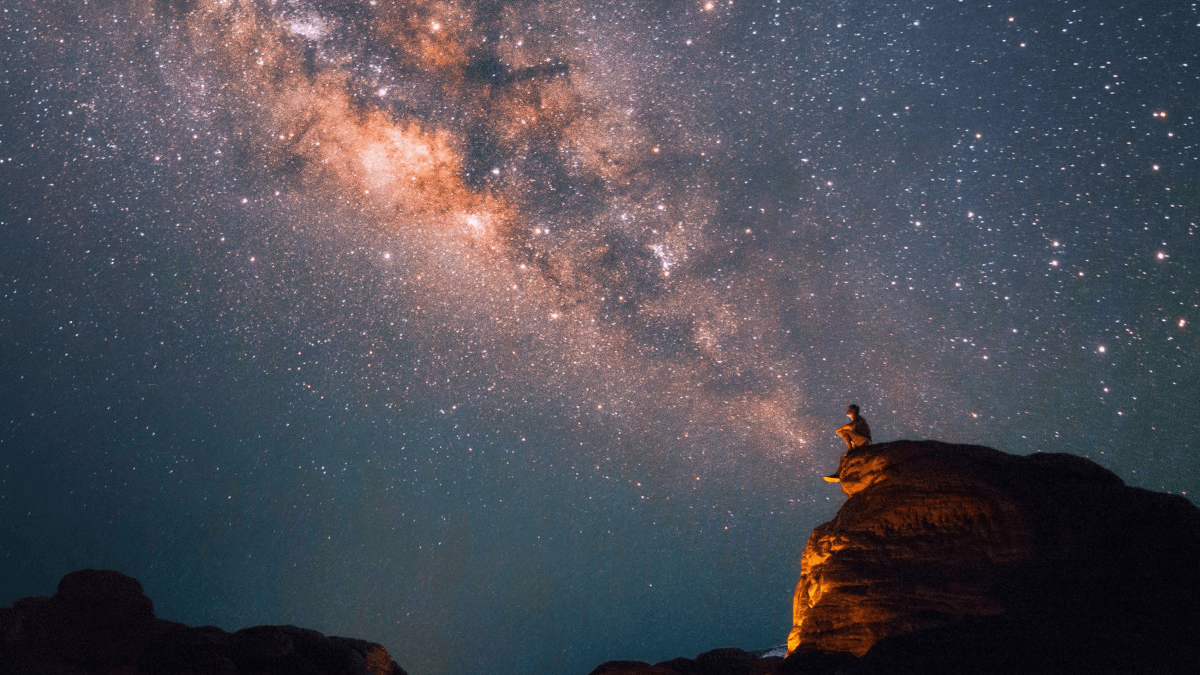
In Vietnam, images of a starry sky and the Milky Way above Con Dao have circulated on TikTok, Facebook and photography groups. The article says many young people are willing to stay up all night with cameras and tripods to capture the Milky Way over tranquil skies.
Beyond individual experiences, the Milky Way-hunting trend in Con Dao is beginning to hint at a travel product, with some families bringing children to night beaches to stargaze and, at times, pairing the activity with astronomy lessons.
Pham Anh Vu, Deputy General Director of Vietnam Tourism, said that if organized properly, it could become a niche travel product with high value, such as photo tours, overnight astronomy retreats or seasonal astronomy-experience tours.
More broadly, the article links the development of astronomy tourism to Vietnam’s effort to diversify nocturnal travel offerings and align with global trends toward sustainable travel and immersive experiences. It also notes that since the Vietnam Space Museum opened at Hoa Lac High-Tech Park in August 2025, it has hosted many visiting groups, mainly students from local schools.
In Quy Nhon, the Explorascience Quy Nhon center is described as the country’s first science center and the second in Southeast Asia. One of its activities is the “Night Journey” astronomy-experience tour held on weekends. Operating since 2024, the program has attracted thousands of visitors and is presented as a highlight of Quy Nhon’s nocturnal tourism.
According to Booking.com’s 2025 report cited in the article, 74% of Vietnamese travelers express a desire to explore destinations suitable for nighttime activities. In particular, 70% are excited to participate in astronomical activities such as stargazing and learning about rare cosmic events, pushing these trips beyond conventional leisure.
The report also says 72% of Vietnamese travelers are willing to choose accommodations designed to minimize environmental impact, enabling them to enjoy the night sky in a clear and vibrant setting.