•
•
•
•
•
•
•
•
•
•
•
•
•
•
•
•
•
•
•
•
•
•
•
•
•
•
•
•
•
•
•
•
•
Authorities in Ho Chi Minh City have dismantled multiple cases involving the production and sale of food products using prohibited chemicals, citing serious health risks to consumers and violations of food safety and consumer rights.
On May 6, 2026, the Ho Chi Minh City Police Department’s Investigation Police Agency filed a criminal case, indicted the suspect, and ordered temporary detention for Tran Minh Thu (born 1979, An Lac Ward, Ho Chi Minh City), director of Thu Tran Hon Trading and Import-Export Co., Ltd., along with three employees, for the crime of “Producing and selling counterfeit foodstuffs.”
Investigators determined that Thu Tran Hon Co., Ltd. did not register and was not licensed to produce the types of chemicals used in the scheme. However, for profit, from September 2025 to present, Tran Minh Thu directed staff to produce fake acetic acid used in foods.
According to the investigation, the suspects procured industrial acetic acid produced in Taiwan, then diluted it with water to produce acetic vinegar used in foods. They bottled the product in empty containers of genuine Korean-origin vinegar for sale.
From September 2025 to date, the group produced more than 500 cases of counterfeit acetic vinegar for sale, generating substantial illicit profits.
Investigators noted that industrial acetic acid is not a naturally fermented product and is used in industries such as textiles, dyeing, and wood processing to prevent mold and improve durability. If used in food, it can cause acute poisoning, mucosal burns in the mouth and stomach, and liver and kidney damage due to residues of heavy metals such as lead and arsenic. It may also cause gastric reflux, abdominal pain, esophageal ulcers, and death at high concentrations.
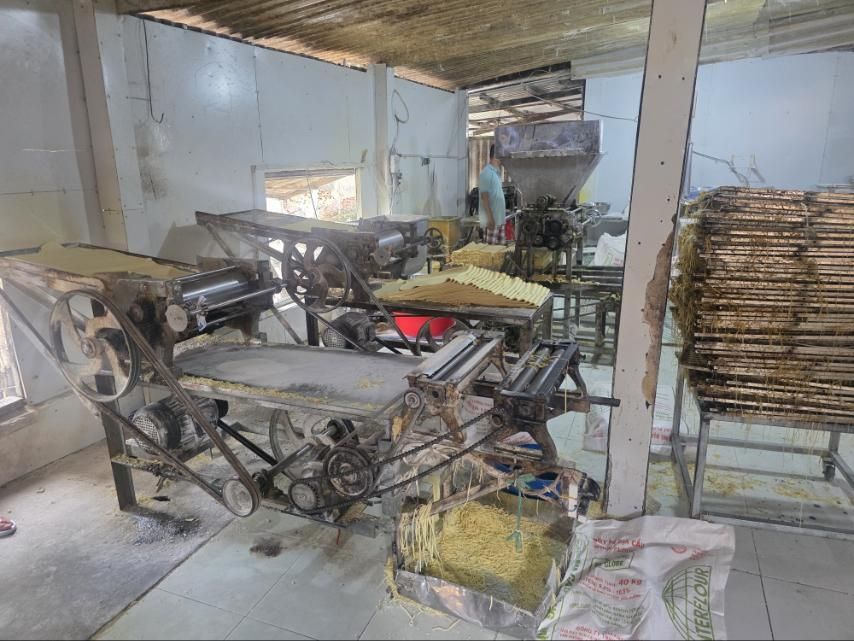
Earlier, at the end of April 2026, the Economic Police Department of Ho Chi Minh City busted a facility producing fresh noodles that investigators said contained prohibited substances.
Police reported that the noodle business run by Nguyen Thi My Phung and her husband Pham Tuan Thanh (both born in 1982) in Tan Tao Ward, Ho Chi Minh City, had been producing and selling fresh noodles (egg noodles and yellow noodles) since 2014.
During the search, authorities seized nearly 700 kg of fresh noodles, 10.2 kg borax, 27 cans of Sodium Silicate (water glass), 10 liters of yellow liquid, and various tools used for noodle production.
Initial investigation results indicated that Nguyen Thi My Phung and Pham Tuan Thanh directly organized the production of fresh noodles using borax (sodium borate) and Sodium Silicate (water glass)—banned substances for use in foods—along with other colorants to make the noodles chewy and extend shelf-life to about 2 days.
Investigators stated that the pair produced and marketed more than 2,800 tons of fresh noodles from 2014 to present, violating food safety regulations. Authorities have proceeded with criminal proceedings for these offenses.









Premium gym chains are entering a “golden era” that is ending or already in decline, as rising operating costs collide with shifting consumer preferences toward more flexible, community-based ways to exercise. Long-term memberships are shrinking, margins are pressured by higher rents and facility expenses, and competition from smaller, more personalized…