•
•
•
•
•
•
•
•
•
•
•
•
•
•
•
•
•
•
•
•
•
•
•
•
•
•
•
•
•
•
•
•
•



Global capital flows over the past week were led by Asian equities, with ABS’s investment banking chief and Deputy Head of ABS Business, Mr. Nguyen The Minh, saying Asian stock indices continued to drive growth. In the emerging market segment, the group maintained a growth ranking of 88 points, signaling stronger relative appeal versus many other investment channels and continued inflows.
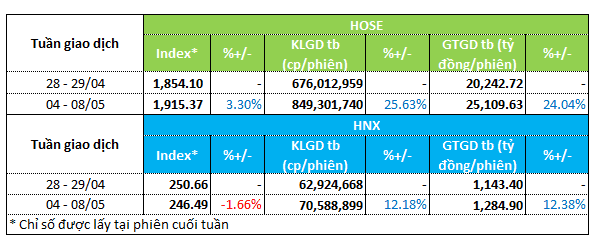
For Vietnam, the VN-Index improved its growth point from 80 to 84 points after reaching a historic high last week. Mr. Minh said the momentum suggests the uptrend remains sustainable.
Oil prices remained a key factor, showing high growth of about 95 points. Even though oil had retraced more than 8% over the past week, the near-term and mid-term trend for oil remains upward, amid ongoing tensions between the US and Iran that have not cooled off.
By contrast, the USD index and VIX—measures of fear in the US stock market—rose only modestly. This indicates investors are not overly worried about geopolitical risks at present.
ABS noted that capital flows are increasingly differentiated across US equities. The Dow Jones rose by 60 points, well below the Nasdaq’s 84 points, reflecting that technology stocks continue to drive market performance.
Dispersion is also visible in the S&P 500: the market-cap weighted version is up about 8% year-to-date and has repeatedly reached new highs, while the equal-weight version is up about 6% but shows signs of stalling at resistance. This aligns with breadth, with about 43% of stocks currently trading below the 200-day moving average.
Mr. Minh highlighted a market signal in the Nasdaq chart, noting it currently resembles the late 1990s. If history repeats, he said the market could enter a blow-off top phase lasting roughly 3–6 months before a pronounced reversal.
Using Bank of America data, ABS projects that as many as 65% of individual investors currently hold stocks, a level returning to the 2021 peak. The implication is that the US stock market is increasingly dependent on individual investors, which can be associated with higher volatility than periods when large institutions dominated.
ABS also said the US market is gradually taking on characteristics similar to Asian markets, where retail capital plays a leading role.
Another trend emphasized by Mr. Minh is the surge in passive funds. He noted that passive funds accounted for about 20% in 2009, but by March 2026 they had surpassed 59%. ABS said this reflects a shift toward market-tracking strategies as the effectiveness of active funds declines.
In Vietnam, VN-Index performance is heavily influenced by large-cap stocks, particularly the Vingroup group. Since the start of the year, the index has risen more than 7%, but excluding VIC, VHM, and VRE, the gain is only about 0.64%, indicating pronounced market polarization.
ABS experts argued that when Vietnam is upgraded to the secondary frontier market group in September 2026, passive funds tracking FTSE Emerging Markets indices will become a more stable and automatic source of capital. They said this would reduce reliance on convincing active funds and allow the market to benefit from periodic rebalancing by global ETFs.

Premium gym chains are entering a “golden era” that is ending or already in decline, as rising operating costs collide with shifting consumer preferences toward more flexible, community-based ways to exercise. Long-term memberships are shrinking, margins are pressured by higher rents and facility expenses, and competition from smaller, more personalized…