•
•
•
•
•
•
•
•
•
•
•
•
•
•
•
•
•
•
•
•
•
•
•
•
•
•
•
•
•
•
•
•
•


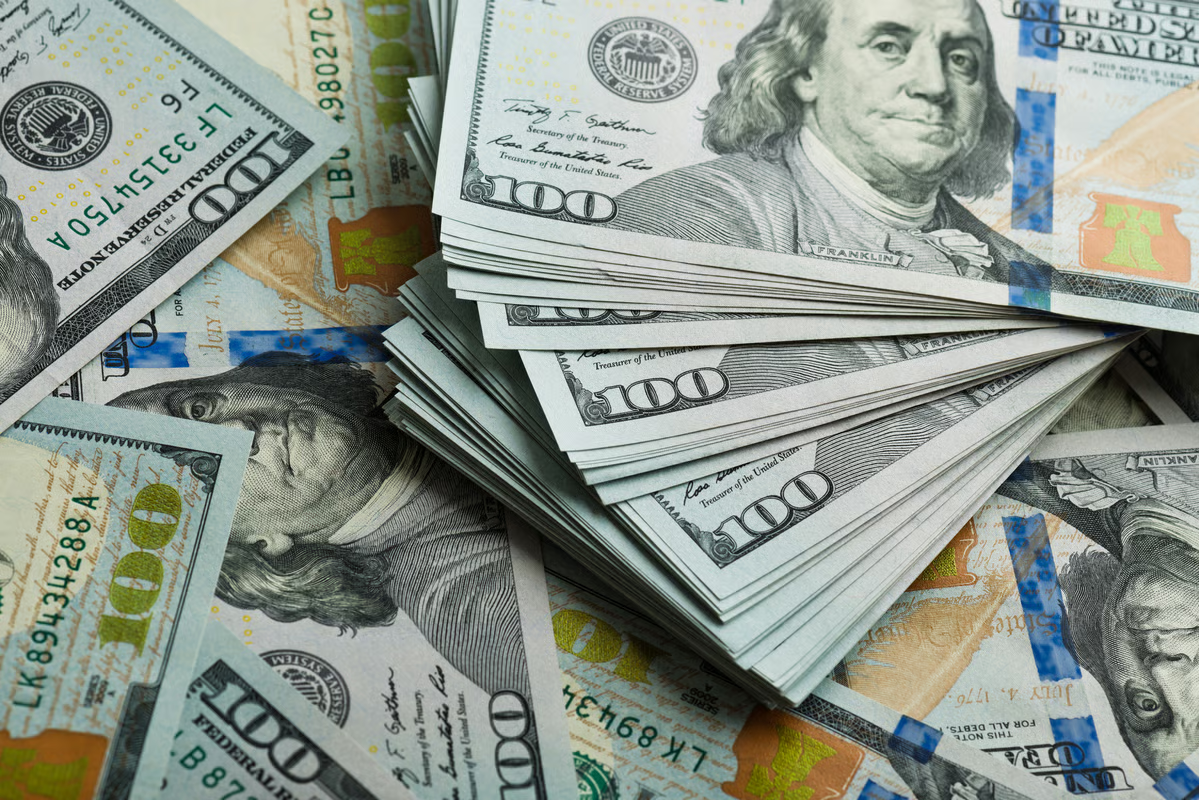
Some investors may see the S&P 500 at an all-time high and conclude there is little value left. Bill Ackman, however, is preparing to raise $10 billion for a new closed-end fund, Pershing Square U.S., arguing that opportunities remain even at elevated market levels.
Ackman is preparing the initial public offering of Pershing Square U.S., a closed-end fund that will trade publicly starting this summer after a dual listing with Pershing Square, the fund management company he runs. Pershing Square currently oversees about $20 billion in assets.
Ackman said he plans to deploy the cash raised from the IPO within weeks, describing the current environment as a favorable time to invest.
Ackman said that “some of the best businesses in the world have become available at some of the lowest valuations in their history.” The view aligns with comments from his most recent letter to Pershing Square Holdings shareholders.
While many investors focus on the S&P 500’s headline valuation, Ackman points to the index’s concentration in a small number of companies that typically trade at higher-than-average price-to-earnings (P/E) multiples. The S&P 500 recently traded at a forward P/E ratio of 20.4, above its historic average in the mid- to high teens.
Ackman argues that these megacap companies deserve higher valuations because they have “durable structural advantages,” often described as competitive moats. He says they benefit from massive scale, dominate their industries, and have the capital to invest in megatrends such as AI. As a result, he expects their earnings growth to remain relatively strong for years.
Ackman recently added shares of Meta Platforms after a sell-off tied to concerns about its capital expenditure budget. He also added to Amazon following investor reactions to the company’s $200 billion spending plans.
Both stocks, Ackman said, trade at relatively low P/E ratios given their growth potential. Amazon has recovered from its March lows, when it traded for a P/E of 26; it now trades at 32 times earnings, which he describes as fair value. Meta’s earnings multiple remains at 22 times earnings, which he characterizes as attractive.
He also said both companies are capable of growing earnings per share by more than 20% per year for the medium term.
Ackman expects the second half of the year to bring tailwinds for investors. Even after the S&P 500 reached an all-time high, he cited ongoing uncertainty related to the war in Iran.
He said the conflict remains a major challenge for markets because its impact on oil prices can spread broadly across the economy. If inflation stays elevated, it could lead to higher-than-expected interest rates set by the Federal Open Market Committee. Higher rates typically pressure earnings multiples.
At the same time, Ackman noted that the downside appears “practically priced in,” with expectations for further rate cuts significantly worsened over the past six weeks.
Ackman also sees potential benefits from the first full year of operations under the new tax code, which he said could have a positive impact on corporate earnings. He added that it could boost deal activity and support capital expenditures by companies, which may help sustain secular growth.
Despite these broader catalysts, Ackman said he is focused on a small number of the highest-quality investment opportunities, increasingly finding them among the largest companies in the world.




Premium gym chains are entering a “golden era” that is ending or already in decline, as rising operating costs collide with shifting consumer preferences toward more flexible, community-based ways to exercise. Long-term memberships are shrinking, margins are pressured by higher rents and facility expenses, and competition from smaller, more personalized…