•
•
•
•
•
•
•
•
•
•
•
•
•
•
•
•
•
•
•
•
•
•
•
•
•
•
•
•
•
•
•
•
•


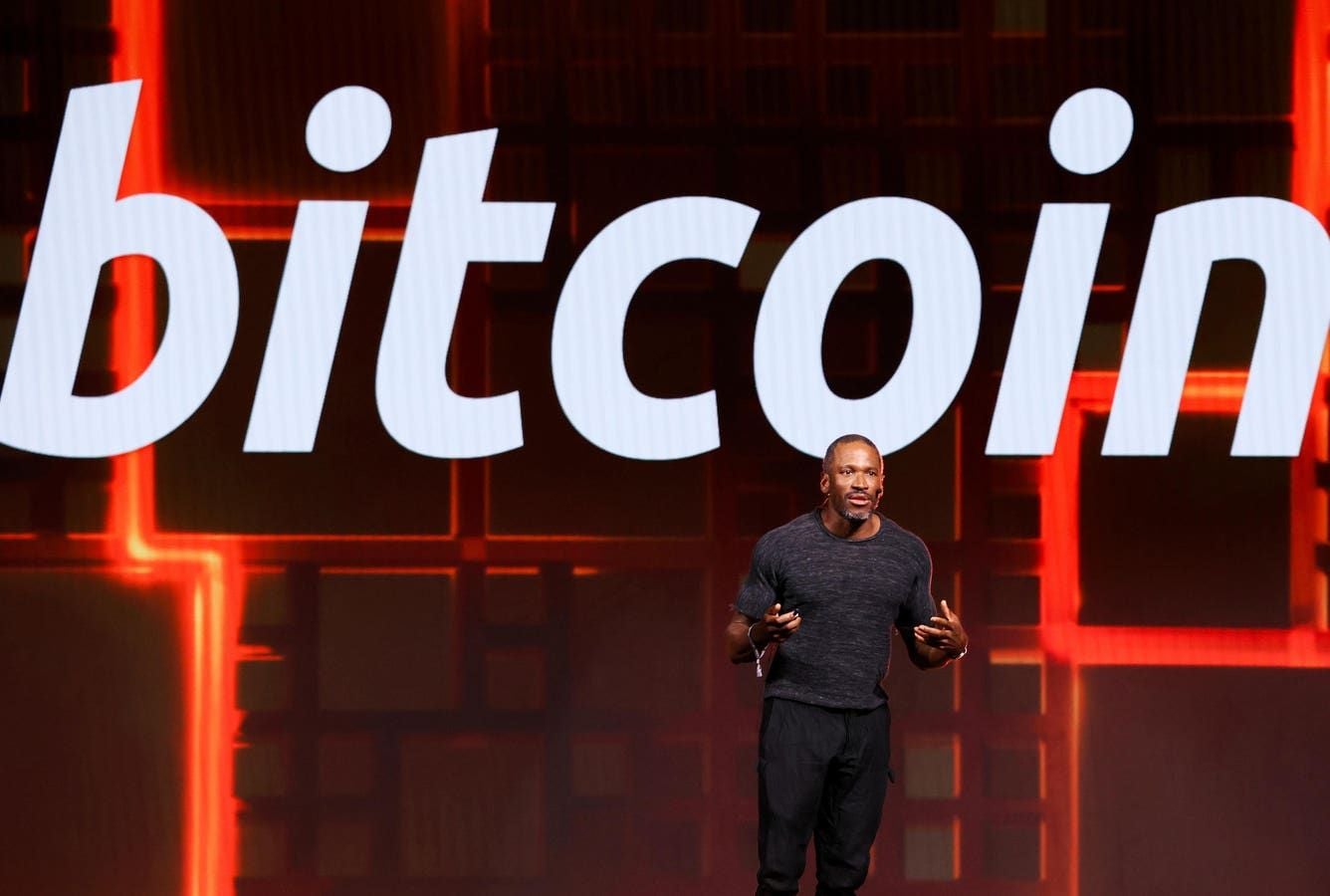
Bitcoin was trading near $77,700 on Wednesday, remaining stuck in the range that has characterized much of April. Two prominent crypto voices—Michael Saylor’s Strategy (formerly MicroStrategy) and Maelstrom hedge fund co-founder Arthur Hayes—are reading the same broader chart but arriving at different near-term conclusions.
Strategy disclosed on Monday that it added 34,164 bitcoin to its treasury, bringing total holdings to 815,061 coins.
The company said it acquired the 34,164 BTC for about $2.54 billion, at an average price of roughly $74,395 per bitcoin. It also reported BTC Yield of 9.5% year-to-date for 2026.
As of 4/19/2026, Strategy reported it holds 815,061 BTC acquired for about $61.56 billion, at an average price of approximately $75,527 per bitcoin.
Hayes, writing on April 16, argued that accumulation efforts will not matter until the Federal Reserve restarts liquidity support. He linked the outlook to a return to pre-war conditions following an Iran ceasefire, but emphasized that the key driver is whether the Fed provides the liquidity needed to address a “black hole” in banks’ balance sheets tied to consumer credit defaults.
Hayes’ broader framework centers on what he calls an “AI agentic deflation bomb,” which he says is still developing beneath the surface. His argument is that AI is eroding knowledge-worker income faster than the labor market can absorb it, contributing to consumer credit defaults. Those defaults, in turn, would force the Fed to bail out bank balance sheets—creating the liquidity he believes would allow bitcoin to rise.
He is not describing a long-term bearish view; rather, he expects bitcoin to remain in a “no-trade zone” until quantitative easing resumes.
A Crypto Nutshell video summary of an April 10 Hayes interview suggested potential upside levels of $150,000 to $200,000 by summer 2026, $250,000 to $500,000 by year end, and $1 million by 2028. The sequencing, according to Hayes, depends on whether the Fed restarts quantitative easing.
Saylor’s approach is not waiting for the Fed. Strategy has been raising money through its $STRC preferred stock, which pays an 11.5% yield and is designed to pull fixed-income capital into bitcoin without diluting common shares.
In an April 14 explainer, the JM Crypto host described the structure as a flywheel that allows Strategy to buy roughly $1 billion of bitcoin per week without using MSTR common shares, channeling traditional fixed-income capital directly into the coin.
Saylor reported on April 15 that Strategy generated ₿17,585 of BTC Gain in the first two weeks of April, worth approximately $1.3 billion. A week later, he updated the figure to roughly 47,079 BTC, or about $3.6 billion of paper gains in three weeks.
In an April 13 Bankless interview, Saylor argued that corporate and ETF accumulation will eventually trigger a non-linear repricing. He described it as an “S-curve” scarcity thesis: once fixed-supply assets are absorbed by treasuries and exchange-traded funds, the marginal price jumps sharply.
Saylor’s long-run target is $10 million per coin if Strategy reaches roughly 7.5% of total bitcoin supply.
Despite their different timelines, both Hayes and Saylor expect bitcoin to be materially higher than current levels around $77,700. Both also point to the Fed as the key unlock.
The disagreement is largely about what happens in the interim. Hayes, running a hedge fund, has said he is positioned long unlevered bitcoin but currently favors $HYPE and other altcoins over adding BTC at these levels. Saylor, by contrast, is operating a public company whose valuation depends on bitcoin and plans to keep buying at roughly $77,000 regardless of Fed timing.
The near-term catalyst is straightforward: whether the Fed signals balance-sheet support at its next meeting. Hayes argues that if consumer credit stress is the driver, a bailout would arrive regardless. Saylor’s view is that corporate buyers could absorb available supply before the Fed needs to act.
At Strategy’s current pace of roughly $1 billion of bitcoin per week, Saylor is expected to add another 30,000 coins before the Fed’s next policy meeting. By then, Hayes said on April 16, the market will know whether the “AI agentic deflation bomb” is still ticking—or whether, in his words, “$BTC is breaking out against US SaaS software and we bottomed?”






Premium gym chains are entering a “golden era” that is ending or already in decline, as rising operating costs collide with shifting consumer preferences toward more flexible, community-based ways to exercise. Long-term memberships are shrinking, margins are pressured by higher rents and facility expenses, and competition from smaller, more personalized…