•
•
•
•
•
•
•
•
•
•
•
•
•
•
•
•
•
•
•
•
•
•
•
•
•
•
•
•
•
•
•
•
•


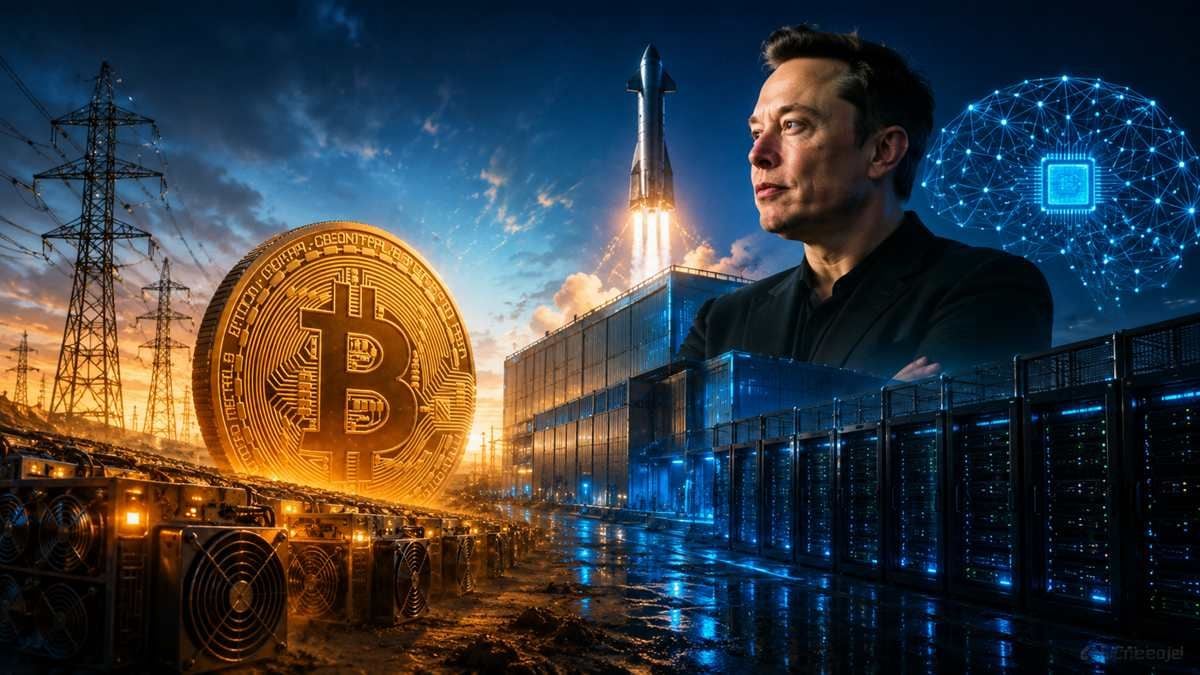
Bitcoin miners looking for alternative revenue streams are facing intensifying competition as Elon Musk’s expanding AI infrastructure ambitions draw additional computing capacity and electricity away from the crypto sector. The latest challenge followed Anthropic’s access to SpaceX’s Colossus computing facility in Memphis, Tennessee, where large-scale energy capacity and Nvidia hardware support advanced AI workloads.
The shift reflects a broader transformation within the mining industry. After the 2024 Bitcoin halving reduced block rewards, several public mining companies accelerated plans to reposition themselves as data-center and high-performance computing operators rather than relying only on BTC production.
Over the past year, mining firms promoted their energy assets as infrastructure for artificial intelligence operations. Companies including TeraWulf, Core Scientific, Hut 8, and Bitfarms increasingly emphasized colocation services, GPU hosting, and long-term power agreements tied to AI demand.
Competition intensified after SpaceX leased massive computing capacity from its Colossus facility to Anthropic. The arrangement reportedly added more than 220,000 Nvidia processors and 300 megawatts of power, strengthening Anthropic’s ability to run large-scale AI workloads.
The agreement also reportedly gave Anthropic more than 300 megawatts of additional capacity through the Colossus facility, enabling the company to increase usage limits for Claude AI products and developer tools.
The rapid expansion of AI has increased electricity demand faster than grid infrastructure can adapt. Data centers require stable energy supplies, cooling systems, transformers, and long-term interconnection agreements, creating bottlenecks across the United States.
In that environment, Bitcoin miners initially held an advantage because many already controlled industrial-scale power sites. However, the Colossus-to-Anthropic agreement showed that larger technology companies can enter the market with deeper financial resources and broader infrastructure networks.
As mining economics weakened—amid lower hashprice levels, rising network difficulty, and higher operational costs—several miners moved to diversify beyond Bitcoin. Industry estimates cited in the article suggest AI-related services could account for most revenue generated by publicly traded miners before the end of 2026.
Investors are also reportedly favoring companies with exposure to AI infrastructure. Data-center operators connected to high-performance computing contracts are trading at stronger valuations than traditional mining firms that remain closely tied to Bitcoin price cycles.
For Bitcoin miners, the AI opportunity remains significant, but the sector is no longer competing only against other crypto operators. The race increasingly depends on securing electricity, scaling computing capacity, and attracting long-term AI clients before power shortages become more severe.
Premium gym chains are entering a “golden era” that is ending or already in decline, as rising operating costs collide with shifting consumer preferences toward more flexible, community-based ways to exercise. Long-term memberships are shrinking, margins are pressured by higher rents and facility expenses, and competition from smaller, more personalized…