•
•
•
•
•
•
•
•
•
•
•
•
•
•
•
•
•
•
•
•
•
•
•
•
•
•
•
•
•
•
•
•
•


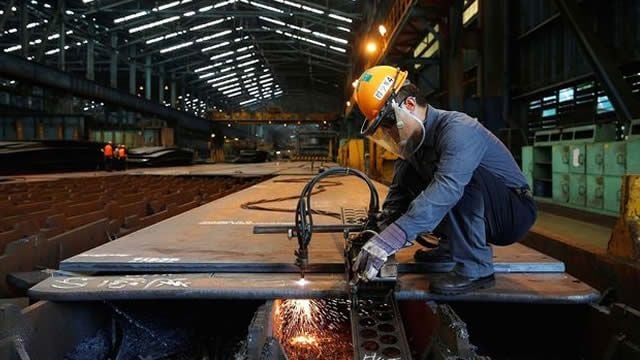
MP Materials reported higher first-quarter revenue and adjusted earnings, driven by record neodymium-praseodymium (NdPr) oxide output and sales, progress in downstream magnet operations, and reiterated expectations for initial magnet revenue in the second half of 2026.
Founder, Chairman and Chief Executive Officer Jim Litinsky said the company “carried that momentum into 2026” after a strong 2025. In the materials segment, MP produced a record 917 metric tons of NdPr oxide, up 63% from a year earlier and 28% sequentially. NdPr oxide sales totaled 1,006 metric tons, more than double the prior-year period and 79% higher than the fourth quarter.
MP also produced just under 13,000 metric tons of rare earth oxide (REO) in concentrate, which Litinsky described as one of MP’s strongest concentrate quarters and its highest first-quarter output to date.
Chief Financial Officer Ryan Corbett said consolidated revenue and PPA income totaled $132.9 million, up 28% from the fourth quarter. Adjusted EBITDA was $36.6 million, and adjusted diluted earnings per share were $0.03, compared with an adjusted diluted loss of $0.12 per share in the first quarter of last year.
Corbett said the results were driven by record NdPr oxide sales volumes, higher market prices and PPA income. At the materials segment level, MP generated $114.5 million of revenue and PPA income, roughly double the prior-year quarter, and $36.7 million of segment adjusted EBITDA.
The magnetics segment generated $21.1 million of revenue and $9.6 million of segment adjusted EBITDA, supported by magnetic precursor production at the company’s Independence facility. MP also received a $32 million prepayment from Apple in February, bringing total Apple prepayments to $72 million.
MP ended the quarter with $1.7 billion in cash and short-term investments. Capital expenditures were $77.4 million, with about 60% attributable to the magnetics segment. Corbett said second-quarter capital spending will “step up meaningfully” as MP acquires the 10X site, breaks ground and accelerates construction. The company continues to expect full-year capital expenditures of $500 million to $600 million.
Corbett said MP had approximately 815 metric tons of NdPr oxide and metal on hand, in transit, at toll processors or awaiting shipment as of March 31. He said most contracts price on about a one-quarter lag to prevailing NdPr market prices, with shipment timing creating some variability.
Based on the company’s current view of sales mix and timing, MP expects second-quarter realized pricing in the low to mid-$90s per kilogram. Corbett said the PPA agreement mostly offsets any difference between realized pricing and the $110 per kilogram floor. He added that as concentrate available for stockpiling declines and NdPr prices remain close to or above the floor, MP does not expect to generate a material amount of PPA income from stockpiled concentrate in coming quarters.
Michael Rosenthal said MP expects a single-digit sequential decline in NdPr oxide production in the second quarter after a semiannual maintenance outage in April, followed by significant sequential growth in the third quarter. MP continues to target progress toward a 500 metric ton per month run rate by year-end.
Litinsky said MP is commissioning commercial production equipment in its magnetics division, with magnetic performance meeting customer specifications. The company is advancing through customer validation before full production.
Corbett reiterated expectations for initial magnet revenue in the second half of 2026, beginning with modest deliveries as capacity ramps over several quarters. He said approximately $62 million of prepaid revenue remains to be earned for magnetic precursor products over the next four quarters on a modestly declining basis. Once that prepayment is fully recognized, MP does not expect to continue producing those products for external sale and instead plans to dedicate metal production capacity to finished magnets.
During the question-and-answer session, Corbett said MP is in the product qualification process with GM. He said validation involves a detailed quality management plan, run-at-rate testing and regulatory testing using parts made on commercial equipment, with deliveries expected to be modest initially and grow over time.
Rosenthal said MP has broken ground on its 10X project. He added that learnings from Independence should help the company move faster at 10X, citing reusable engineering work, existing vendor relationships and operational knowledge gained from ramping the first facility.
Rosenthal said MP’s heavy rare earth separation circuit remains on schedule to begin commissioning in the second quarter and produce terbium and dysprosium later this year. He said the circuit will also generate intermediate feed streams that MP can store for future separation or sell to third parties.
He said MP remains committed under its agreement with the Department of War to producing high-purity samarium oxide and is also evaluating potential gadolinium oxide production and other heavy rare earth product capabilities.
MP is also advancing a magnet recycling line at Mountain Pass in support of its Apple agreement. Rosenthal said the line has completed conceptual design and is moving through engineering and procurement, creating an incremental source of third-party feedstocks containing both light and heavy rare earths.
The company expects to begin recommissioning the first phase of its chloralkali capability in short order. Rosenthal said the effort could reduce external dependencies, lower environmental footprint and reduce costs over time, even though the company’s primary reagents are available domestically.
Litinsky emphasized that he believes access to NdPr oxide will remain the “binding constraint” for economically viable rare earth magnet production outside China for at least the next five years. He cited Japanese government and industry arrangements for nearly all of Lynas’ NdPr output and said there is limited uncommitted supply available to support what Adamas Intelligence projects as more than 60,000 metric tons of existing and announced Western magnet capacity in coming years.
Litinsky said a rule of thumb is that every 2 metric tons of magnet output requires about 1 metric ton of NdPr oxide feedstock. He argued that MP’s vertically integrated model, with contracts involving GM, Apple and the Department of War, positions the company as demand grows.
He said customer engagement remains high, particularly as demand from defense, drones, robotics and “physical AI” applications increases. Litinsky also said the Middle East conflict has reinforced recognition that drones and robotics are likely to play a larger role in warfare, potentially accelerating rare earth magnet demand.
Litinsky said MP will be methodical in building out the customer base for 10X and may not announce all customers, depending on sensitivity. He added that new upstream rare earth projects are difficult, expensive and time-consuming to develop, and that any incentive price for new NdPr supply would be “materially higher than today’s prices.”
Premium gym chains are entering a “golden era” that is ending or already in decline, as rising operating costs collide with shifting consumer preferences toward more flexible, community-based ways to exercise. Long-term memberships are shrinking, margins are pressured by higher rents and facility expenses, and competition from smaller, more personalized…