•
•
•
•
•
•
•
•
•
•
•
•
•
•
•
•
•
•
•
•
•
•
•
•
•
•
•
•
•
•
•
•
•


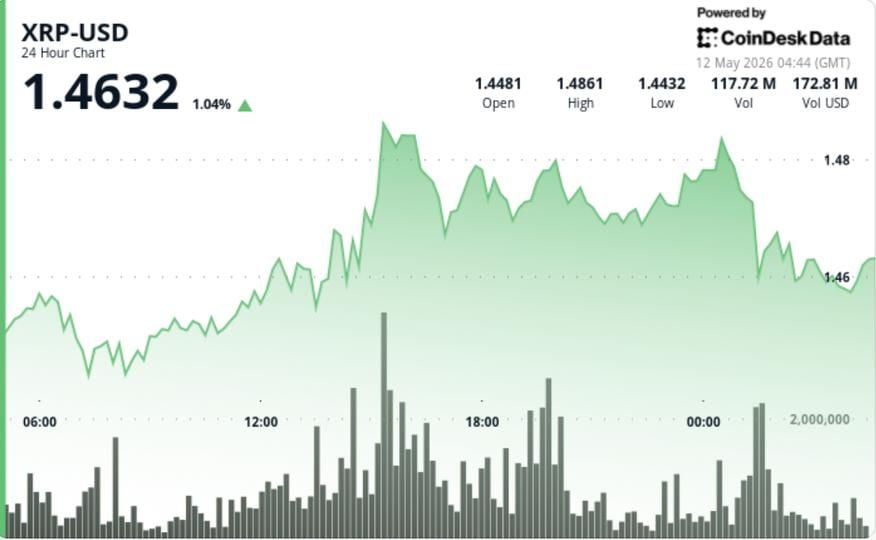
XRP briefly pushed toward $1.49 on heavy volume before stalling again near a resistance zone that has capped rallies for months. The latest shift is that price is holding closer to recent highs rather than being sold off immediately after testing the range, suggesting sellers’ control may be weakening.
Ripple’s prime brokerage arm is gaining institutional traction as it expands margin financing. Ripple Prime secured a $200 million funding facility from Neuberger Berman to expand margin financing across traditional and digital asset trading markets.
Ripple also said demand for its prime brokerage business has accelerated since the Hidden Road acquisition, with revenue tripling year over year. The broader XRP narrative has also been shifting toward institutional infrastructure, including tokenized Treasury settlement on XRPL after Ripple, JPMorgan, Mastercard and Ondo completed such a settlement.
During the 24-hour session, XRP climbed from $1.4483 to $1.4565 and briefly reached an intraday high of $1.4877. Volume surged during the May 11 15:00 UTC session, when more than 105M XRP traded as price broke above $1.4750.
After the breakout, the rally cooled into consolidation near $1.45 to $1.46 rather than fully retracing, keeping the short-term structure constructive.
XRP remains inside a larger multi-month compression structure. Repeated tests near resistance tend to weaken seller control over time, and the market has shown signs of improving momentum conditions as it reclaimed several shorter-term moving averages during the recent move higher.
Price continues to stall near the $1.47 to $1.50 region, which has repeatedly capped upside attempts since February. Volume profiles also point to relatively thin liquidity above current levels, which could allow moves to accelerate quickly if XRP secures a clean break higher.
Premium gym chains are entering a “golden era” that is ending or already in decline, as rising operating costs collide with shifting consumer preferences toward more flexible, community-based ways to exercise. Long-term memberships are shrinking, margins are pressured by higher rents and facility expenses, and competition from smaller, more personalized…