•
•
•
•
•
•
•
•
•
•
•
•
•
•
•
•
•
•
•
•
•
•
•
•
•
•
•
•
•
•
•
•
•



BNB has broken above a multi-month descending triangle pattern after reclaiming key resistance near $630, a move that suggests a potential shift in momentum toward buyers. At press time on May 8, BNB was trading around $638, up modestly over the past 24 hours, according to crypto.news.
The token has climbed nearly 10% from recent April lows near $582. It also pushed above a descending resistance trendline that had capped upside attempts since February.
The move follows several weeks of sideways trading between roughly $580 and $640. While the prior price compression had pointed to a potential bearish continuation setup, the latest advance above resistance indicates that bulls may have invalidated the pattern before a deeper breakdown could occur.
BNB has faced pressure in recent months amid growing regulatory scrutiny tied to Binance’s anti-money laundering and sanctions compliance controls. Sentiment weakened further after reports alleged that Iran-linked entities may have used Binance’s platform to move funds and bypass sanctions, drawing renewed attention from U.S. authorities.
Recent reporting said the U.S. Treasury Department has privately demanded stricter oversight and stronger compliance cooperation from Binance under a monitoring program tied to the exchange’s 2023 settlement with U.S. regulators. The development followed reports detailing over $1 billion in alleged Iran-linked crypto flows connected to the platform.
These compliance concerns contributed to weaker sentiment around Binance-linked assets earlier this year and helped push BNB more than 30% below its previous highs above $900. However, sentiment has gradually stabilized as Binance strengthened its compliance framework across multiple jurisdictions, easing some of the downside pressure that weighed on the token during the first quarter.
Broader conditions have also improved. Bitcoin holding above major psychological support levels and easing macroeconomic concerns have helped restore risk appetite across the crypto market. Altcoins have begun attracting fresh inflows as traders rotate back into large-cap assets with relatively strong ecosystem activity.
Derivatives indicators suggest sentiment may be shifting back toward bullish positioning. CoinGlass data shows BNB open interest remained elevated in the $920 million to $970 million range over the past day, indicating traders are adding leveraged positions rather than reducing exposure. The weighted funding rate has remained slightly positive, suggesting long traders are still paying premiums to maintain bullish positions.
On the daily chart, BNB has broken above the descending resistance trendline that formed part of a descending triangle pattern over the past three months. The breakout followed repeated defenses of the horizontal support zone near $580, which buyers have held multiple times since February.
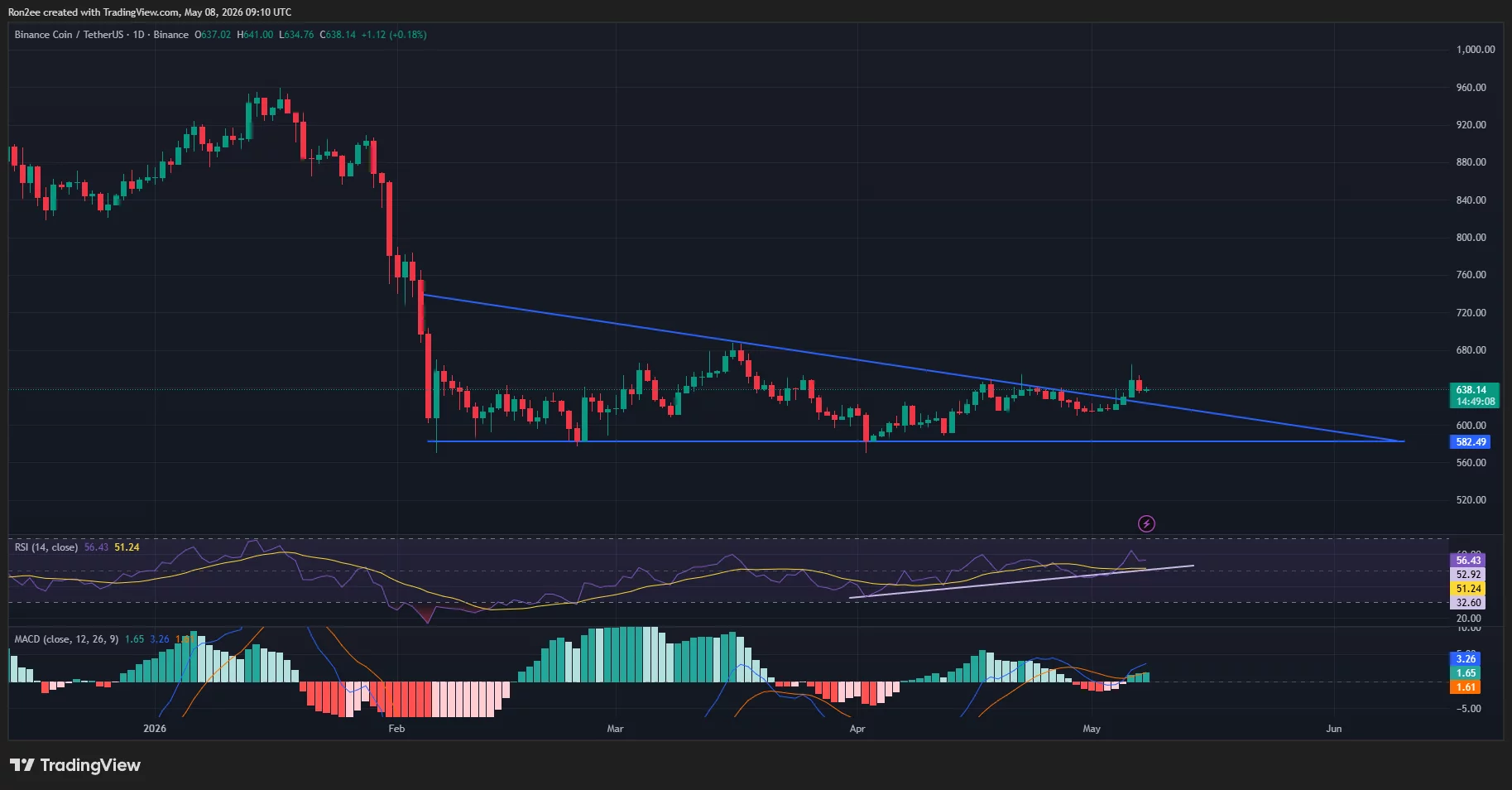
BNB is now attempting to stabilize above the former resistance line, which could confirm the breakout if it holds over coming sessions.
Momentum indicators are also improving. The MACD has completed a bullish crossover on the daily timeframe, and the histogram has started printing green bars again. The RSI has climbed above 56 and continues to trend higher while holding above its signal line, with the indicator appearing to form higher lows.
BNB has also reclaimed its 50-day simple moving average, which had acted as dynamic resistance during earlier recovery attempts. Sustained trading above this level could reinforce the bullish structure.
If buyers maintain momentum above the breakout zone, the next major resistance could appear near the $680 region, followed by a potential move toward the psychological $720 area. A stronger continuation rally could also set up a retest of higher levels not seen since early 2026.
On the downside, failure to hold above the broken trendline could invalidate the breakout and pull BNB back toward the $600–$580 support range, where buyers previously stepped in aggressively.
Premium gym chains are entering a “golden era” that is ending or already in decline, as rising operating costs collide with shifting consumer preferences toward more flexible, community-based ways to exercise. Long-term memberships are shrinking, margins are pressured by higher rents and facility expenses, and competition from smaller, more personalized…